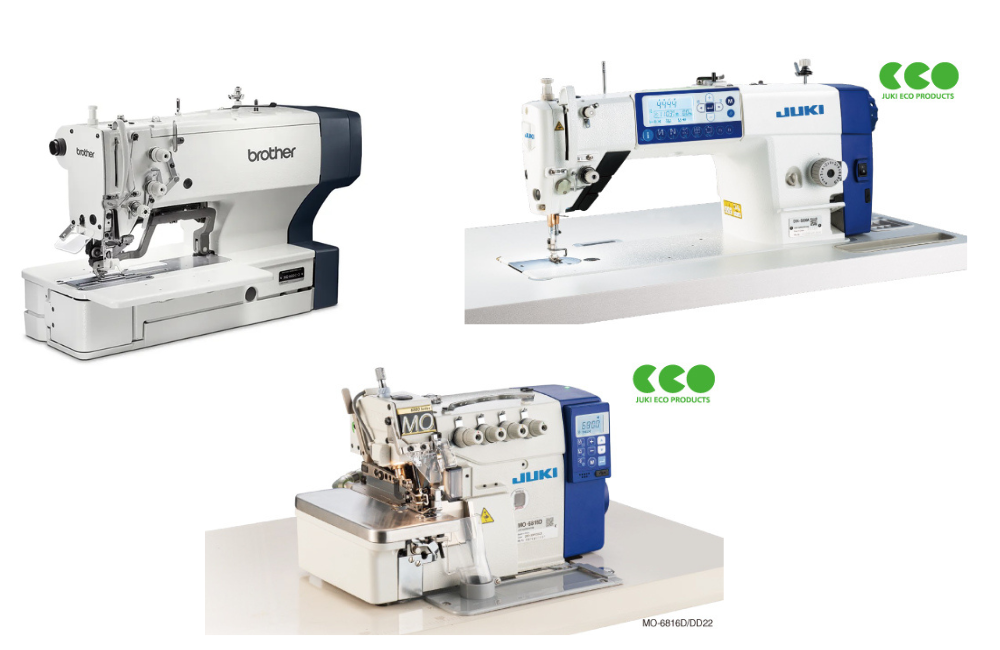
Industrial Sewing Machine
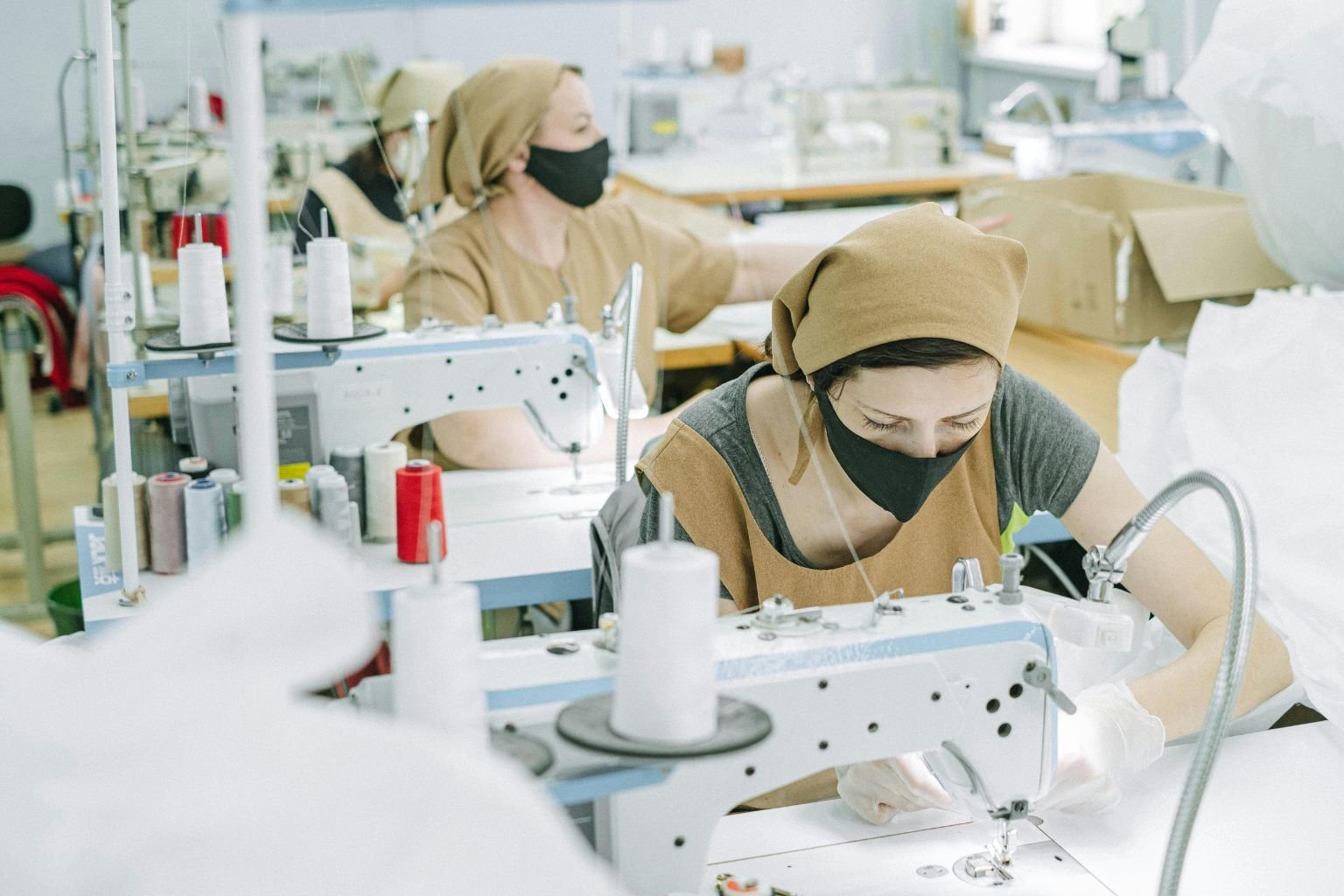
An industrial sewing machine is a high-performance sewing machine designed for continuous, demanding sewing operations in garment factories, tailoring businesses, upholstery workshops, footwear production, leather goods manufacturing, and other commercial applications. Unlike many household machines, industrial machines are built for speed, durability, consistent stitch quality, and specialized production work.
Whether you are starting a garment business, setting up a tailoring workshop, replacing an old machine, or looking for a professional stitching machine, understanding how industrial sewing machines work and which type is right for your application is essential.
From an industrial straight stitch sewing machine for general garment construction to specialized machines for heavy materials, there is no single machine that is best for every sewing operation.
In this guide, we explain the different types of industrial sewing machines, their uses, advantages, features, prices, and how to choose a good industrial sewing machine for your business.
What Is an Industrial Sewing Machine?
An industrial sewing machine is a sewing machine engineered for professional and commercial production rather than occasional household sewing.
These machines typically have robust internal components, powerful motors, durable construction, and specialized mechanisms designed to sew particular materials and stitch types efficiently.
An industrial sewing machine can be used for:
- Garment manufacturing
- Professional tailoring
- Denim production
- Leather goods
- Bags and luggage
- Upholstery
- Automotive textiles
- Workwear and uniforms
- Footwear
- Home textile production
- Curtains and furnishings
- Canvas products
- Mattress manufacturing
Because industrial production involves repetitive operations and high sewing volumes, an industrial machine is generally designed to operate for long periods while maintaining consistent stitch quality.
How Does an Industrial Sewing Machine Work?
The basic sewing principle is similar to that of a household sewing machine. A needle carries the upper thread through the fabric while another thread is controlled underneath the material to form the stitch.
However, an industrial machine is designed around production efficiency, durability, and specialized sewing operations.
Depending on the machine type, the sewing system can include:
- Needle mechanism
- Presser foot
- Feed dog
- Bobbin and hook
- Thread tension system
- Needle bar
- Take-up lever
- Stitch-length regulator
- Sewing machine motor
- Machine bed
- Specialized feeding mechanisms
Different machines use different combinations of these components to handle lightweight fabrics, multiple layers, thick materials, stretch fabrics, leather, denim, or other challenging materials.
Industrial Sewing Machine vs. Household Sewing Machine
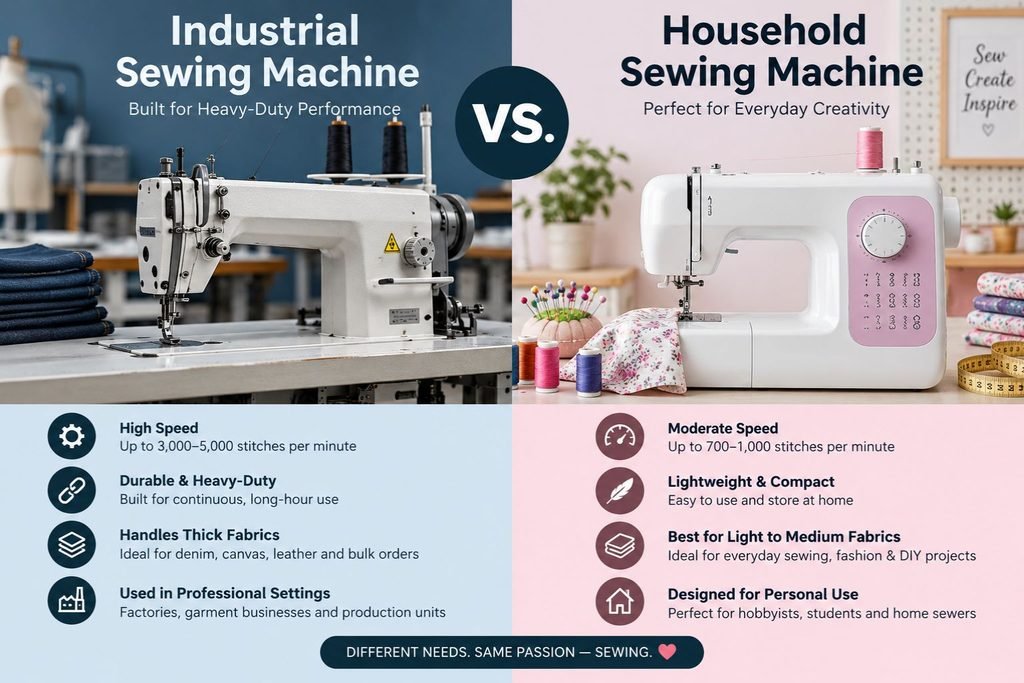
The biggest difference between a household and industrial sewing machine is the intended workload.
| Feature | Industrial Sewing Machine | Household Sewing Machine |
|---|---|---|
| Primary purpose | Commercial production | Home sewing |
| Construction | Heavy-duty | Generally lighter |
| Operating workload | High | Low to moderate |
| Sewing speed | Often high | Generally lower |
| Motor | Production-oriented | Usually integrated |
| Durability | Designed for continuous use | Designed for intermittent use |
| Specialization | Often designed for one operation | More versatile |
| Work environment | Factory, workshop, production line | Home or hobby room |
An industrial machine is therefore not automatically better for every user. If you only sew occasionally, a household machine may be more practical. If you need consistent production and high-volume sewing, an industrial machine can be a much better choice.
Types of Industrial Sewing Machines
There are many types of industrial sewing machines, each designed for a particular sewing operation.
1. Industrial Straight Stitch Sewing Machine
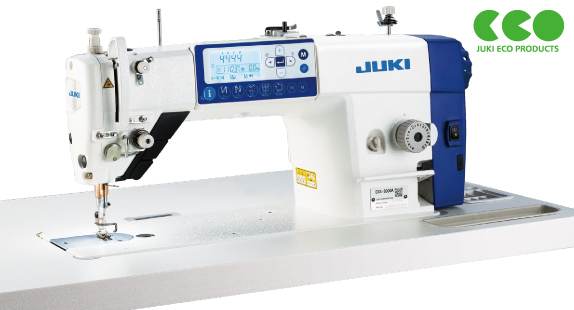
The industrial straight stitch sewing machine is one of the most widely used machines in garment manufacturing.
It typically produces a straight lockstitch and is used for operations such as:
- Joining garment panels
- Sewing seams
- Attaching pockets
- Sewing collars
- Constructing shirts
- Making trousers
- Producing dresses
- General garment assembly
For general apparel manufacturing, this is often one of the first machines businesses consider.
2. Industrial Overlock Sewing Machine

An industrial overlock machine trims the fabric edge while simultaneously sewing over it.
It is commonly used for:
- Edge finishing
- Seam construction
- Knitwear
- T-shirts
- Sportswear
- Stretch garments
- Preventing fabric edges from fraying
Overlock machines can be configured for different thread and stitch arrangements depending on the application.
3. Industrial Coverstitch Machine
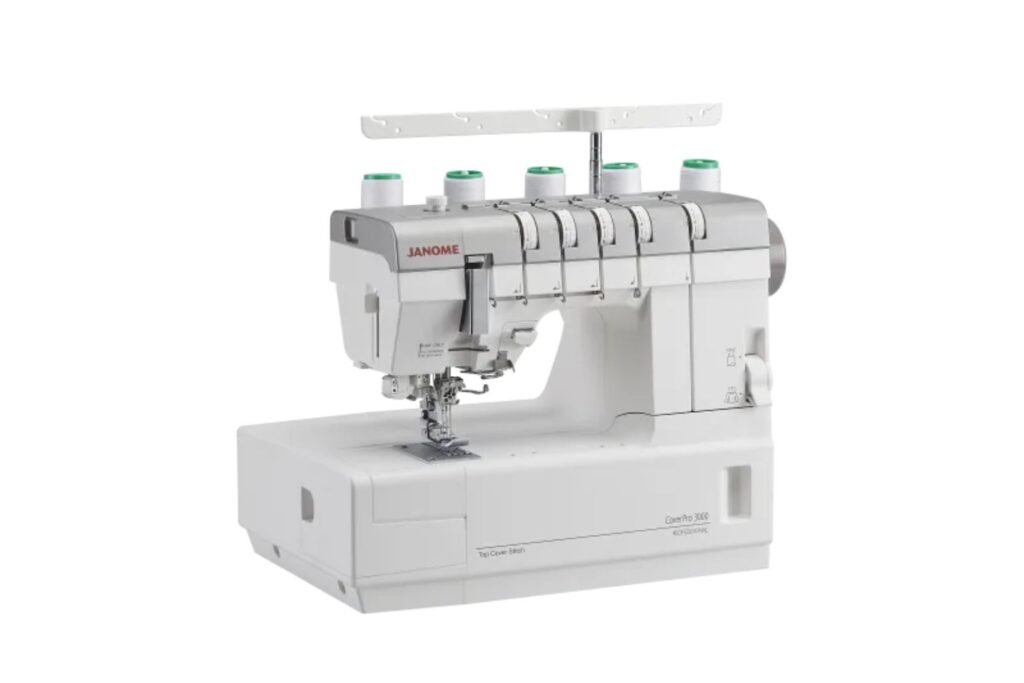
A coverstitch machine is widely used for knit garments and stretch apparel.
Common applications include:
- T-shirt hems
- Sleeve hems
- Sportswear
- Underwear
- Knitwear
- Decorative seams
The machine creates a professional-looking stitch while allowing the seam to retain flexibility.
4. Walking Foot Industrial Sewing Machine
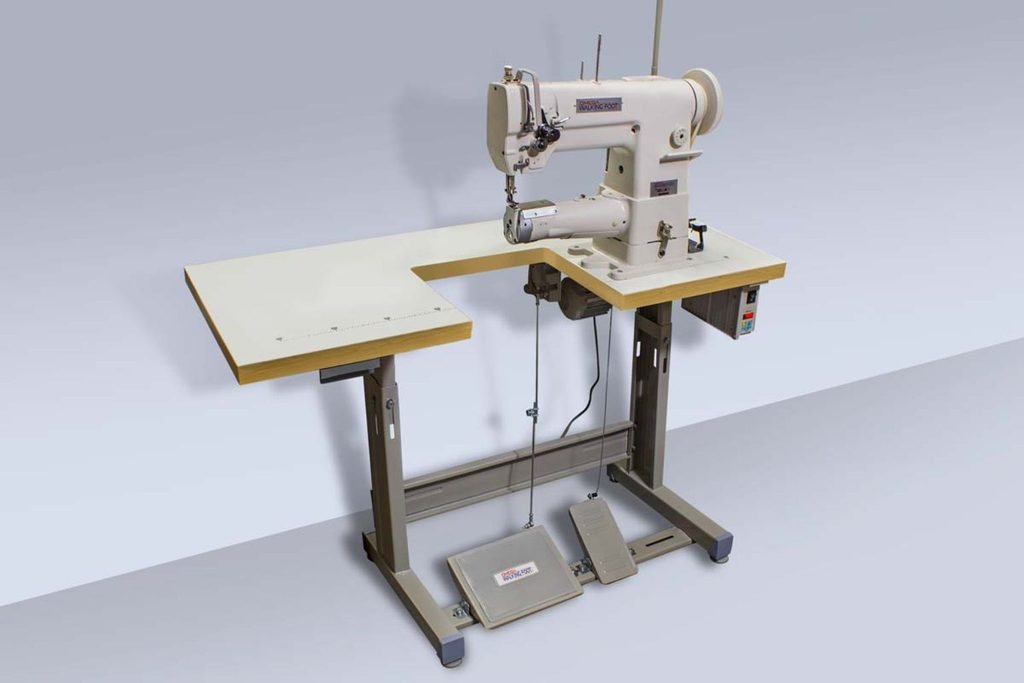
A walking-foot machine is designed to help move multiple layers of material through the sewing area.
It is particularly useful for:
- Upholstery
- Leather
- Furniture
- Bags
- Canvas
- Automotive interiors
- Heavy fabrics
The walking foot provides additional feeding assistance compared with a conventional drop-feed system.
5. Industrial Needle Feed Sewing Machine
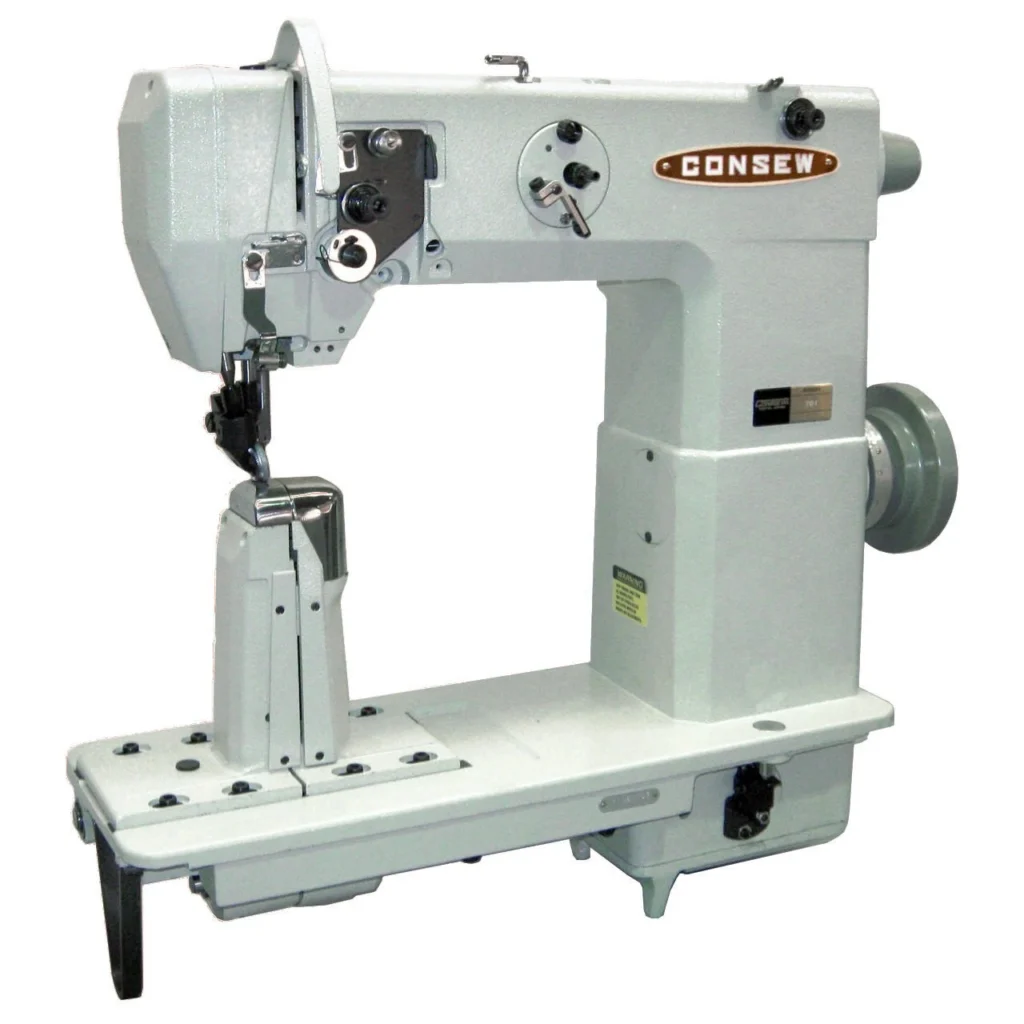
A needle-feed machine uses movement of the needle along with the feeding system to help move the material.
This can be particularly useful when working with materials where controlling multiple layers is important.
6. Compound Feed Industrial Sewing Machine
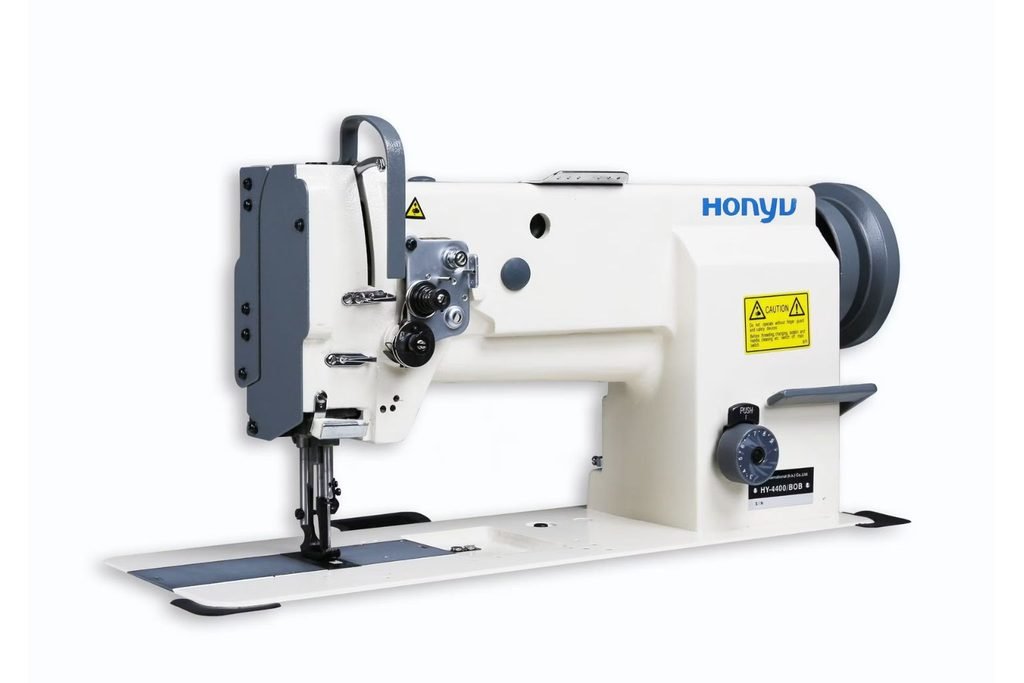
Compound-feed machines combine multiple feeding actions to provide improved control over challenging materials.
They are commonly associated with heavy-duty applications such as leather goods, upholstery, bags, and other products requiring strong material control.
7. Industrial Chainstitch Machine
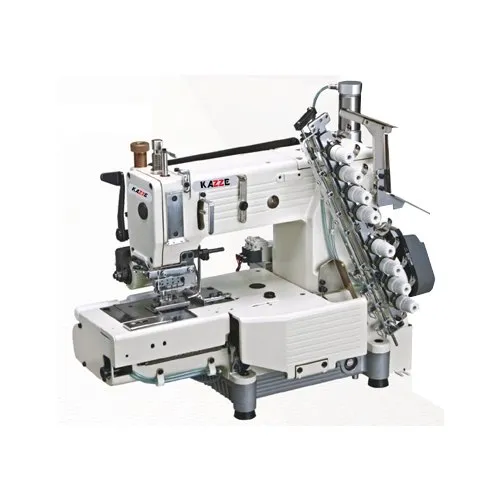
Chainstitch machines use a different stitch formation system from conventional lockstitch machines.
They can be used for various garment and textile production operations where flexibility, speed, or specific seam characteristics are required.
8. Industrial Buttonhole Machine
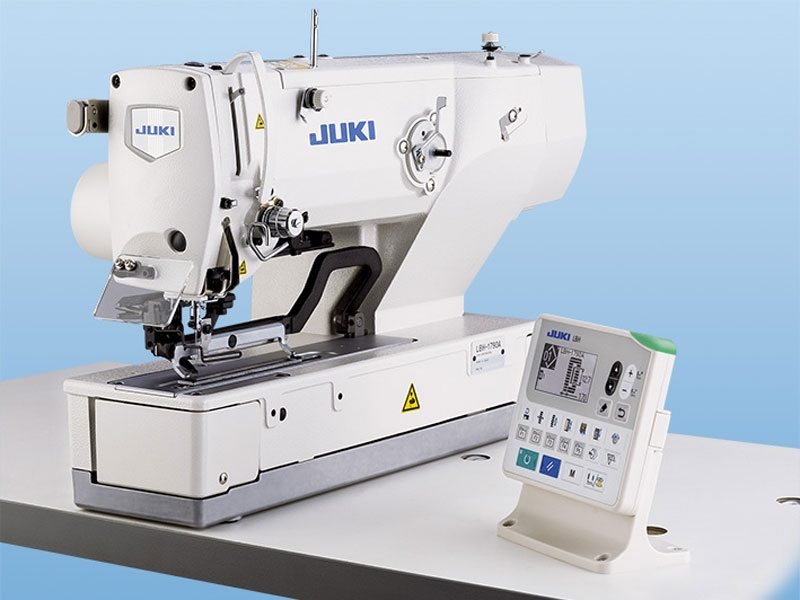
Buttonhole machines are specialized production machines designed to create buttonholes efficiently and consistently.
They are commonly found in garment factories producing:
- Shirts
- Jackets
- Uniforms
- Trousers
- Coats
- Fashion garments
9. Industrial Button Sewing Machine
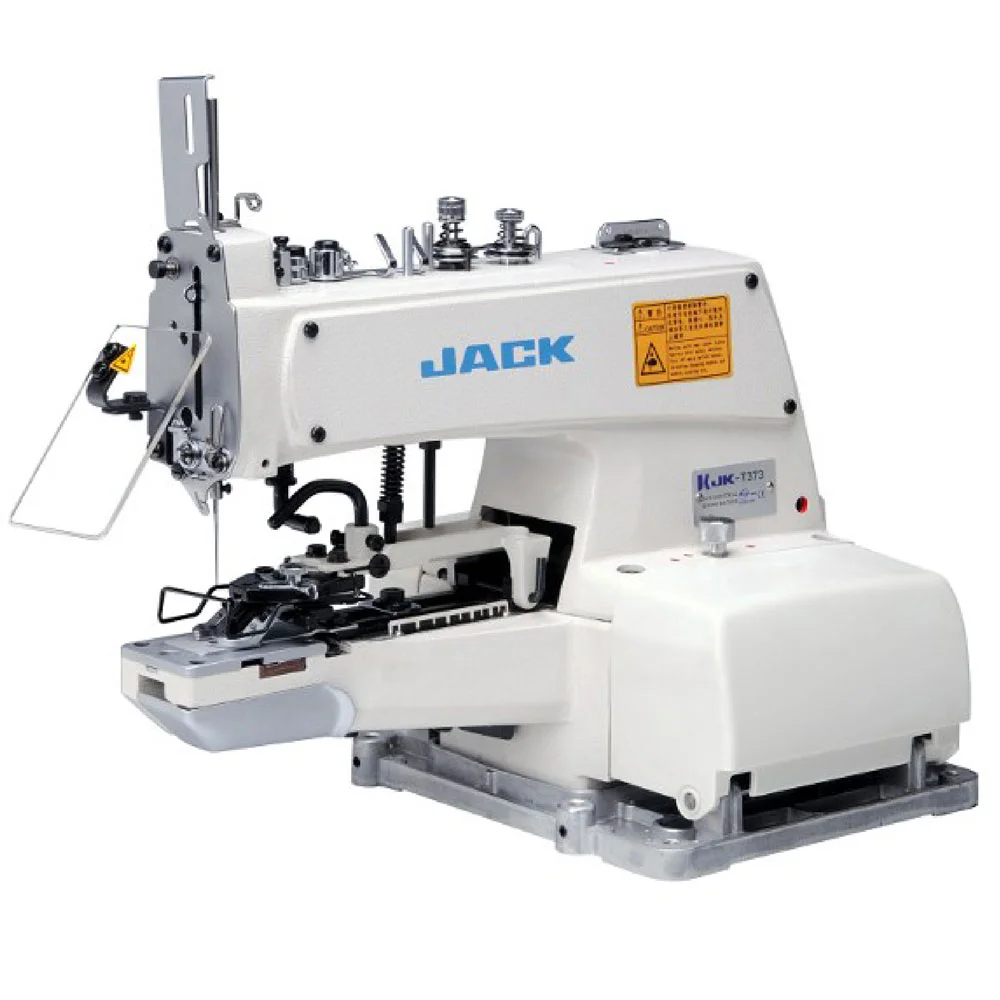
A button sewing machine automates the process of attaching buttons to garments.
Instead of manually positioning and sewing each button with a general-purpose machine, a specialized machine can perform the operation quickly and consistently.
10. Industrial Bartack Machine
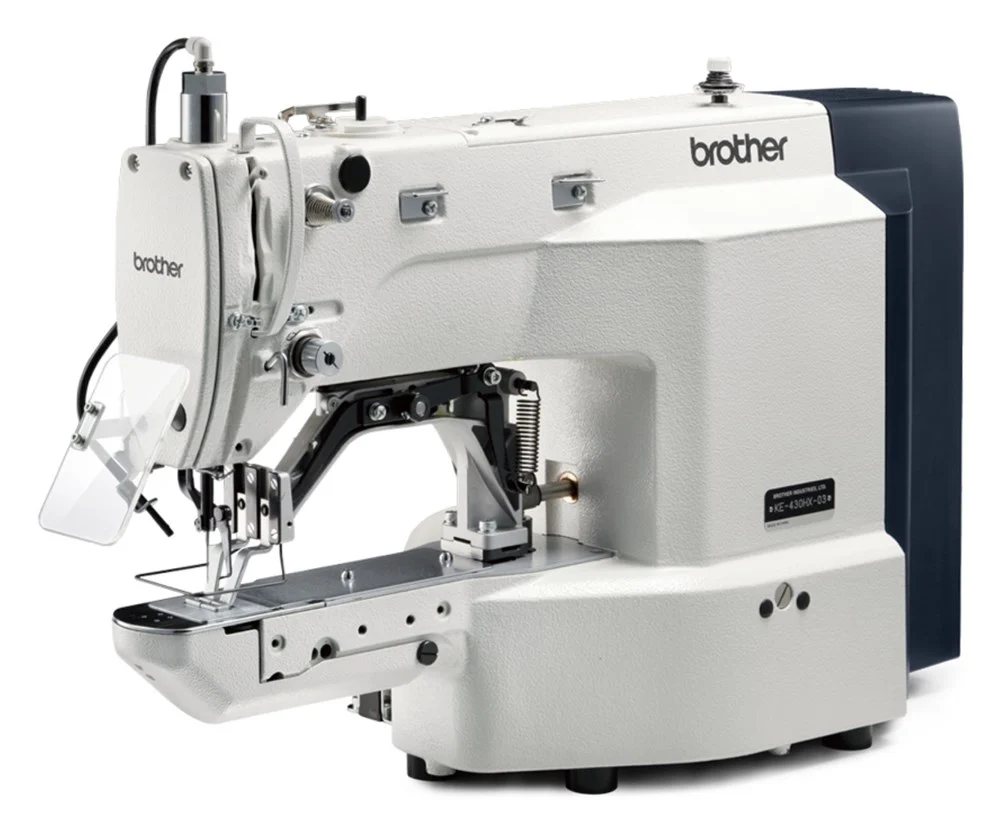
Bartack machines create dense reinforcement stitches at stress points.
They are commonly used on:
- Belt loops
- Pocket openings
- Workwear
- Jeans
- Bags
- Uniforms
- Sportswear
What Is an Industrial Sewing Machine Used For?
The applications of industrial sewing extend across almost every major textile and sewn-product industry.
Garment Manufacturing
Industrial machines are fundamental to clothing production.
Factories may use different machines for different operations, including:
- Seaming
- Hemming
- Edge finishing
- Pocket attachment
- Collar construction
- Sleeve attachment
- Waistband construction
- Buttonholes
- Button attachment
- Reinforcement stitching
A production line may therefore contain many specialized machines rather than one universal machine.
Professional Tailoring
An industrial tailoring machine can be useful for tailoring businesses that handle substantial daily workloads.
Professional tailors may use industrial machines for:
- Suits
- Shirts
- Trousers
- Uniforms
- Dresses
- Alterations
- Custom garments
Leather Products
Industrial machines designed for heavy materials are used to manufacture:
- Leather bags
- Wallets
- Belts
- Shoes
- Leather furniture
- Accessories
The correct machine must be selected according to leather thickness, construction, thread size, and the required stitch.
Upholstery
Heavy-duty industrial machines are widely used in upholstery applications.
They may sew:
- Furniture covers
- Sofas
- Chairs
- Automotive upholstery
- Cushions
- Heavy textile products
What Makes an Industrial Sewing Machine Different?
Several characteristics distinguish an industrial machine from a conventional household machine.
Heavy-Duty Construction
Industrial machines are generally built to withstand repetitive production work.
The frame, internal mechanisms, shafts, bearings, feeding systems, and other components are designed with durability in mind.
High Sewing Speed
A high speed industrial sewing machine can significantly increase production efficiency when operated correctly.
However, maximum speed should not be the only consideration. The appropriate sewing speed depends on:
- Fabric
- Thread
- Needle
- Stitch type
- Operator skill
- Machine specification
- Production requirements
Specialized Operation
Many industrial machines are designed to perform one particular operation extremely well.
This specialization is one reason a garment factory may have many different machine types.
Consistent Stitch Quality
In production environments, consistency is critical.
A professional sewing machine should produce repeatable stitches throughout long production runs when correctly adjusted and maintained.
What Is a Good Industrial Sewing Machine?
A good industrial sewing machine is not necessarily the most expensive machine or the fastest machine.
The right machine should match your:
- Material
- Sewing operation
- Production volume
- Stitch requirement
- Thread specification
- Needle requirement
- Operator skill
- Workspace
- Maintenance capabilities
- Budget
For example, a machine optimized for lightweight woven fabrics may not be appropriate for thick leather or multiple layers of upholstery material.
Best Industrial Sewing Machine: How to Choose
There is no universal best industrial sewing machine.
The best machine depends on what you are manufacturing.
For General Garment Production
Consider an industrial lockstitch machine when your primary requirement is straight seams and general garment construction.
For T-Shirts and Knitwear
An overlock and coverstitch setup may be more appropriate because knit garments require specialized seam and edge-finishing capabilities.
For Denim
Look for machines capable of handling multiple layers and heavier thread and needle combinations.
For Leather
Consider a machine designed specifically for leather and heavy materials, particularly when sewing multiple layers.
For Upholstery
A walking-foot or compound-feed machine may provide the material control required for upholstery work.
Industrial Sewing Machine for Home Use: Is It a Good Idea?
An industrial sewing machine for home use can make sense for an experienced sewer, home-based business, tailor, or small production operation.
However, there are important considerations.
Industrial machines are often larger and heavier than domestic machines. Many are designed around a dedicated industrial table and motor rather than a compact portable setup.
Before purchasing one for home use, consider:
- Available floor space
- Noise
- Electrical requirements
- Machine weight
- Sewing speed
- Material requirements
- Production volume
- Maintenance
- Operator experience
If your home sewing requirements are occasional and varied, a domestic machine may be more convenient. If you operate a home-based sewing business, an industrial machine can be an excellent investment when matched to the work.
How Much Does an Industrial Sewing Machine Cost?
The industrial sewing machine price can vary substantially depending on the machine type, brand, automation level, motor, application, accessories, and configuration.
The cost of an industrial sewing machine can range from relatively affordable basic production machines to significantly more expensive automated and specialized systems.
Factors that influence the price include:
- Machine type
- Brand
- Stitch type
- Sewing speed
- Motor technology
- Automation
- Programmable functions
- Material capability
- Accessories
- Table and stand
- Warranty
- After-sales service
Therefore, searching only for an industrial sewing machine price is not enough to determine the best purchase.
Compare the machine’s capabilities with your actual production requirements.
Should You Buy a Used or New Industrial Sewing Machine?
Both new and used machines can make sense.
New Industrial Sewing Machine
Advantages include:
- Latest technology
- Manufacturer warranty
- Lower uncertainty about machine condition
- Better availability of replacement parts
- Potentially improved energy efficiency
- Modern automation features
Used Industrial Sewing Machine
Advantages can include:
- Lower initial investment
- Access to established machine models
- Availability of proven mechanical systems
However, inspect a used machine carefully for:
- Excessive vibration
- Unusual noise
- Worn bearings
- Feed problems
- Needle-bar issues
- Hook timing problems
- Oil leakage
- Motor condition
- Stitch quality
What Are the Main Industrial Sewing Machine Brands?
When researching professional sewing machine brands, consider manufacturers based on the specific machine category and application rather than simply choosing the most recognizable name.
Important evaluation criteria include:
- Machine reliability
- Product range
- Local service
- Spare-parts availability
- Dealer support
- Warranty
- Operator training
- Machine specifications
- Application suitability
Buyers may encounter machines from international manufacturers as well as sewing machines made in the USA and machines manufactured in other major industrial sewing-machine markets.
The manufacturing country alone should not determine your purchase. Machine specifications, build quality, application suitability, service support, and parts availability are generally more important.
Industrial Sewing Machine vs. Commercial Sewing Machine
The terms commercial sewing machine and industrial sewing machine are sometimes used interchangeably.
However, “commercial” can describe a broad category of machines intended for business use, while “industrial” generally refers to machines engineered specifically for production environments.
A commercial stitching machine may be suitable for a small business, while an industrial production setup may require several specialized machines.
The phrase industrial commercial sewing machine therefore does not necessarily describe one specific machine type.
Always check the manufacturer’s specifications and intended application.
What Is a Big Sewing Machine?
People sometimes search for a big sewing machine when they are actually looking for an industrial sewing machine.
Industrial machines can appear much larger than household sewing machines because they are commonly installed in dedicated tables with industrial motors and production accessories.
The machine head itself may not look dramatically different in size from some heavy-duty domestic machines, but the complete industrial setup can be considerably larger and heavier.
Industrial Sewing Machine Equipment
A complete equipment sewing industrial setup can include much more than the sewing machine head.
Depending on the application, a production workstation may include:
- Industrial sewing machine head
- Motor
- Sewing table
- Stand
- Pedal
- Thread stand
- Bobbin equipment
- Needles
- Presser feet
- Edge guides
- Attachments
- Oil
- Lighting
- Specialized folders
- Cutting equipment
- Pressing equipment
For a factory, these machines become part of a larger production system rather than standalone equipment.
Modern and High-Tech Industrial Sewing Machines
Today’s industrial sewing technology goes beyond purely mechanical machines.
A high tech sewing machine may incorporate:
- Electronic speed control
- Automatic thread trimming
- Automatic needle positioning
- Programmable stitch functions
- Digital controls
- Automatic presser-foot lifting
- Sensor-based functions
- Energy-efficient motors
- Production monitoring
- Automated sewing functions
An industrial design machine may also be developed around a specific production operation, allowing manufacturers to automate repetitive processes and improve consistency.
Automation can increase productivity, but it also increases the importance of correct setup, operator training, maintenance, and machine selection.
Industrial Sewing Machine Maintenance
Regular maintenance is essential for production sewing.
Basic maintenance may include:
- Cleaning lint and fabric debris.
- Checking the needle regularly.
- Maintaining correct lubrication according to manufacturer instructions.
- Cleaning the bobbin and hook area.
- Checking thread tension.
- Inspecting the presser foot and feed system.
- Checking belts and motor components.
- Monitoring unusual vibration or noise.
- Following the manufacturer’s maintenance schedule.
- Replacing worn components before they affect production.
Poor maintenance can result in skipped stitches, thread breakage, uneven seams, fabric damage, excessive noise, and downtime.
Common Industrial Sewing Machine Problems
Even a high-quality machine can develop problems if it is incorrectly adjusted or maintained.
Thread Breaking
Possible causes include:
- Incorrect threading
- Incorrect tension
- Damaged needle
- Incorrect needle size
- Poor-quality thread
- Damaged hook or needle plate
Skipped Stitches
Possible causes include:
- Incorrect needle
- Damaged needle
- Incorrect needle installation
- Incorrect hook timing
- Fabric movement problems
Uneven Stitching
Possible causes include:
- Incorrect thread tension
- Feed problems
- Presser-foot pressure
- Operator technique
- Machine adjustment
Correct diagnosis should follow the manufacturer’s service instructions.
Industrial Sewing Machine Buying Checklist
Before you buy an industrial sewing machine, answer these questions:
1. What material will you sew?
Cotton, polyester, denim, leather, canvas, knits, upholstery fabric, and technical textiles can require very different machine characteristics.
2. What operation will the machine perform?
Determine whether you need:
- Straight stitching
- Overlocking
- Coverstitching
- Bartacking
- Buttonholing
- Button sewing
- Heavy-material stitching
- Decorative stitching
3. How much will you sew?
Production volume determines whether you need a basic industrial machine or a highly automated system.
4. What stitch quality do you require?
Different products require different stitch types, thread sizes, and seam constructions.
5. What is your budget?
Don’t evaluate the purchase solely on the initial machine price. Consider the total cost of ownership, including:
- Machine
- Motor
- Table
- Accessories
- Installation
- Maintenance
- Spare parts
- Electricity
- Operator training
Frequently Asked Questions About Industrial Sewing Machines
Is an industrial sewing machine better than a regular sewing machine?
An industrial machine is generally better for high-volume professional production, while a household machine can be more convenient for occasional sewing and projects requiring many different stitch types.
What is the most common industrial sewing machine?
The industrial lockstitch machine is one of the most common types used for general garment sewing and straight-seam construction.
Can an industrial sewing machine sew thick fabric?
Yes, but the machine must be designed and configured for the material. Heavy fabrics may require specialized feeding systems, needles, thread, presser feet, and motors.
Can I use an industrial sewing machine at home?
Yes. An industrial machine can be used at home if you have sufficient space and the machine is appropriate for your sewing requirements.
Are industrial sewing machines difficult to use?
They can require more specialized knowledge than household machines, particularly because many industrial machines are optimized for specific operations. With proper training and practice, operators can become highly efficient.
How fast is an industrial sewing machine?
Sewing speed varies significantly by machine type and application. A high-speed machine may operate at several thousand stitches per minute, but the appropriate operating speed depends on the material, stitch, machine specifications, and safety requirements.
What is the difference between an industrial and commercial sewing machine?
The terminology varies by manufacturer and market. Industrial sewing machines generally refer to production-oriented machines designed for demanding workloads, while commercial sewing machine is a broader term for machines intended for business use.
How much does an industrial sewing machine cost?
The price varies according to machine type, brand, automation, motor, accessories, and application. Basic production machines are generally less expensive than specialized automated systems.
Final Thoughts
An industrial sewing machine is an essential piece of equipment for professional garment manufacturing, tailoring, upholstery, leatherwork, and many other sewn-product industries.
The most important decision is not simply finding the cheapest machine or the machine with the highest sewing speed. Instead, choose a machine based on the material, sewing operation, production volume, stitch requirements, automation needs, service support, and total cost of ownership.
A professional garment factory may need several specialized machines, while a tailor or small sewing business may need only one or two machines. Understanding these differences will help you select a machine that delivers reliable performance, consistent stitch quality, and long-term value.
Ready for Production?
Get a professional tech pack for your fashion design.
Table of Contents