Denim Stitching Machine: Complete Guide to Sewing Jeans & Denim
Denim is one of the most popular and durable fabrics used in clothing. But its thickness and tight weave can make it difficult to sew with an ordinary sewing machine. If you regularly make jeans, denim jackets, bags, repairs, or alterations, choosing the right denim stitching machine can make a major difference.
The right machine should be able to handle multiple layers of denim, maintain consistent stitch quality, and sew through thick seams without struggling. Depending on your needs, you may choose a domestic heavy-duty machine, a specialized machine, or an industrial sewing machine.
In this guide, we explain how to choose the right sewing machine for jeans, what features to look for, and which type of machine is suitable for different denim sewing projects.
What Is a Denim Stitching Machine?
A denim stitching machine is a sewing machine designed to sew thick and durable fabrics such as denim, canvas, twill, and other heavyweight materials.
Denim can be much more demanding than lightweight cotton or polyester fabric. When sewing jeans, the machine may need to pass through several layers of fabric, especially around areas such as:
- Waistbands
- Belt loops
- Pocket openings
- Side seams
- Inseams
- Hem areas
- Zipper areas
- Jean pockets
A suitable machine provides enough needle penetration, presser-foot pressure, motor power, and feeding ability to sew these difficult areas smoothly.
Can You Sew Jeans With a Regular Sewing Machine?
Yes, you can sew jeans with a regular sewing machine, but it depends on the machine and the thickness of the denim.
A lightweight domestic machine may handle thin or medium-weight denim reasonably well. However, it may struggle when sewing several layers together.
If you frequently work with jeans, look for a sewing machine that can sew denim and has a strong motor, appropriate presser foot, and suitable needle system.
For occasional repairs, a domestic heavy-duty machine may be enough. For continuous production, an industrial machine is generally a better choice.
What Is the Best Sewing Machine for Jeans?
The best sewing machine for jeans depends on what you are making and how frequently you sew denim.
For home users, a heavy-duty domestic machine can be a practical choice. For professional alteration shops, tailors, and garment manufacturers, an industrial machine designed for heavyweight fabrics is usually more appropriate.
When selecting a machine, consider:
- Motor power
- Needle penetration
- Maximum sewing speed
- Presser-foot lift
- Feed mechanism
- Needle compatibility
- Ability to sew multiple denim layers
- Availability of spare parts and service
- Stitch quality
- Your production volume
There is no single best denim sewing machine for every user. The right machine is the one that matches your fabric thickness, production volume, and type of sewing.
Features to Look for in a Sewing Machine for Denim
If you are looking for a sewing machine for denim fabric, pay particular attention to the following features.
1. Strong Motor
Denim requires more power than lightweight fabrics. A strong motor helps the machine maintain consistent needle movement when sewing thick areas.
For occasional home sewing, a heavy-duty domestic machine can be sufficient. For commercial production, an industrial motor is usually more suitable.
2. Strong Needle Penetration
The needle must penetrate multiple layers of tightly woven denim.
A machine with poor penetration can result in:
- Broken needles
- Skipped stitches
- Uneven stitching
- Thread breakage
- Difficulty crossing bulky seams
Choose the needle according to the denim weight and thread being used.
3. Appropriate Denim Needles
Using the correct needle is just as important as choosing the machine.
For denim, jeans needles or other appropriate heavy-fabric needles are commonly used. The exact needle size depends on the fabric weight and thread thickness.
For example, lightweight denim may require a smaller needle, while heavyweight denim may require a larger needle.
4. High Presser-Foot Lift
Thick denim seams can create significant fabric bulk.
A higher presser-foot lift makes it easier to position several layers of fabric underneath the foot.
This is particularly useful when working around:
- Waistbands
- Side seams
- Belt loops
- Thick hems
- Pocket attachments
5. Good Feeding System
The feed system needs to move thick denim smoothly and consistently.
A poor feeding mechanism can cause the fabric to:
- Shift
- Gather
- Stall
- Produce uneven stitch lengths
A machine with a strong and reliable feed system is therefore important when choosing a good sewing machine for denim.
What Type of Sewing Machine Is Best for Denim?
There are three major categories to consider.
1. Domestic Sewing Machine
Best for:
- Occasional repairs
- DIY projects
- Light denim
- Jeans alterations
- Home sewing
A strong domestic machine can be a good best home sewing machine for denim option if you do not sew denim continuously.
2. Heavy-Duty Domestic Machine
Best for:
- Regular home sewing
- Denim garments
- Jeans repairs
- Denim bags
- Multiple layers of medium-weight denim
A heavy duty sewing machine for denim generally offers more capability than a basic household machine.
3. Industrial Sewing Machine
Best for:
- Tailoring businesses
- Alteration shops
- Garment factories
- High-volume production
- Heavy denim
- Continuous sewing
If you are producing jeans commercially, an industrial machine is usually the better investment.
Best Home Sewing Machine for Denim
If you are searching for the best home sewing machine for denim, don’t select a machine simply because it is advertised as “heavy duty.”
Check whether it can actually handle the denim weight you plan to sew.
For home use, look for:
- Strong motor
- Metal internal components
- Adjustable stitch length
- Suitable presser feet
- Good needle penetration
- High presser-foot clearance
- Reliable feed mechanism
- Easy-to-source needles and spare parts
A home machine can work very well for jeans repairs and alterations when the denim is not excessively thick.
Heavy Duty Sewing Machine for Denim
A heavy duty sewing machine for denim is designed to handle heavier materials than a basic household sewing machine.
These machines are useful for projects such as:
- Jeans
- Denim jackets
- Workwear
- Canvas bags
- Heavy cotton
- Upholstery-style projects
However, “heavy duty” does not automatically mean that a machine is suitable for industrial jeans production.
If you are sewing hundreds or thousands of garments, an industrial machine designed for the specific operation is generally more appropriate.
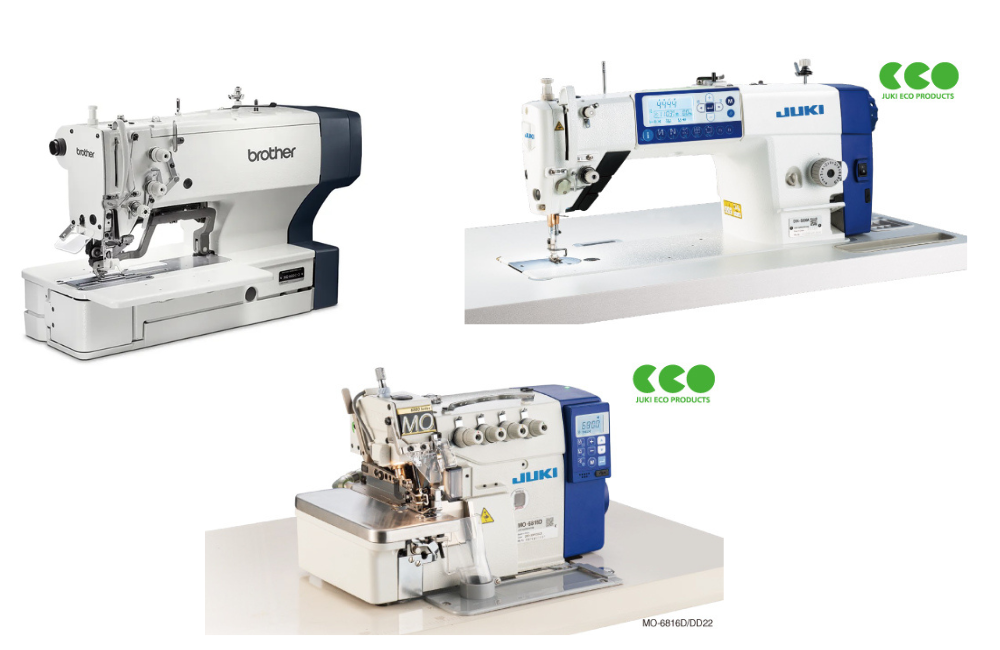
Best Industrial Sewing Machine for Denim
The best industrial sewing machine for denim depends on the operation you need to perform.
Jeans manufacturing involves many different sewing operations, and different machines may be optimized for different jobs.
Common industrial machine categories include:
| Machine type | Common denim application |
|---|---|
| Single-needle lockstitch | General construction |
| Double-needle lockstitch | Parallel decorative seams |
| Chainstitch machine | Specific garment construction |
| Overlock machine | Seam finishing |
| Bartack machine | Belt loops and reinforcement |
| Buttonhole machine | Buttonholes |
| Button attaching machine | Button attachment |
| Specialized jeans machines | Specific jeans operations |
Therefore, a factory may use several different machines for jeans rather than one universal machine.
Sewing Machine to Sew Jeans: What Should You Choose?
If you are specifically searching for a sewing machine to sew jeans, first determine how you will use it.
For occasional home repairs
Choose a capable domestic machine.
For frequent jeans alterations
Choose a heavy-duty domestic or commercial machine capable of handling multiple denim layers.
For a tailoring shop
Consider an industrial lockstitch machine along with specialized equipment for common alteration operations.
For jeans manufacturing
Use industrial machines selected for individual production operations.
This approach is much more efficient than trying to find one jeans machine sewing machine that performs every operation.
Sewing Machine for Hemming Jeans
Hemming jeans is one of the most common denim sewing tasks.
If you are looking for the best sewing machine for hemming jeans, pay special attention to how the machine handles the thick folded hem.
The original hem of jeans can contain several layers of denim. This creates a bulky section that can cause a weak machine to slow down or skip stitches.
A good sewing machine for hemming jeans should have:
- Strong needle penetration
- Good fabric feeding
- Adequate presser-foot clearance
- Adjustable stitch length
- Suitable denim needle
- Ability to handle multiple layers
For occasional alterations, a strong domestic machine may be sufficient. Professional alteration shops may benefit from industrial equipment.
Sewing Machine for Jeans Alteration
A sewing machine for jeans alteration should be versatile because alteration work involves many different operations.
You may need to perform:
- Waist reduction
- Waist expansion
- Inseam shortening
- Original-hem preservation
- Pocket adjustments
- Side-seam alterations
- Belt-loop adjustments
- Repairs
- Tear reinforcement
For this type of work, a machine with adjustable stitch length, good control, and reliable performance through thick seams is valuable.
How to Sew Denim on a Sewing Machine
Once you have the right sewing machine to sew denim, follow these basic steps.
Step 1: Choose the Correct Needle
Select a needle designed for denim or heavyweight woven fabrics.
The heavier the denim, the more important correct needle selection becomes.
Step 2: Choose Suitable Thread
Use a thread appropriate for the fabric weight and the desired appearance.
For topstitching jeans, thicker decorative thread is commonly used.
Step 3: Test on Scrap Denim
Before sewing the actual garment, test your machine on a piece of the same denim.
Test:
- Stitch length
- Thread tension
- Needle size
- Presser-foot pressure
- Stitch appearance
Step 4: Sew Slowly Through Thick Areas
Do not force the fabric through the machine.
Allow the feed system to move the fabric while maintaining steady control.
Step 5: Handle Bulky Seams Carefully
When approaching a thick seam intersection, a hump jumper or similar sewing aid can help keep the presser foot level.
This can improve stitch consistency and reduce needle deflection.
What Stitch Length Should You Use for Jeans?
The appropriate stitch length depends on the construction and desired appearance.
For many jeans construction and topstitching applications, a longer stitch is preferred compared with lightweight garment sewing.
A longer stitch can provide a clean, professional appearance while reducing excessive perforation of the fabric.
Always test the stitch length on scrap fabric before production.
What Thread Is Best for Denim?
The thread should match the fabric, machine, and sewing operation.
For standard construction seams, strong all-purpose or garment-suitable thread may be appropriate.
For traditional jeans topstitching, heavier thread is often used to create the characteristic visible stitching.
Remember that very thick thread also requires the correct needle, tension settings, and machine capability.
Common Problems When Sewing Denim
Even with a sewing machine good for jeans, problems can occur if the setup is incorrect.
Broken Needles
Possible causes include:
- Incorrect needle size
- Bent needle
- Excessive fabric thickness
- Incorrect needle installation
- Sewing too fast
Skipped Stitches
Possible causes include:
- Wrong needle
- Dull needle
- Poor fabric feeding
- Incorrect machine setup
Thread Breaking
Possible causes include:
- Incorrect tension
- Wrong needle/thread combination
- Poor-quality thread
- Excessive friction
Uneven Stitches
Possible causes include:
- Poor feeding
- Incorrect presser-foot pressure
- Pulling the fabric
- Incorrect stitch settings
Sewing Machine for Denim vs Regular Sewing Machine
The main difference is the machine’s ability to handle fabric thickness and sewing stress.
| Feature | Regular sewing machine | Denim-capable machine |
|---|---|---|
| Lightweight fabric | Excellent | Excellent |
| Light denim | Usually suitable | Excellent |
| Medium denim | Depends on machine | Generally suitable |
| Heavy denim | Often difficult | Better suited |
| Multiple layers | Limited | Better capability |
| Thick seams | Can struggle | Designed to handle greater bulk |
| High-volume production | Not ideal | Industrial machines preferred |
The important point is that a sewing machine for denim should be selected according to the actual denim weight and number of layers—not simply the word “denim” in the product description.
How to Choose the Best Sewing Machine for Sewing Denim
Before buying the best sewing machine for sewing denim, ask yourself these questions:
How thick is the denim?
Lightweight denim requires much less machine power than heavyweight jeans denim.
How many layers will you sew?
A machine that handles two layers may struggle with six or eight layers.
Are you sewing occasionally or every day?
Occasional home sewing and commercial production require very different machines.
What operations will you perform?
General construction, hemming, topstitching, bartacking, and seam finishing may require different machine types.
Is servicing available?
For professional use, local technical support and spare-parts availability are extremely important.
Is a Sewing Machine That Can Sew Denim Worth Buying?
If denim is a regular part of your sewing work, investing in a machine that can reliably handle denim is worthwhile.
A sewing machine that can sew denim gives you more flexibility for projects such as:
- Jeans
- Denim skirts
- Jackets
- Shirts
- Bags
- Shorts
- Workwear
- Repairs
- Alterations
However, you don’t necessarily need an industrial machine for every denim project.
The best choice depends on your workload and the thickness of your fabric.
Tips for Better Denim Sewing
Follow these practical tips to get cleaner results from your sewing denim machine:
- Use the correct denim needle.
- Replace dull or bent needles.
- Test settings before starting the garment.
- Use suitable thread.
- Increase stitch length when appropriate.
- Sew slowly over bulky areas.
- Never force the fabric.
- Use a leveling tool for thick seams.
- Keep the machine clean and properly lubricated according to the manufacturer’s instructions.
- Maintain the machine regularly.
Denim Stitching Machine for Home vs Industrial Use
The right denim stitching machine depends largely on production volume.
| Requirement | Home machine | Heavy-duty home machine | Industrial machine |
|---|---|---|---|
| Occasional jeans repair | ✓ | ✓ | Usually unnecessary |
| Jeans hemming | ✓ | ✓ | ✓ |
| Denim alterations | ✓ | ✓ | ✓ |
| Denim garments | Limited | ✓ | ✓ |
| Heavy denim | Limited | Better | ✓ |
| Continuous production | ✕ | Limited | ✓ |
| Factory production | ✕ | ✕ | ✓ |
For most home users, purchasing an industrial machine may be unnecessary. For professional production, however, an industrial setup can provide better speed, consistency, durability, and productivity.
Frequently Asked Questions About Denim Stitching Machines
What is the best sewing machine for jeans?
The best sewing machine for jeans depends on the denim weight and how frequently you sew. For home users, a capable heavy-duty domestic machine can work well. For professional production, an industrial machine designed for the required operation is usually better.
Can a normal sewing machine sew denim?
Yes, some normal sewing machines can sew lightweight or medium-weight denim. However, thick denim and multiple layers can be difficult for machines that are not designed to handle heavy fabrics.
What is the best sewing machine for denim fabric?
The best machine depends on your application. A heavy-duty domestic machine is suitable for many home projects, while industrial machines are preferable for regular commercial denim production.
What sewing machine is good for jeans alteration?
A strong domestic or industrial lockstitch machine can be suitable for many jeans alteration jobs. The choice depends on the type and volume of alterations.
What is the best sewing machine for hemming jeans?
A machine with strong needle penetration, good fabric feeding, sufficient presser-foot clearance, and the ability to sew through multiple layers is a good choice for hemming jeans.
Can a sewing machine sew thick denim?
Yes, but the machine must be capable of handling the fabric thickness. Using the correct needle, thread, stitch settings, and sewing speed is also important.
Is a heavy-duty sewing machine good for denim?
Yes. A good heavy-duty machine can be useful for home sewing projects involving denim, particularly medium-weight denim and multiple layers.
Do I need an industrial sewing machine for jeans?
Not necessarily. If you occasionally repair or alter jeans, a suitable domestic or heavy-duty machine may be enough. Industrial equipment becomes more useful for professional and high-volume production.
Final Thoughts
Choosing the right denim stitching machine is about more than finding a machine with a powerful motor. You need to consider denim weight, number of layers, sewing operation, production volume, needle and thread requirements, and machine durability.
For occasional home projects, a reliable heavy-duty domestic machine may be the most practical solution. For tailoring and alteration businesses, a commercial or industrial machine can provide better performance. For jeans manufacturing, specialized industrial machines are generally the right choice.
Whether you need a sewing machine for jeans, a sewing machine to sew denim, or the best industrial sewing machine for denim, always match the machine to the actual sewing operation rather than choosing based on marketing claims alone.
Ready for Production?
Get a professional tech pack for your fashion design.
Table of Contents