
Sewing Machine for Jeans: Complete Guide to Sewing Denim
Finding the right sewing machine for jeans is important because denim is much thicker and more demanding than ordinary clothing fabrics. A regular household sewing machine may handle lightweight denim, but thick jeans seams can put significant stress on the needle, thread, presser foot, motor, and feeding system.
Whether you are making jeans at home, developing denim samples, or producing jeans commercially, choosing the right machine can make sewing faster, cleaner, and more reliable.
In this guide, we explain what to look for in a sewing machine for denim, the different types of machines used for jeans, and how to choose the right machine for your needs.
What Is a Sewing Machine for Jeans?
A sewing machine for jeans is a machine capable of sewing denim and other heavy fabrics without struggling with multiple layers or thick seams.
Jeans commonly use medium- to heavyweight denim. Areas such as the waistband, belt loops, pockets, yoke, inseam, and flat-felled seams can contain several layers of fabric.
For this reason, a suitable denim sewing machine needs enough needle penetration, feeding power, and presser-foot clearance to move through these thick areas consistently.
There are two main categories:
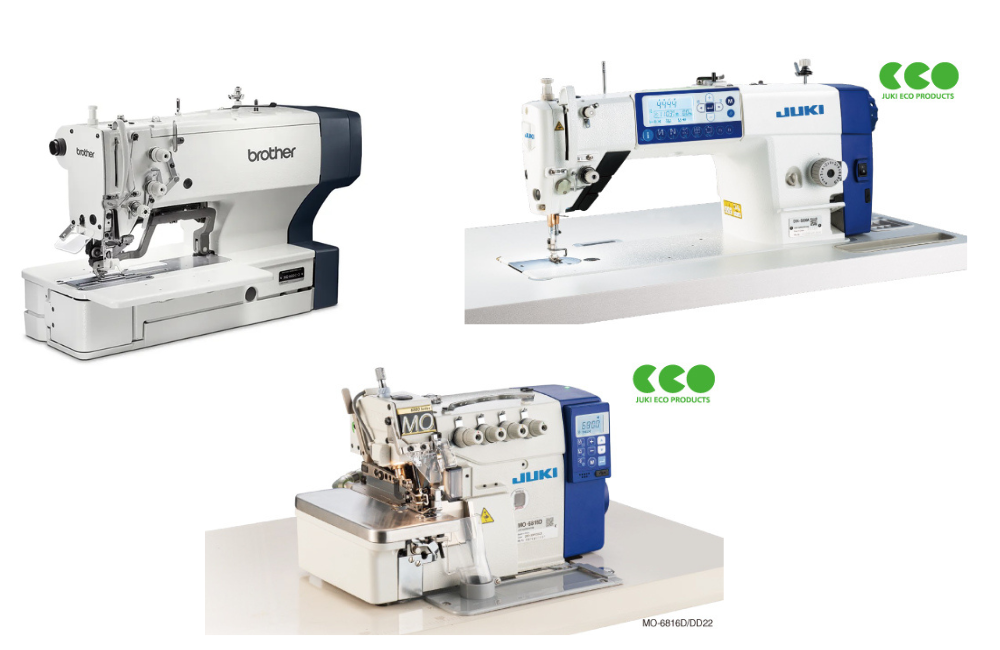
- Domestic or heavy-duty sewing machines – suitable for home sewing, alterations, prototypes, and small-scale production.
- Industrial sewing machines – designed for continuous professional production and heavier workloads.
Can a Regular Sewing Machine Sew Jeans?
Yes, a regular sewing machine can sew denim, but its ability depends on the fabric weight and the number of layers.
Lightweight or medium-weight denim can often be sewn using a good-quality household machine with the correct needle, thread, presser foot, and settings.
However, thick jeans seams can be difficult for a basic machine. The machine may skip stitches, break needles, struggle to feed the fabric, or produce inconsistent stitches.
If you regularly work with heavy denim, a heavy duty sewing machine for jeans is usually a better choice.
What Is the Best Sewing Machine for Jeans?
The best sewing machine for jeans depends on how you plan to use it.
For occasional home sewing, a strong heavy-duty domestic machine can be sufficient. For professional jeans manufacturing, an industrial sewing machine for jeans is generally the better option.
When selecting a machine, consider:
- Motor power
- Needle penetration
- Maximum sewing speed
- Presser-foot lift
- Feed mechanism
- Stitch quality
- Thread compatibility
- Ability to sew multiple denim layers
- Availability of spare parts
- Ease of maintenance
- Production volume
The important point is that more powerful does not always mean better. The machine should match the specific sewing operation.
Best Types of Sewing Machines for Jeans
Different parts of a pair of jeans may require different sewing machines. In professional jeans manufacturing, factories often use specialized machines for individual operations rather than one machine for everything.
1. Heavy-Duty Lockstitch Sewing Machine
A heavy-duty lockstitch machine is one of the most useful machines for sewing denim.
It creates a strong straight stitch and can be used for many basic jeans construction operations.
Typical applications include:
- Joining panels
- Side seams
- Inseams
- Pocket construction
- Waistband operations
- General denim assembly
For small businesses and sampling, this type of machine can be a practical choice.
2. Industrial Lockstitch Sewing Machine
An industrial lockstitch machine is designed for continuous production.
Compared with many domestic machines, industrial machines generally provide better durability, speed, feeding performance, and consistency.
They are commonly used in professional garment factories for operations requiring strong, consistent seams.
3. Walking Foot Sewing Machine
A walking foot machine can be useful when sewing thick or multiple layers of denim.
The walking foot helps move the upper layers of fabric while the feed dogs move the lower layers.
This can reduce problems such as:
- Fabric shifting
- Uneven feeding
- Layer movement
- Uneven stitching
A walking foot machine can be particularly useful for heavy materials and bulky sewing projects.
4. Chainstitch Machine
Chainstitch machines are widely used in garment manufacturing and can be suitable for certain jeans operations.
They are especially useful where a flexible seam or specific industrial construction method is required.
However, a chainstitch machine is not necessarily the best single machine for every jeans operation.
5. Overlock Machine
An overlock machine, also called a serger, is used to finish raw fabric edges.
It can help prevent denim edges from fraying and can provide a clean internal finish.
However, an overlock machine should not be considered a replacement for a lockstitch machine when constructing the main structural seams of jeans.
6. Bartack Machine
A bartack machine is a specialized industrial machine used to reinforce areas that experience high stress.
Common applications in jeans include:
- Belt loops
- Pocket openings
- Fly areas
- Other stress points
Bartacking is particularly important for commercial jeans because these areas need additional reinforcement.
7. Chainstitch Hemming Machine
Specialized hemming machines can be used for jeans hems in industrial production.
These machines are designed to produce consistent hems at high production speeds.
For a jeans factory, using specialized machines for specific operations can significantly improve production efficiency.
What Features Should a Sewing Machine for Denim Have?
Before purchasing a sewing machine for thick denim, look at more than the machine’s advertised power.
Strong Motor
A strong motor helps the machine maintain consistent sewing performance when passing through multiple layers.
For professional production, motor and machine configuration should be selected according to the specific operation and fabric thickness.
High Presser-Foot Lift
Thick denim assemblies can become bulky.
A suitable presser-foot system should provide enough clearance to accommodate multiple layers without compressing the material excessively.
Strong Feed Mechanism
The feed mechanism is extremely important when sewing jeans.
A good feeding system helps move multiple layers of denim evenly through the machine.
Correct Needle System
Needle selection matters enormously when sewing denim.
Using a needle that is too small can result in:
- Needle breakage
- Skipped stitches
- Poor penetration
- Damaged fabric
For heavy denim, a suitable jeans or denim needle with an appropriate size should be selected according to the fabric weight and thread.
Suitable Thread
Jeans often use heavier decorative thread for topstitching.
The machine must be compatible with the thread size required for the particular operation.
Heavy thread may require adjustments to:
- Needle size
- Thread tension
- Stitch length
- Presser-foot pressure
Adjustable Stitch Length
Longer stitch lengths are commonly used for certain denim construction and topstitching operations.
Having adjustable stitch length gives you more control over the appearance and strength of the seam.
What Needle Should You Use for Jeans?
Using the correct needle is one of the easiest ways to improve denim sewing performance.
For denim, you should generally use a jeans/denim needle designed to penetrate tightly woven, heavy fabric.
The correct needle size depends on the denim weight and thread being used.
As a general guide:
| Denim Weight | Typical Needle Range |
|---|---|
| Lightweight denim | 90/14–100/16 |
| Medium denim | 100/16–110/18 |
| Heavy denim | 110/18–120/19 |
These are starting points rather than universal rules. Always test the combination of fabric, needle, and thread before production.
What Thread Is Best for Sewing Jeans?
The thread should match both the fabric and the sewing operation.
For jeans construction, strong polyester thread is commonly used. Decorative topstitching may use a heavier thread to create the classic denim appearance.
When choosing thread, consider:
- Thread thickness
- Seam strength
- Color
- Abrasion resistance
- Machine compatibility
For professional jeans production, thread selection should be included in the garment’s technical specifications and sewing requirements.
How Many Layers of Denim Can a Sewing Machine Sew?
There is no single number that applies to every sewing machine.
The number of layers depends on:
- Denim weight
- Fabric construction
- Machine type
- Needle size
- Thread size
- Presser-foot system
- Feed mechanism
- Sewing speed
- Seam configuration
For example, sewing two flat layers of medium denim is very different from sewing through a waistband, belt loop, pocket and several folded seam allowances.
This is why testing the thickest point of the garment is more useful than simply asking how many layers a machine can sew.
How to Sew Jeans With a Sewing Machine
If you are sewing jeans at home or making a prototype, follow these basic steps.
Step 1: Choose the right denim
Start by identifying the denim weight and construction.
Lightweight denim is considerably easier to sew than heavyweight rigid denim.
Step 2: Install a denim needle
Use an appropriate jeans/denim needle and select the size based on your fabric and thread.
Step 3: Select the correct thread
Choose a strong thread suitable for denim construction.
Step 4: Adjust stitch length
Test different stitch lengths on a scrap piece before sewing the garment.
Step 5: Test the thickest seam
Do not test only on a single layer of denim.
Create a sample that replicates the thickest part of the actual jeans.
Step 6: Sew slowly through bulky areas
When approaching thick seams, reduce the sewing speed if necessary.
A slower speed gives you greater control and can reduce needle breakage and skipped stitches.
Step 7: Check the seam
After sewing, inspect:
- Stitch formation
- Seam strength
- Thread tension
- Fabric damage
- Skipped stitches
- Seam appearance
Sewing Machine for Jeans vs Regular Sewing Machine
| Feature | Regular Sewing Machine | Heavy-Duty/Industrial Machine |
|---|---|---|
| Lightweight fabric | Excellent | Excellent |
| Medium denim | Usually suitable | Excellent |
| Heavy denim | Limited | Better suited |
| Multiple layers | Limited | Better |
| Continuous production | Not ideal | Designed for it |
| High-speed sewing | Limited | Excellent |
| Professional jeans manufacturing | Not suitable for most operations | Suitable |
| Specialized jeans operations | Limited | Wide range available |
The right choice depends on whether you are sewing jeans occasionally or producing them commercially.
Best Sewing Machine for Jeans Manufacturing
For commercial jeans manufacturing, there is rarely one machine that performs every operation.
A professional jeans production line may include machines for:
- Front pocket sewing
- Back pocket attachment
- Fly construction
- Side seam sewing
- Inseam sewing
- Waistband attachment
- Belt loop attachment
- Bartacking
- Hemming
- Topstitching
This specialized approach improves sewing quality, production speed, consistency, and operator efficiency.
For a new jeans brand, the machine requirements should ideally be determined from the garment’s construction details before production begins.
How to Choose a Sewing Machine for Jeans
Before buying a sewing machine for jeans, answer these questions:
Are you sewing at home?
If you are making occasional alterations or personal jeans, a good heavy-duty domestic machine may be enough.
Are you making samples?
If you are developing jeans for a fashion brand, prioritize stitch quality, fabric handling, and the ability to reproduce the intended construction accurately.
Are you producing jeans commercially?
For commercial production, industrial machines are generally the better choice because they are designed for repetitive, high-volume sewing.
What type of denim are you using?
A machine suitable for lightweight stretch denim may not be suitable for heavyweight rigid denim.
What sewing operations do you need?
A machine for joining seams is different from a machine designed for bartacking, hemming, or decorative topstitching.
Common Problems When Sewing Denim
Even with a suitable sewing machine for denim, problems can occur.
Skipped Stitches
Possible causes include:
- Incorrect needle
- Damaged needle
- Incorrect needle size
- Improper thread tension
- Difficult seam construction
Broken Needles
Needles may break when sewing through thick seams or when the wrong needle is used.
Always keep your hands away from the needle area and use appropriate machine safety practices.
Uneven Stitching
Uneven stitches may result from poor fabric feeding, incorrect presser-foot pressure, unsuitable thread tension, or trying to sew too quickly through bulky sections.
Thread Breaking
Thread breaking can be caused by excessive tension, an unsuitable needle, incorrect threading, poor-quality thread, or excessive friction.
Do You Need an Industrial Sewing Machine for Jeans?
Not always.
If you are making a few pairs of jeans for personal use, a capable heavy-duty household machine may be enough.
But if you are producing jeans professionally, an industrial sewing machine for jeans is usually a better investment.
Industrial machines are designed for:
- High production volumes
- Consistent stitch quality
- Long operating hours
- Heavy materials
- Specialized sewing operations
- Faster production
For a commercial fashion brand, machine selection should be based on the actual garment construction rather than simply choosing the most powerful machine available.
Frequently Asked Questions
What is the best sewing machine for jeans?
The best sewing machine for jeans depends on denim weight, number of layers, sewing operation, and production volume. A heavy-duty domestic machine can work for occasional sewing, while industrial machines are better for professional jeans production.
Can a normal sewing machine sew denim?
Yes. Many household machines can sew lightweight and medium-weight denim. However, thick seams and multiple layers can require a heavy-duty or industrial machine.
What is the best sewing machine for thick denim?
A heavy-duty or industrial sewing machine with strong fabric feeding, suitable needle penetration, sufficient presser-foot clearance, and compatibility with heavier thread is generally better for thick denim.
What needle should I use to sew jeans?
Use a jeans or denim needle appropriate for the fabric weight and thread. Medium and heavyweight denim generally require larger needle sizes than lightweight fabrics.
Can a sewing machine sew through multiple layers of jeans?
Yes, but the maximum practical number of layers varies by machine and fabric. Thick seam intersections are much more challenging than flat layers.
Is an industrial sewing machine better for making jeans?
For professional jeans manufacturing, yes. Industrial machines provide the durability, speed, consistency, and specialized capabilities needed for production.
Final Thoughts
Choosing the right sewing machine for jeans depends on what you are making and how much you plan to produce.
For occasional home sewing, a good heavy-duty household machine may be enough. For fashion brands, sample rooms, and factories, industrial machines provide greater consistency and production capability.
Remember that the machine is only one part of successful denim sewing. Needle selection, thread, stitch length, feeding, seam construction, and fabric weight all affect the final result.
If you are developing jeans for a clothing brand, the sewing requirements should be clearly documented in the garment’s tech pack so the manufacturer understands the required construction, stitch type, seam details, thread, and finishing specifications.
Ready for Production?
Get a professional tech pack for your fashion design.
Table of Contents

Pingback: Industrial Sewing Machine: Complete Guide To Buying