Where to Buy Professional Tech Packs for Your Clothing Line (The Complete Guide for 2026)
You had the vision. You sketched the design. You knew exactly what you wanted to create.
Then you called a factory — and they asked for a tech pack.
Suddenly, you were staring at a blank screen, typing “what is a tech pack” into Google at 11 PM, wondering if you were already behind. Sound familiar? You’re not alone. Every single clothing brand founder goes through this moment. The good news? You’re in exactly the right place.
This guide will walk you through everything you need to know about where to buy professional tech packs for your clothing line — what to look for, what to avoid, how much to spend, and why getting this one document right can be the difference between a production success and an expensive disaster.
What Is a Tech Pack, and Why Does It Matter So Much?
Let’s start simple.
A tech pack (short for technical package) is the master document you send to a factory when you want them to manufacture your garment. Think of it as the blueprint an architect sends to a construction crew. Without it, your manufacturer is just guessing — and guessing in fashion production is very, very costly.
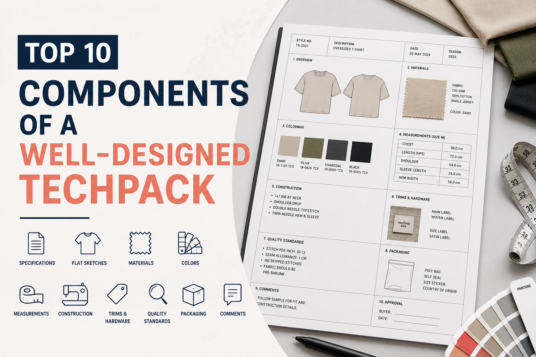
A complete tech pack includes:
- Technical flat sketches — front, back, and side views of the garment
- Measurement specifications — exact dimensions for every size you’re producing
- Bill of Materials (BOM) — every fabric, thread, zipper, button, and label needed
- Construction notes — how seams are sewn, how pockets are placed, how collars are finished
- Colorways — exact Pantone codes or color references
- Label and packaging details — hang tags, care labels, poly bags
- Grading specs — how the measurements scale across your size range
Without a professional tech pack, factories either refuse to work with you, or they produce something that looks nothing like what you imagined — and charge you for the privilege.
The Real Cost of Skipping a Professional Tech Pack
Here’s a real-world scenario that plays out every day in this industry.
A founder in the US designs a premium streetwear hoodie. She finds a manufacturer in Bangladesh. She sends over a mood board, her Canva sketch, and a size chart she found on Pinterest. The factory produces 300 units.
When the shipment arrives, the drawstring pocket is on the wrong side, the ribbing is a different weight than expected, and the chest logo is three centimeters too high. She can’t sell them at full price. She loses $7,000.
This happens constantly — and almost every time, the root cause is the same: no professional tech pack.
A professional tech pack eliminates ambiguity. Every specification is locked down in writing. The factory has no excuse. You have legal documentation of exactly what was agreed.
6 Reliable Places to Buy Professional Tech Packs for Your Clothing Line
Now let’s get practical. Here’s where you can actually go to get a professional tech pack made.
1. Specialized Tech Pack Services (Best for Most Founders)
This is the most efficient route for the majority of clothing brand founders — especially those launching their first or second collection.
Specialized tech pack services are agencies or freelance studios that do only this work. They live and breathe garment specifications. They know factory requirements, they understand grading, and they speak the same language your manufacturer does.
TechPackGenius.com is built exactly for this purpose — helping clothing brand founders, ecommerce owners, and startup designers get factory-ready tech packs done professionally, affordably, and fast. You provide your sketches, reference images, and measurements. The team handles the rest — flats, BOMs, grading, construction notes, everything.
Why this route works:
- You get a team that understands global factory standards (Bangladesh, China, Portugal, Turkey, India)
- Turnaround is faster than hiring in-house staff
- Pricing is per-style, so you only pay for what you need
- No learning curve — just submit and receive
Best for: Startup brands, ecommerce founders, DTC labels, POD creators scaling into private label
2. Freelance Tech Pack Designers on Platforms Like Upwork and Fiverr
Freelancing platforms are a popular choice — especially for founders who are watching their budget carefully. Platforms like Upwork, Fiverr, and Toptal host hundreds of freelance fashion designers who offer tech pack creation services.
What to look for when hiring a freelancer:
- Portfolio of actual tech packs (not just fashion illustrations)
- Experience with garment construction, not just graphic design
- Knowledge of your specific category (knitwear, wovens, activewear, denim — each has different requirements)
- Reviews from real clothing brands or production teams
The honest trade-off:
Quality varies widely. A $40 Fiverr tech pack and a $400 Fiverr tech pack are rarely the same thing. Many beginners on these platforms create visually attractive documents that factories reject because the construction details are incomplete or technically inaccurate.
If you go this route, do your homework. Ask to see actual factory feedback on previous work. Ask if they understand grading. Ask if they’ve worked with manufacturers in your target country.
Best for: Founders with tight budgets who are willing to vet carefully and potentially iterate
3. Fashion Design Schools and Graduate Designers
This is an underused option that can yield excellent results.
Many fashion graduates — fresh out of schools like Parsons, LCF (London College of Fashion), NIFT (India), ESMOD (Paris), or fashion programs across Southeast Asia — are building their freelance portfolios. They have strong technical training and are highly motivated to deliver quality work.
Connecting with recent graduates through school alumni portals, LinkedIn, or even Instagram can get you access to technically trained talent at reasonable rates.
The upside: You’re working with someone who was formally taught pattern-making, construction, and garment specs. They understand the why behind every measurement.
The downside: They may lack real-world production experience. A spec that looks correct on paper might still miss factory-specific nuances — things that only come from years of working directly with manufacturers.
Best for: Simple styles with straightforward construction, early-stage prototypes
4. Full-Service Fashion Consultancies
If you’re scaling a larger collection — say, 20+ styles per season — or working at a mid-market or premium price point, a full-service fashion consultancy may be the right move.
These are firms that offer end-to-end product development services: design direction, trend research, tech pack creation, factory sourcing, sampling coordination, and quality control. They often have dedicated technical designers and production managers on staff.
Examples of the type of firm to look for: boutique product development studios in New York, London, or Melbourne that serve emerging-to-mid-size brands.
What you get:
- A full team — not just a single freelancer
- Institutional knowledge of factory networks worldwide
- Ability to handle complexity (multiple fabric compositions, complex construction, global compliance requirements)
What it costs:
This is the premium option. Expect monthly retainers, per-style project fees, or both. Pricing for full consultancies typically runs significantly higher than specialized tech pack services — but for the right brand at the right stage, the ROI is worth it.
Best for: Established brands preparing for wholesale, brands with complex construction needs, founders who want a full production partner
5. Your Manufacturer’s In-House Team (with Major Caveats)
Some factories — particularly larger ones in China, Bangladesh, and Vietnam — offer tech pack creation or “spec development” as a paid add-on service.
On the surface, this sounds convenient. One stop — the factory creates the pack and manufactures the garment.
The serious caveat: When your manufacturer creates your tech pack, you lose a critical layer of protection. Their tech pack is designed to suit their production process, not necessarily to reflect your original vision accurately. You also have no independent documentation to compare against what arrives in your shipment.
This approach can work fine for very simple basics — plain t-shirts, standard sweatshirts — where there’s minimal room for interpretation. But for anything with unique design details, custom construction, or brand-specific proportions, relying on your factory to self-document your specs is a risky shortcut.
Best for: Only very simple basics, when working with a long-term trusted factory partner
6. Software-Assisted DIY (for the Technically Minded)
For founders who have some design background and want to maintain full creative control over their documentation, there are software tools that make tech pack creation more accessible.
Popular platforms include:
- Adobe Illustrator — the industry standard for creating flat sketches and spec sheets
- Techpacker — a dedicated web-based platform built specifically for tech pack creation
- FastReact — used more at scale, but powerful
- Canvass and similar newer tools built for fashion startups
What this takes:
Creating a professional tech pack yourself requires more than just design software. You need to understand garment construction, grading rules, factory communication standards, and BOM formatting. If you don’t have that background, software alone won’t get you there.
That said, if you do have a technical design background and want to own the full process, learning these tools can be a long-term investment that gives you independence.
Best for: Fashion graduates, experienced designers transitioning to brand ownership, or technically-minded founders willing to invest significant learning time
What Makes a Tech Pack “Professional”? The 7 Things to Check
Not all tech packs are equal. Whether you’re buying from a service, a freelancer, or a consultancy, here’s how to evaluate quality before you send anything to a factory.
1. Factory-readable flat sketches The illustrations must be clean, precise technical flats — not artistic illustrations. Every design detail must be visible and labeled.
2. Complete measurement specifications Every finished garment measurement (FGM) must be listed for every size, with clear tolerance notes.
3. Accurate Bill of Materials Every component — fabric, lining, interlining, trims, hardware, labels — must be listed with supplier codes or Pantone references where applicable.
4. Construction details Seam types, stitch types (e.g., flatlock, coverstitch, lockstitch), finishing methods, and placement measurements must all be specified.
5. Clear colorway documentation Pantone numbers or physical swatch references. “Navy blue” means 50 different things to a factory in Guangzhou.
6. Grading specs How each measurement changes across your size range (XS through 3XL, for example) must be graded correctly to maintain proportional fit.
7. Care and compliance labels Required fiber content, care instructions, and country-of-origin labeling — especially critical for brands selling in the US, EU, or UK where legal requirements apply.
How Much Does a Professional Tech Pack Cost?
This is the question everyone wants answered — and the honest answer is: it depends on complexity, quantity, and where you buy.
Here’s a general breakdown for the US market:
| Style Type | Budget Range (per style) | What to Expect |
|---|---|---|
| Basic tee / simple top | $150 – $300 | Clean flats, basic BOM, size spec |
| Mid-complexity (hoodie, chino) | $300 – $600 | Full construction notes, grading, trims |
| Complex (outerwear, tailoring) | $600 – $1,200 | Multi-component BOM, detailed construction, compliance |
| Rush / premium service | Add 25–50% | Faster turnaround, priority support |
Avoid the extremes. A $25 tech pack will likely be unusable. A $2,000 tech pack from a consultancy may include services you don’t need yet. For most startup founders, the $200–$600 range from a reputable specialized service covers the vast majority of styles well.
Red Flags to Watch Out For When Buying a Tech Pack Service
Here are warning signs that should make you pause before handing over your money or your designs:
- No portfolio or only shows illustrations, not actual tech packs. Fashion illustrations and technical flat sketches are completely different things.
- Promises a tech pack in 24 hours for any style. A complete, accurate tech pack for a complex style cannot be done properly in a few hours. Rush is fine; impossibly fast is a red flag.
- Can’t explain what’s included. A professional service can clearly list every deliverable — flats, BOM, size chart, grading, construction notes. Vague answers mean vague output.
- No revision policy. Tech packs almost always need at least one revision after factory review. A service with zero revision included is charging you twice for one product.
- No experience with your garment category. A designer who specializes in womenswear may not understand the construction requirements for technical outerwear or structured tailoring. Match expertise to your product.
How to Prepare Before You Buy a Tech Pack
You’ll get a better result — and save time and money — if you come prepared. Here’s what to have ready:
Your design reference:
- Sketches (hand-drawn is fine), CAD files, reference images, or a physical sample
- Notes on what you want changed or emphasized vs. the reference
Size range and target fit:
- What sizes are you producing? (S-XL? 00–14? EU 36–46?)
- Is this fitted, relaxed, or oversized? Do you have a fit model size?
Fabric information:
- What fabric are you planning to use? Weight, composition, construction (woven, knit, etc.)
- Do you have a fabric swatch or supplier reference?
Trim and hardware details:
- Are there specific zippers, buttons, buckles, or other hardware?
- Any brand labels, hang tags, or care label requirements?
Target market and compliance:
- Where will this be sold? (US, EU, UK, Australia each have different labeling laws)
- Are there specific certifications needed? (GOTS organic, OEKO-TEX, etc.)
The more information you bring, the faster and more accurate your tech pack will be.
A Quick Word About Global Market Differences
If you’re manufacturing in one country and selling in another, be aware that factories in different regions have different standards and preferences.
China: Factories in Guangdong and Zhejiang are experienced with international tech pack formats. Most work fluently with Illustrator-based flat files and Excel BOM templates.
Bangladesh and India: Highly skilled in garment production but often prefer very detailed construction notes, as production may be managed across multiple lines or shifts. Ambiguity leads to variation.
Portugal and Turkey: Common choices for European premium brands. These factories often appreciate European size standards and may request metric measurements throughout.
Vietnam: Growing fast in outerwear and activewear. Tech packs for these factories should include especially clear fabric sourcing guidance, as local supplier access varies.
A specialized tech pack service with global production experience will know these nuances. They’ll format and phrase your specs in ways that factories in each region respond to well.
Conclusion: Your Tech Pack Is the Foundation of Your Brand
Every successful clothing line is built on a foundation of clear, professional documentation.
The factory doesn’t know your vision. They haven’t seen your mood board, they haven’t felt the fabric you touched at the trade show, and they haven’t met your customer. All they have is what you send them.
Your tech pack is your voice in that conversation.
Getting it right doesn’t have to be complicated or expensive. Whether you work with a specialized service like TechPackGenius.com, hire a vetted freelancer, or partner with a full consultancy — the important thing is to start with professionalism, not shortcuts.
Every great brand started somewhere. The ones that last started with the right documents.
Ready to get your tech pack created by people who live and breathe fashion production? Visit TechPackGenius.com and let’s build the foundation your brand deserves.
Frequently Asked Questions
Q1. Can I make a tech pack myself without a fashion design background?
You can try — tools like Techpacker or Adobe Illustrator make it more accessible. But without technical garment construction knowledge, there’s a high risk of missing factory-critical details. For most founders, it’s faster and cheaper to hire a professional than to learn from expensive production mistakes.
Q2. How long does it take to get a professional tech pack done?
For most styles, a reputable service delivers within 5–10 business days. Rush options are available from many providers for an additional fee. Very complex styles (multi-component outerwear, structured tailoring) may take longer.
Q3. Do I need a separate tech pack for every colorway?
Usually not. A single tech pack can document multiple colorways within the same file. What you will need is a separate tech pack for each distinct style — a hoodie and jogger set, for example, would be two separate tech packs.
Q4. What file format do factories prefer for tech packs?
Most factories work best with PDF files for the spec document (easy to open anywhere, no software needed) and sometimes request the Illustrator source files. A good tech pack service will deliver both.
Q5. Can I reuse my tech pack for different manufacturers?
Yes — and this is one of the major advantages of owning a professionally created tech pack. You’re not locked to one factory. If a manufacturer increases their MOQ or prices, your tech pack is portable. Take it to a new factory and production continues with zero rework.
Q6. Do I need a tech pack for print-on-demand (POD) products?
For standard POD platforms (Printful, Printify, etc.) that print on pre-made blanks, you typically don’t need a tech pack. But if you’re moving into private-label POD — custom-cut-and-sew garments with your own specs — a tech pack becomes essential.
Q7. What’s the difference between a tech pack and a specification sheet?
A spec sheet is often a simplified version of a tech pack — it may include only measurements and basic material notes. A full tech pack includes everything a factory needs to build the garment from scratch: construction methods, BOM, grading, label details, and more. For serious production, you want a full tech pack, not just a spec sheet.
Table of Contents