How Can I Get a Tech Pack for a One-Off Custom Design? Complete guide 2026
If you’re designing a single custom garment — a one-off sample, a personal project, or a small test order — you’ve probably asked yourself: do I actually need a tech pack for this?
The short answer: yes, you can get a tech pack for a one-off design, and in most cases you should. Tech packs aren’t just for factories running thousands of units. They’re a communication tool, and even a single piece benefits from clear, documented specs — especially if anyone other than you will touch the production process.
Below, we’ll break down what a tech pack actually does for a small or single-item order, when it’s worth the investment, when you can get away with a simplified version, and how much a one-off tech pack typically costs.
What Is a Tech Pack, Exactly?
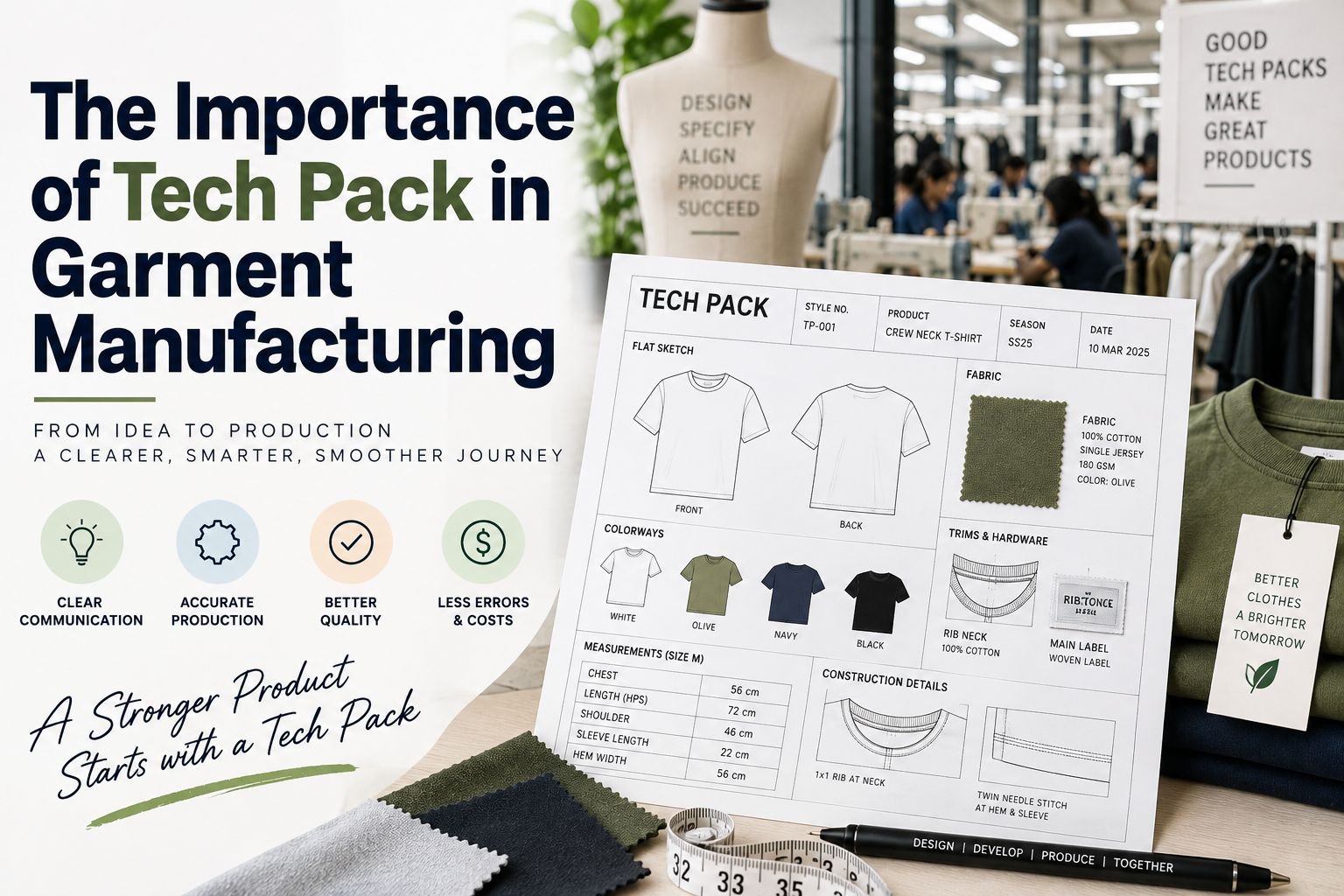
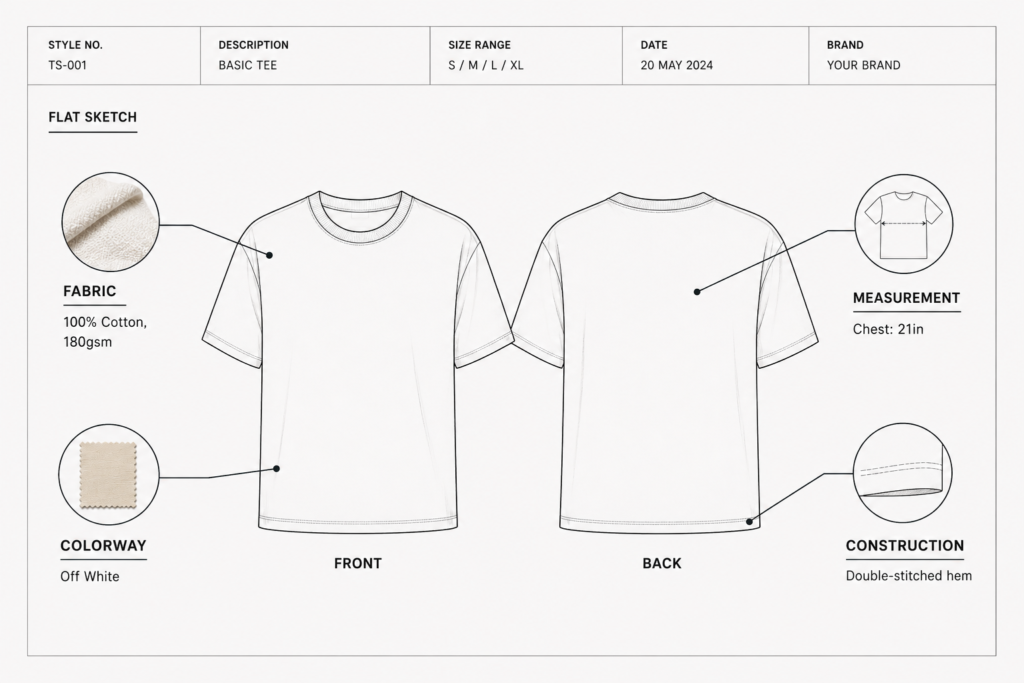
A tech pack (short for “technical package”) is a document that communicates every detail a manufacturer needs to build your product correctly the first time. A typical tech pack includes:
- Flat sketches or CADs of the front, back, and any special details
- Measurement specs (a “spec sheet” with a size grading table, even if it’s just one size)
- Fabric and trim details, including weight, composition, and suppliers
- Construction notes (seam types, stitching, hardware placement)
- Colorways and Pantone references
- Labeling and packaging instructions
- A bill of materials (BOM)
For bulk production, tech packs are non-negotiable — they’re what keeps hundreds or thousands of units consistent. For a single custom piece, the question isn’t whether the information matters, it’s whether you need it documented this formally.
Why a Tech Pack Still Matters for a Single Custom Item
1. You’re Handing the Work to Someone Else
If you’re sketching a design and sewing it yourself, you can keep the details in your head. But the moment you send a design to a pattern maker, a sample sewist, a local tailor, or an overseas factory for a single sample, you need a shared reference point. A tech pack removes ambiguity and prevents costly back-and-forth revisions.
2. Samples Are Expensive to Redo
A first sample often costs more per piece than a full production run because there’s no economy of scale. If a manufacturer misreads your intent — wrong seam allowance, wrong closure, wrong proportions — you’re paying to redo the sample from scratch. A tech pack, even a simplified one, dramatically reduces the risk of a failed first sample.
3. It Protects Your Design IP
A documented tech pack timestamps your design details and ownership. If you ever move from a one-off custom piece into small-batch or full production later, having a tech pack from day one means you’re not reconstructing specs from memory.
4. It Speeds Up Quoting
Vendors and freelance pattern makers quote faster and more accurately when they can see specs instead of guessing from a rough sketch or reference photo. This alone can save days of email threads.
When You Can Skip a Tech Pack
Not every one-off project needs a 20-page technical document. You can likely simplify or skip a full tech pack if:
- You’re sewing the piece yourself, with no outside vendor involved
- It’s a rough concept sketch you’re testing before committing to real specs
- You’re working with a collaborator who already knows your process intimately (a longtime tailor, for example)
- The design is extremely simple with no unusual construction details
In these cases, a mini spec sheet — one page with a flat sketch, key measurements, fabric choice, and a couple of construction notes — is often enough. This is different from a full tech pack, but it captures the essentials without the overhead.
How Much Does a One-Off Tech Pack Cost?
Pricing for a single-item tech pack is typically lower than a full multi-size, multi-colorway package, since there’s less grading and fewer variations to document. Costs generally depend on:
- Garment complexity (a basic t-shirt vs. a structured jacket with hardware)
- Number of views needed (front/back only vs. detail call-outs)
- Whether measurements need to be taken from an existing sample or built from scratch
- Turnaround time
Many designers use a streamlined, single-size tech pack for one-off pieces rather than paying for full grading across a size run — since grading only matters once you’re producing multiple sizes.
Tech Pack for a One-Off vs. Small Batch: What Changes?
| One-Off / Single Sample | Small Batch (10–100 units) | |
|---|---|---|
| Sizing | Usually one size only | May need 2–4 sizes graded |
| Colorways | Typically one | Often 2–3 |
| Grading | Not required | Required |
| Detail depth | Moderate | High (consistency across units matters more) |
| Cost | Lower | Moderate |
If there’s a chance your one-off design could become a small production run later, it’s worth building the tech pack with that future in mind — adding a grading table and extra colorways later is far easier than starting from scratch.
How to Get a Tech Pack for Your Custom Design
- Gather your reference material. Sketches, mood boards, photos of similar garments, or even a rough hand-drawn concept.
- Decide on fabric and trims, even loosely, so they can be documented.
- Take or estimate key measurements if you have a fit reference or body measurements to work from.
- Work with a tech pack service or freelance technical designer who specializes in translating concepts into manufacturer-ready documents — this is faster and more accurate than DIY-ing it in a general design tool if you’re not trained in garment construction.
- Review and revise before sending it to your sample maker or factory.
Frequently Asked Questions
Do factories require a tech pack for a single sample order?
Many small-batch and sample-run manufacturers will accept a simplified spec sheet, but a proper tech pack speeds up quoting and reduces the chance of errors, even for one unit.
Is a tech pack worth it if I’m only making one item for myself?
If you’re the one sewing it, probably not. If you’re paying someone else to make it, a basic spec sheet is almost always worth the small upfront cost versus the risk of a failed sample.
Can I upgrade a one-off tech pack later for full production?
Yes. A well-built single-item tech pack can be expanded with grading, additional colorways, and packaging specs when you’re ready to scale.
What’s the difference between a tech pack and a spec sheet?
A spec sheet is usually one component of a tech pack, focused on measurements. A full tech pack includes the spec sheet plus sketches, materials, construction notes, and labeling instructions.
How long does it take to get a tech pack for a one-off design?
Turnaround is typically faster than a full multi-size package since there’s no grading — most single-item tech packs can be completed in a few business days.
Do I need a graded spec sheet if I’m only making one size?
No. Grading is only necessary once you’re producing multiple sizes — a one-off order just needs accurate specs for that single size.
Yes — you can and often should get a tech pack for a one-off custom design, especially any time someone other than you is producing it. For truly personal, DIY projects, a simplified spec sheet may be all you need. But for anything going to a pattern maker, sample sewist, or factory, a tech pack — even a lightweight, single-size version — pays for itself by preventing costly sample mistakes and miscommunication.
Need a tech pack for your one-off design or small order? TechPackGenius can build a manufacturer-ready tech pack scaled to your project size, from single samples to full production runs.
Ready for Production?
Get a professional tech pack for your fashion design.
Table of Contents