5 Things First-Time Founders Get Wrong About MOQs (And How to Avoid Them)
You found the perfect factory. Your samples look amazing. You’re ready to place your first order.
Then the factory sends you one word that stops you cold: MOQ.
500 units per style. Per color. Per size. Suddenly your dream of launching a 3-style capsule collection turns into a bill for 1,500 units you’re not sure you can sell — and a knot in your stomach that won’t go away.
If this feels familiar, you’re not alone. MOQ (Minimum Order Quantity) confusion is one of the biggest reasons first-time fashion founders either overspend, get stuck with dead stock, or give up before they even launch.
The good news? Almost every MOQ mistake is avoidable once you understand how MOQs actually work behind the scenes.
Let’s break it down.
What Is an MOQ, Really?
MOQ simply means the smallest quantity a factory or supplier is willing to produce or sell in a single order.
It’s not a random number a factory picks to annoy you. It exists because setting up a production line — cutting fabric, threading machines, training workers on your specific style — costs money whether you order 10 pieces or 10,000.
Factories need enough volume to make that setup cost worthwhile. That’s the whole story behind MOQs.
Once you understand why MOQs exist, the number itself stops feeling like a wall and starts feeling like a variable you can negotiate.
5 Things First-Time Founders Get Wrong About MOQs
Mistake #1: Thinking MOQ Is One Fixed Number
Most first-time founders hear “MOQ: 500 pieces” and assume that’s a rigid, universal rule. It’s not.
MOQ actually depends on several separate factors:
- Per style — a t-shirt design and a hoodie design are two different MOQs
- Per color — a black hoodie and a beige hoodie usually count separately
- Per fabric — a factory that already stocks your fabric may allow a lower MOQ; a custom fabric almost always raises it
- Per size run — some factories require a full size curve (S–XL) to hit the MOQ; others allow you to concentrate quantity in fewer sizes
Real scenario: A founder launching a streetwear brand assumes “MOQ 300” means 300 total units for the whole collection. In reality, it meant 300 units per colorway. With 3 colors across 2 styles, the real order was 1,800 units — six times what they budgeted for.
What to do instead: Before you get excited about a quote, always ask the factory to break the MOQ down by style, color, and fabric. Get it in writing, not just a verbal “around 300 or so.”
Mistake #2: Confusing Fabric MOQ With Garment MOQ
This is one of the most overlooked traps for new founders — and it can quietly kill a collection before it starts.
A factory might tell you the garment MOQ is low, say 50 pieces. Sounds great. But if you want a custom fabric, print, or color, the fabric mill may require a separate MOQ — often 300 to 1,000 meters — just to weave or dye that fabric for you.
Beginner-friendly explanation: Think of it like ordering a custom-painted car. The car factory might build you just one car, but the paint supplier won’t mix a one-off custom color unless you buy a full drum of paint.
Real scenario: A founder in the UK wanted a custom sage-green organic cotton for a small 100-piece run. The garment factory was happy to produce 100 pieces. But the fabric mill’s dye-lot MOQ was 500 meters — enough fabric for roughly 400 garments. The founder either had to order 4x their planned quantity or switch to an in-stock fabric color.
How to avoid it:
- Always ask two separate questions: “What’s your MOQ for garments?” and “What’s the MOQ for the fabric or color I want?”
- Whenever possible, choose from a factory’s in-stock fabric library for your first order. Custom fabric is a second-collection move, not a launch-day move.
Mistake #3: Believing Lower MOQ Always Means a Better Deal
New founders often chase the lowest MOQ they can find, assuming it’s automatically the smartest choice. But a low MOQ usually comes with trade-offs that aren’t obvious upfront.
What low-MOQ manufacturing often means:
- Higher per-unit cost (sometimes 30–60% higher than bulk pricing)
- Less priority in the factory’s production schedule
- Fewer customization options (limited fabric, trims, or labeling choices)
- Sometimes lower quality control, since small orders get less hands-on attention
That doesn’t mean low-MOQ factories are bad — they’re often the right starting point for testing a new brand. But founders get burned when they don’t budget for the higher per-unit cost, or when they assume the same factory will scale smoothly once demand grows.
Real scenario: A POD-turned-wholesale founder in Australia started with a 20-unit MOQ factory to test a swimwear line. It worked great for validation. But when a boutique chain wanted to order 2,000 units at wholesale pricing, the same factory couldn’t deliver the cost-per-unit needed to stay profitable — the founder had to re-source and requalify a completely new factory mid-negotiation with the retailer.
How to avoid it:
- Use low-MOQ manufacturing for validation, not for your final scaling plan
- Ask every factory upfront: “What happens to pricing and lead time if I 5x this order next season?”
- Build your pricing model around your first order cost, not an assumed future bulk discount
Mistake #4: Not Connecting MOQ to Cash Flow and Storage Reality
MOQ isn’t just a production number — it’s a cash flow decision and a storage decision rolled into one.
Founders often calculate “500 units × $8 per unit = $4,000, I can afford that” and stop there. But that $4,000 is only the beginning of the real cost.
What actually gets tied up in an MOQ order:
- Manufacturing cost (the obvious part)
- Shipping and customs/duties (often 15–30% on top, especially for international orders)
- Storage — either a warehouse fee, a spare room, or a 3PL monthly charge
- Cash that’s now locked in inventory instead of available for marketing or ads
Real scenario: A founder in Canada ordered 500 hoodies to hit MOQ, spent nearly all her launch budget on production and freight, and had almost nothing left for ads or influencer seeding. The hoodies sat in her garage for four months because no one knew the brand existed yet.
How to avoid it:
- Before committing to an MOQ, map out your total landed cost — production + shipping + duties + storage
- Set aside a separate marketing budget before placing the order, not after
- If cash is tight, consider splitting the MOQ across colors strategically (e.g., 2 strong sellers at higher quantity, 1 test color at lower quantity) rather than spreading evenly
Mistake #5: Never Asking If the MOQ Is Negotiable
Here’s something most first-time founders don’t realize: MOQs are often a starting position, not a fixed law.
Factories quote MOQs based on their default production efficiency — but many are open to flexibility, especially if you’re easy to work with, pay a deposit upfront, or agree to specific trade-offs.
Ways founders successfully lower MOQs in real conversations:
- Choosing in-stock fabric instead of custom fabric
- Reducing the number of colors in the first order
- Paying a small MOQ surcharge per unit instead of asking for a price break
- Agreeing to a longer production lead time (off-peak production slots are more flexible)
- Committing to a second reorder in writing, which reduces the factory’s risk on order #1
Real scenario: A founder in India wanted to launch with just 150 units across 3 styles, but the factory’s standard MOQ was 300 per style. By agreeing to a 20% per-unit surcharge and picking from the factory’s existing fabric roll, the founder got the order approved at 150 units per style — a workable launch size without draining their entire budget.
How to approach it:
- Always ask directly: “Is this MOQ flexible if I adjust fabric, color count, or timeline?”
- Come prepared with 2–3 trade-offs you’re willing to make
- Never assume the first quoted number is final — treat it as the opening line of a conversation, not the end of one
Quick MOQ Checklist Before You Place Your First Order
- [ ] Confirmed MOQ is broken down by style, color, and fabric — not a vague total
- [ ] Asked separately about fabric/mill MOQ vs. garment MOQ
- [ ] Calculated total landed cost (production + shipping + duties + storage)
- [ ] Set aside a marketing budget separate from the production budget
- [ ] Asked the factory directly if the MOQ is negotiable and what trade-offs are possible
- [ ] Have a tech pack ready so quotes are accurate and comparable across factories
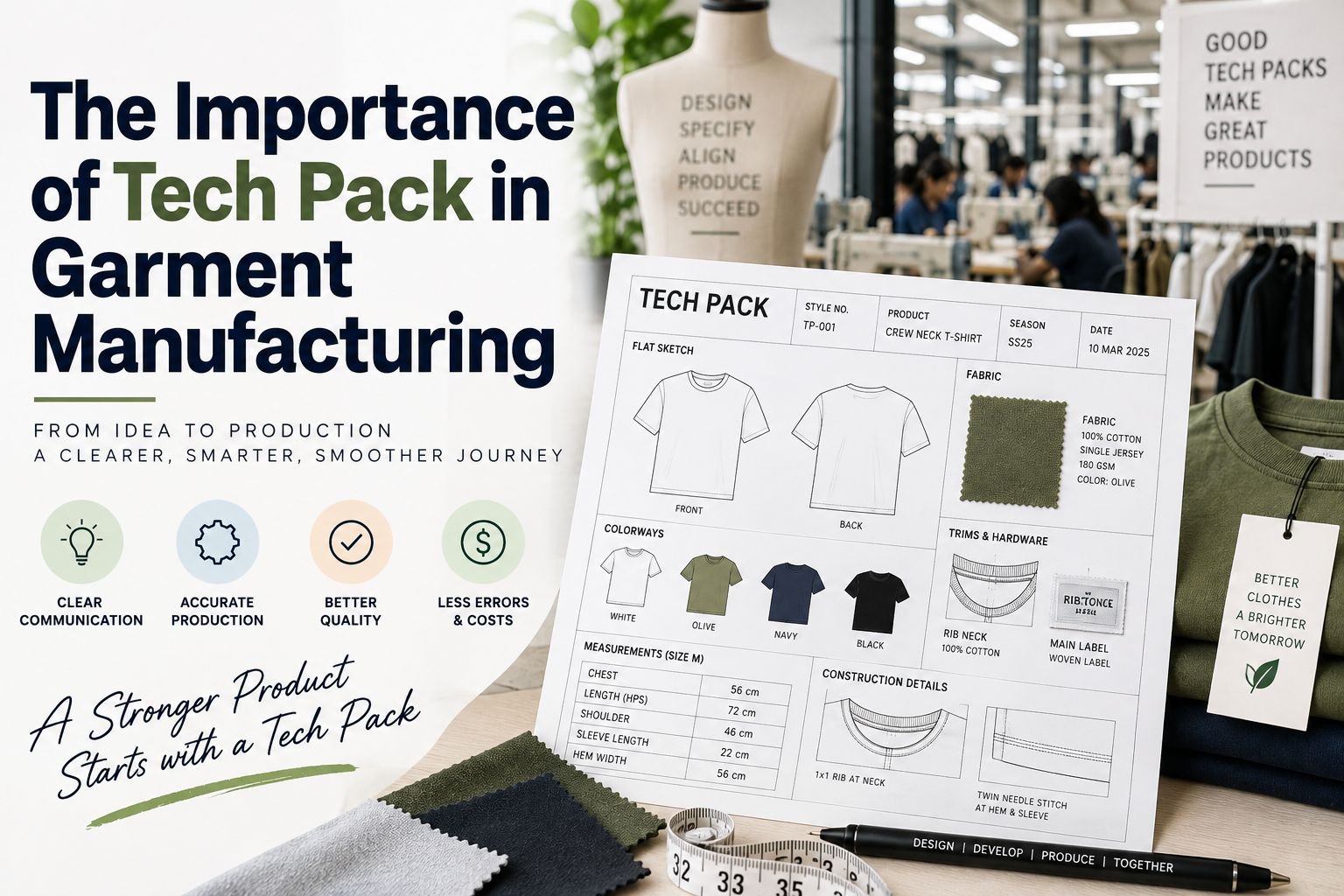
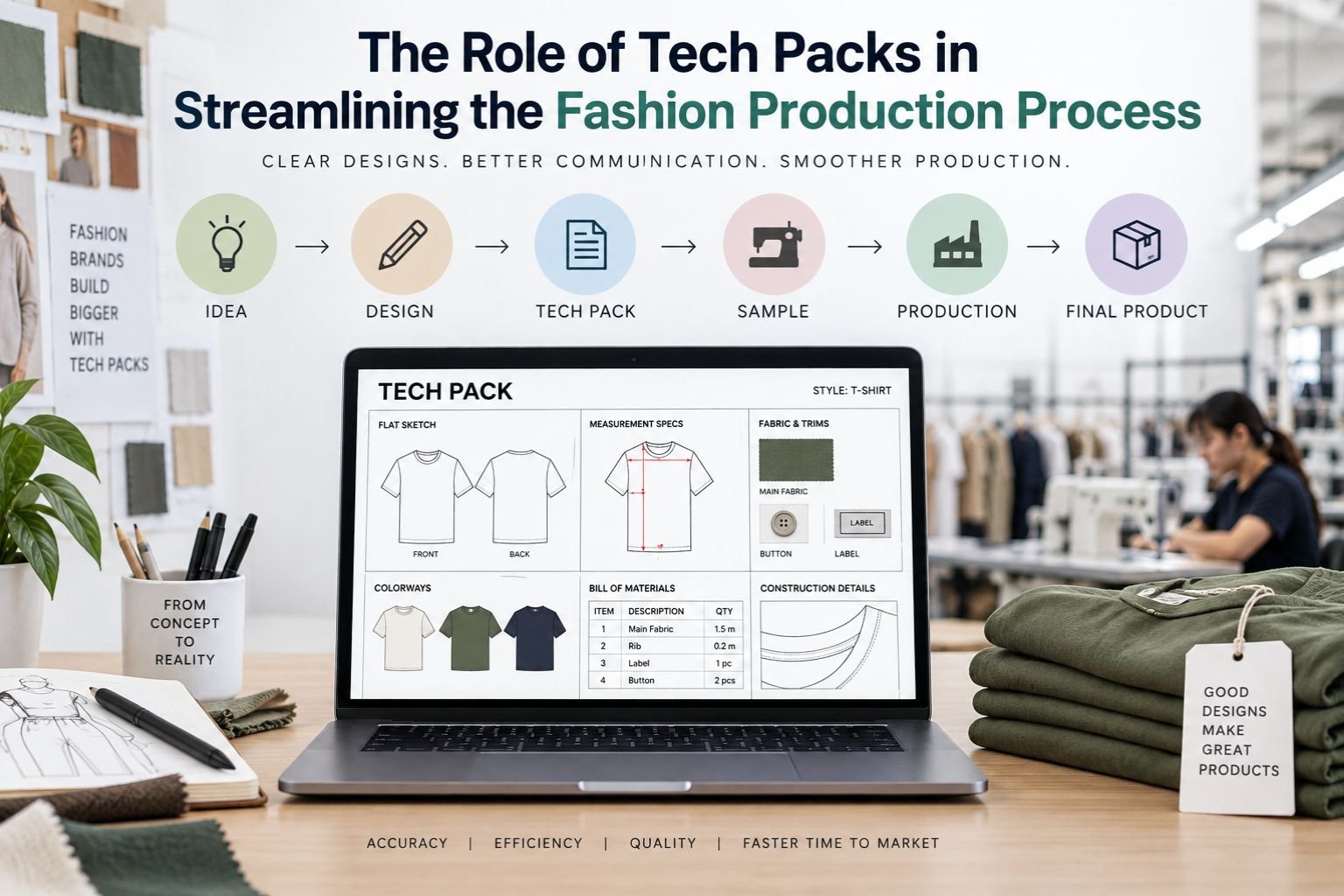
That last point matters more than founders expect. A vague sketch or a moodboard leads to vague, inflated MOQ quotes because the factory can’t calculate real costs. A clear, detailed tech pack lets a factory quote your actual product — which often means a more accurate, and sometimes lower, MOQ conversation from day one.
Final Thoughts: MOQ Is a Negotiation, Not a Wall
MOQs feel intimidating the first time you see them — like a locked door standing between you and your brand launch. But once you understand what’s really driving that number, it stops being a wall and starts being a conversation you can steer.
Ask better questions. Get the breakdown in writing. Know your total landed cost before you commit. And always, always ask if there’s room to move.
Your first order doesn’t need to be your biggest risk. It just needs to be your smartest decision.
FAQs
1. What does MOQ mean in the fashion industry?
MOQ stands for Minimum Order Quantity — the smallest number of units a factory or fabric supplier will produce or sell in a single order.
2. Why do factories have MOQs instead of accepting any order size?
Setting up production (cutting, threading machines, training workers) costs money regardless of order size, so factories set a minimum to make that setup worthwhile.
3. Is fabric MOQ the same as garment MOQ?
No. A factory may accept a low garment order, but the fabric mill often requires a separate, usually higher, minimum to weave or dye a custom fabric or color.
4. Can I negotiate a factory’s MOQ?
Often, yes. Choosing in-stock fabric, reducing colors, paying a small surcharge, or committing to a reorder can all help lower a quoted MOQ.
5. What’s a good MOQ for a first-time founder to start with?
There’s no universal number, but many new founders start with low-MOQ factories (50–300 units) to validate demand before committing to larger, more cost-efficient bulk orders.
6. Does a low MOQ always mean a better deal?
Not necessarily. Low MOQs are great for testing a brand, but usually come with a higher cost per unit and sometimes lower production priority.
7. How does a tech pack help with MOQ negotiations?
A detailed tech pack lets a factory calculate accurate costs and MOQ based on your actual specs, instead of inflating the quote due to guesswork.
Ready for Production?
Get a professional tech pack for your fashion design.
Table of Contents