Top 50 Fabric Suppliers in the USA (2026 Guide for Clothing Brand Founders, Designers & POD Creators)
You have the sketch. You have the brand name. You’ve even picked your logo colors.
Then you sit down to actually make the product — and you realize you have no idea where to get the fabric.
That one moment, right there, is where most first-time apparel founders freeze. Because picking the wrong fabric supplier doesn’t just cost you money. It costs you time, samples, and sometimes your entire launch date.
This guide fixes that. Below is a categorized list of 50 real fabric suppliers operating in the USA — from giant industrial mills to small-batch, designer-friendly fabric houses — organized so you can actually find the one that fits your brand, not just a random ranked list.
Why Your Fabric Supplier Matters More Than Your Logo
New founders obsess over branding. Smart founders obsess over fabric.
Here’s why: your fabric decides how your garment feels, how long it lasts, how it photographs, and how much it costs to make. A great design on bad fabric still feels cheap. A simple design on great fabric feels premium.
Think of Everlane. Their designs are minimal — plain t-shirts, basic tanks. What makes them feel “elevated” is fabric weight, hand-feel, and finishing. That’s a fabric decision, not a design decision.
Quick beginner terms you’ll see throughout this guide:
- GSM – Grams per Square Meter. This tells you how heavy or light a fabric is. Higher GSM = heavier, sturdier fabric (think hoodies). Lower GSM = lighter, drapier fabric (think summer dresses).
- MOQ – Minimum Order Quantity. The smallest amount a supplier will sell you, usually measured in yards or meters.
- GOTS certified – Global Organic Textile Standard. A certification proving the cotton or fiber was grown and processed organically.
- Converter – A company that buys raw fabric (greige goods), then dyes, prints, or finishes it before selling to brands.
- Vertically integrated – A supplier that controls the whole process, from raw fiber to finished fabric, under one roof.
Now let’s get into the list.
Big Industrial Mills (Best for Large, Consistent, Bulk Orders)
Top Fabric Suppliers in the USA
If you’re scaling past your first few hundred units and need consistent quality at volume, these are the heavyweight names behind a large chunk of American-made textiles.
- Milliken & Company – A century-old materials science company out of Spartanburg, South Carolina, known for performance apparel fabric, industrial textiles, and flame-resistant materials for military and workwear use.
- Parkdale Mills – America’s largest independent yarn spinner, based in Gastonia, North Carolina, supplying yarn that feeds into countless woven and knit fabric mills.
- Unifi, Inc. – Based in North Carolina, famous for turning recycled plastic bottles into performance yarns used across sportswear and activewear supply chains.
- Elevate Textiles – A Charlotte-based group that owns several heritage American textile brands under one roof, including denim and technical fabric lines.
- Cone Denim – One of the most recognized names in American denim manufacturing, part of Elevate Textiles, known for indigo-dyed denim used by both heritage and startup denim brands.
- Burlington – A long-standing American textile brand under Elevate Textiles, producing wovens and performance fabrics for apparel brands.
- American & Efird – A major American sewing thread manufacturer, essential if you’re also sourcing thread alongside fabric for production.
- Mount Vernon Mills – A Georgia-based denim and technical fabric producer with a strong reputation among denim-focused apparel brands.
- Glen Raven (Sunbrella) – North Carolina-based innovator behind Sunbrella fabric, dominant in outdoor, marine, and performance textile categories.
- Springs Creative (Springs Global) – A long-running American fabric and home textile producer supplying wovens for apparel, home goods, and licensed prints.
Yarn & Technical Fiber Specialists
If your brand is built around performance — activewear, athleisure, or technical outerwear — these names matter more than typical “fashion fabric” suppliers.
- Buhler Quality Yarns – A Georgia-based specialist in fine combed cotton and micro-modal yarns, popular with luxury knitwear and premium basics brands.
- Apex Mills – A New York-based technical textile manufacturer known for durable, high-performance fabrics used in military, industrial, and outdoor apparel.
- Camber – A USA-made manufacturer specializing in heavyweight outerwear and activewear fabric and finished goods, with strong customization options for founders wanting private label production.
- Seattle Fabrics – A go-to retail source for athletic, performance, and outdoor technical fabrics, great for smaller brands testing performance fabric swatches before committing to bulk.
Sustainable & Organic Fabric Suppliers
Sustainability is no longer a “nice to have” — for many global buyers, especially in the US and EU, it’s a baseline expectation. These suppliers specialize in that space.
- California Textile Group – A Los Angeles-based, made-to-order fabric house specializing in GOTS-certified organic cotton, offering knitting and dyeing done locally in California.
- Eagle Fabrics – An LA-based knit fabric supplier offering TENCEL Lyocell, TENCEL Modal, and GOTS-certified organic cotton, with domestic production.
- KenDor Textiles – Offers eco-friendly knits and wovens made from TENCEL, modal, bamboo, hemp, organic cotton, and recycled synthetics.
- Nature’s Fabrics – A family-owned supplier of organic cotton, hemp, bamboo, and wool fabrics using eco-conscious production methods.
- Monaluna Organic Fabric – Specializes in GOTS-certified organic cotton printed with low-impact dyes, popular with kidswear and lifestyle brands.
- A Thrifty Notion – A sustainable fabric wholesaler focused on deadstock and vintage fabric, helping brands reduce textile waste while sourcing unique materials.
- Alexa Organics – Produces certified organic cotton textiles finished with natural dyes and minimal processing.
Founder tip: if sustainability is core to your brand story, ask every supplier for their actual certification documents (GOTS, OEKO-TEX, or similar) — don’t just take “eco-friendly” as marketing language. A real supplier will hand over paperwork without hesitation.
Designer & Small-Batch Fabric Houses (Best for Startups & Independent Labels)
These are the suppliers most useful for founders who are still figuring out their first few hundred units, testing designs, or building a made-to-order model.
- Robert Kaufman Fabrics – A nearly 80-year-old, family-owned wholesale converter based in Los Angeles, offering an enormous in-stock range of cotton wovens plus custom development for brands with unique fabric needs.
- Mood Fabrics – Made famous by “Project Runway,” Mood carries an enormous range of designer, deadstock, and speciality fabrics out of its New York and Los Angeles showrooms.
- Britex Fabrics – A legendary San Francisco fabric shop known for fine and couture-level fashion fabrics.
- Spoonflower – A print-on-demand fabric platform based in Durham, North Carolina, letting brands print custom designs on demand with no giant MOQ — ideal for POD apparel and accessory creators.
- Raspberry Creek Fabrics – Another custom fabric printing service offering multiple fabric bases, often compared favorably to Spoonflower for print quality and turnaround.
- Hawthorne Supply Co. – Known for bold, in-house printed patterns on organic cotton, linen-cotton canvas, and jersey knits.
- Harts Fabric – Carries designer and couture fabric lines alongside bottom-weight, swimwear, and shirting fabrics.
- Purl Soho – Offers a curated selection including Robert Kaufman, Michael Miller, and Liberty of London fabrics.
- Fabrics-store.com – A Los Angeles-based specialist entirely focused on linen fabric, popular with resortwear and summer apparel brands.
- B. Black & Sons – A long-running Los Angeles Fashion District supplier known for silk and luxury fabric offerings.
Print & Quilting-Cotton Converters (Great for Kidswear, Accessories & POD)
If you’re building a brand around prints — think loungewear, kidswear, scrunchies, tote bags, or scarves — these converters are worth exploring even though they originate from the quilting world. Their base cloths (poplin, lawn, broadcloth) work beautifully for lightweight apparel too.
- Michael Miller Fabrics – A well-known New York-based print fabric house.
- Timeless Treasures – Offers a wide catalog of printed cotton fabrics.
- Riley Blake Designs – A major American print fabric brand with broad retail distribution.
- Windham Fabrics – A long-standing American textile converter known for licensed and original prints.
- Free Spirit Fabrics – Known for artist-collaboration prints on quality cotton bases.
- P&B Textiles – A print fabric converter supplying fabric shops and brands nationwide.
- Hoffman Fabrics – Known especially for batik and Bali-inspired prints.
- Marcus Fabrics – A long-running American print fabric brand.
Wholesale Distributors & Jobbers
These companies don’t always manufacture fabric themselves — they aggregate multiple fabric brands into one catalog, which can save you serious sourcing time.
- Checker Distributors – Distributes a wide range of fabric brands including Robert Kaufman, Hoffman, Marcus Fabrics, Wilmington Prints, and Riley Blake, all through one account.
- Brewer Sewing Supplies – A century-old, one-stop supplier offering fabric alongside sewing machines, notions, and patterns.
Fashion District Wholesale Houses (Best for In-Person Sourcing & Small Runs)
If you’re based in or near Los Angeles or New York, walking a fashion district in person is still one of the fastest ways to feel fabric quality before committing to an order — no swatch shipping delays, no guesswork.
- Michael Levine Inc. – A long-standing anchor of the Los Angeles Fashion District, carrying a huge range of apparel fabrics.
- Fabric Planet – A Los Angeles Fashion District wholesale fabric retailer serving independent designers.
- Denver Fabrics – An online and wholesale fabric retailer carrying apparel and quilting fabric lines.
- Cinergy Textiles – A Los Angeles-based wholesale supplier known for knit fabrics used across streetwear and casualwear brands.
- Jomar Textiles – A Los Angeles Fashion District wholesale fabric house serving apparel manufacturers.
- Metro Textiles – A well-known fabric wholesaler in the New York Garment District.
- Paron Fabrics – A long-time presence in the NYC Garment District, known for fashion and special-occasion fabrics.
Specialty & Niche Sourcing Options
- Vidalia Mills – Part of the American denim revival movement, producing domestically woven denim fabric.
- Indigo Handloom – Offers handwoven organic cottons, khadi cottons, ikats, and silk blends, great for brands wanting an artisanal, story-driven fabric angle.
How to Actually Choose the Right One (Instead of Getting Overwhelmed)
Fifty names is a lot. Here’s how to narrow it down fast:
Step 1: Know your production stage.
- Testing your first sample run? Start with designer/small-batch houses (#22–31) or print-on-demand platforms (#25–26).
- Scaling past 500–1,000 units per style? Look at industrial converters and mills (#1–10).
- Building a niche, story-driven brand? Sustainable and artisanal suppliers (#15–21, #49–50) fit better.
Step 2: Always request a swatch card before a bulk order. Never trust a photo on a website. Fabric drape, weight, and stretch recovery can only be judged by touching the actual material.
Step 3: Ask about MOQ upfront. Some mills won’t talk to you below thousands of yards. Others (like Spoonflower or Raspberry Creek) will happily sell you a single yard. Match the supplier to your order size — don’t waste time chasing a mill that isn’t built for startups.
Step 4: Confirm care instructions and shrinkage data. A fabric that shrinks 8% after the first wash will ruin your fit — and your return rate. Ask suppliers for pre-shrunk options or shrinkage percentages before finalizing your pattern.
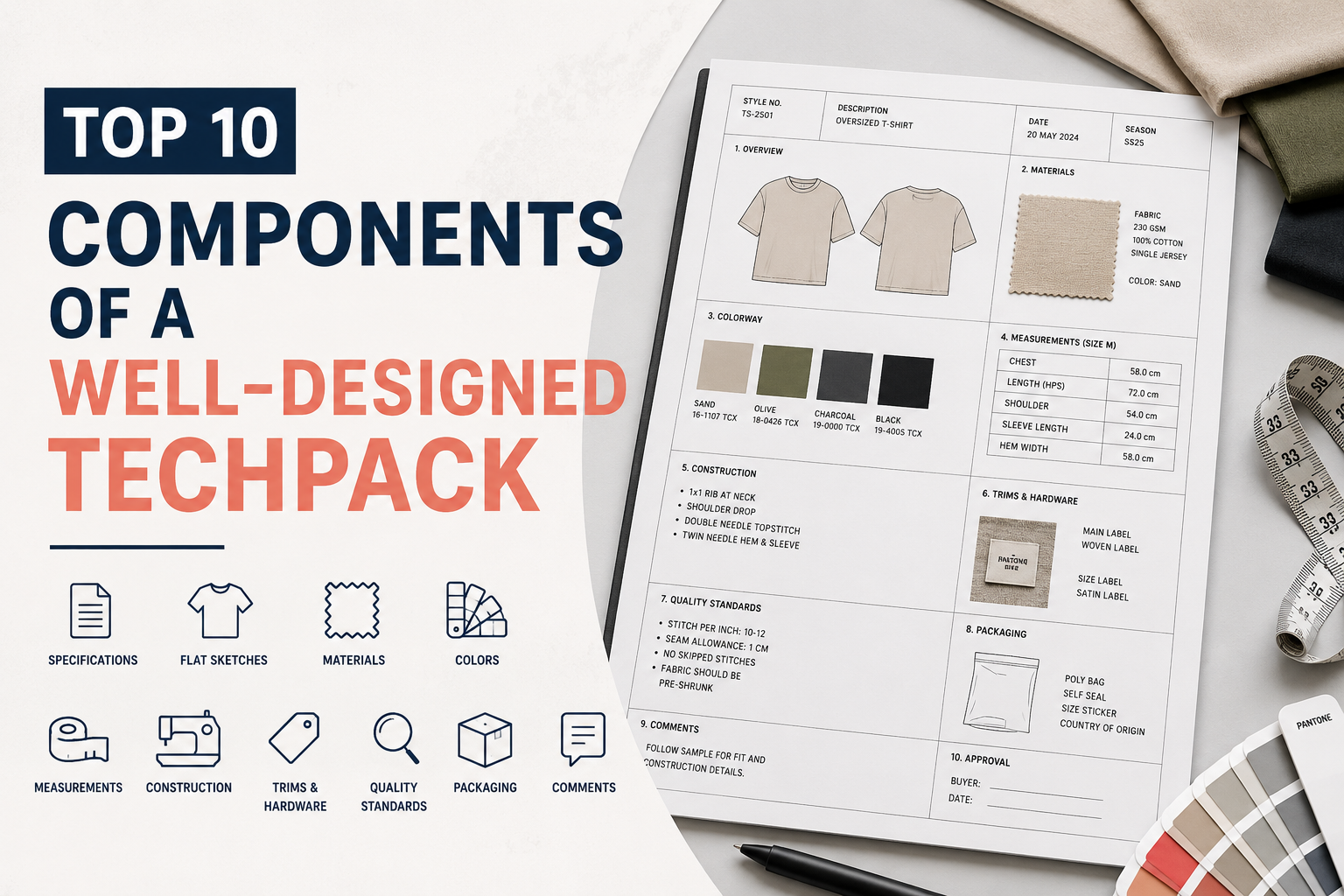
Step 5: Match fabric to your tech pack, not the other way around. This is where a lot of founders go backwards — they pick a fabric they like, then try to force their design onto it. Instead, your tech pack should already specify GSM, composition, and stretch requirements before you go supplier-shopping. That single document saves you from ordering the wrong material entirely.
A Quick Real-World Scenario
Imagine you’re launching a small activewear line. You love the idea of moisture-wicking leggings, but you only need 200 units for your first drop.
Going straight to a giant mill like Milliken or Unifi won’t work — their MOQs are built for large brands. Instead, a smart founder would start with a technical fabric retailer like Seattle Fabrics for swatches, confirm stretch recovery and moisture-wicking performance, then place a small trial order before scaling to a bigger converter once demand is proven.
That’s the real sourcing game: start small, validate, then scale your supplier relationship alongside your brand.
Final Thoughts
Fabric sourcing isn’t glamorous, but it’s the single decision that decides whether your customers come back for a second order — or return the first one.
Start with your tech pack. Know your GSM, your composition, your MOQ needs, and your budget per yard. Then match that specification to the right name on this list, request a swatch, and test before you commit.
Your fabric is your product’s first impression before a single stitch is sewn. Choose it like your brand depends on it — because it does.
FAQs
Q1: What is the minimum order quantity (MOQ) for most US fabric suppliers?
It varies hugely. Large industrial mills often require thousands of yards, while designer-friendly suppliers and print-on-demand platforms like Spoonflower will sell you as little as a single yard.
Q2: How do I know if a fabric supplier is legitimate before ordering?
Ask for a physical swatch card, request references from other apparel brands, and confirm certifications (GOTS, OEKO-TEX) with actual documentation rather than just website claims.
Q3: Is it cheaper to buy fabric directly from a mill instead of a converter?
Usually yes, but only if you can meet their MOQ. For small first-run orders, a converter or designer fabric house is often more practical even at a slightly higher per-yard cost.
Q4: What’s the difference between a fabric mill and a fabric converter?
A mill produces raw or greige fabric from fiber and yarn. A converter buys that raw fabric and dyes, prints, or finishes it before selling to brands — most startup-friendly suppliers are converters.
Q5: Can I get organic or sustainable fabric in small quantities in the USA?
Yes. Suppliers like California Textile Group, Monaluna, and A Thrifty Notion cater specifically to smaller, sustainability-focused brands with lower MOQs than industrial organic cotton mills.
Q6: How much fabric do I actually need for my first production run?
This depends on your garment’s pattern yield per yard, which your tech pack or pattern maker should calculate. As a rough starting point, a basic t-shirt typically uses around 1 to 1.5 yards per unit, but always confirm exact consumption with your manufacturer.
Q7: Should I choose fabric before or after finalizing my tech pack?
Your tech pack should specify fabric requirements (GSM, composition, stretch) first. Choosing fabric before locking your tech pack often leads to costly re-sourcing later.
Table of Contents