T-Shirt Tech Pack: Everything You Need for Factory-Ready Manufacturing
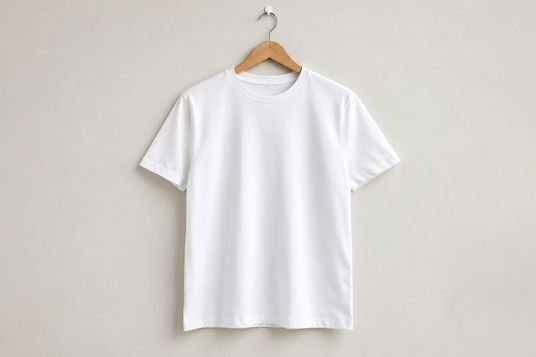
A plain t-shirt looks like the easiest thing in the world to manufacture. One body, two sleeves, a neckline, a hem. No zippers, no linings, no complicated pattern pieces.
That’s exactly why so many first-time founders skip the tech pack and just send a factory a reference photo, a size chart pulled off Google, and a note that says “make it like this.” Weeks later, the sample arrives with the wrong neck ribbing, a hem that puckers, a fit that runs two inches short in the body, and a fabric that feels nothing like what they had in mind.
A tee has nowhere to hide. There’s no print, no hardware, no design detail to distract from a construction mistake — every seam, every measurement, and every finish is fully visible. That’s exactly why a simple t-shirt tech pack for manufacturing matters so much, even though the garment itself is basic.
This guide walks through what actually needs to go into a tech pack for a basic tee, in the order a factory expects to see it, so your first sample comes back right the first time.
Why a “Simple” Tee Still Needs a Full Tech Pack
Founders often assume that a basic crew neck or boxy tee is too simple to need real documentation. In practice, tees are one of the most error-prone garments to manufacture for the opposite reason: because there’s so little else going on, small mistakes are impossible to hide.
A few examples of what goes wrong without a proper spec:
- Neck ribbing that stretches out or sits crooked because the ribbing ratio and construction method were never specified.
- A body that measures fine flat but fits wrong on the body because grading rules between sizes weren’t defined.
- Fabric that feels thin or heavy compared to your sample because GSM (grams per square meter) was never locked in writing.
- Hems that curl or pucker because the stitch type wasn’t called out.
None of these are exotic problems. They’re the standard failure points of tee production, and every one of them is solved by a proper tech pack.
The Core Components of a Simple T-Shirt Tech Pack
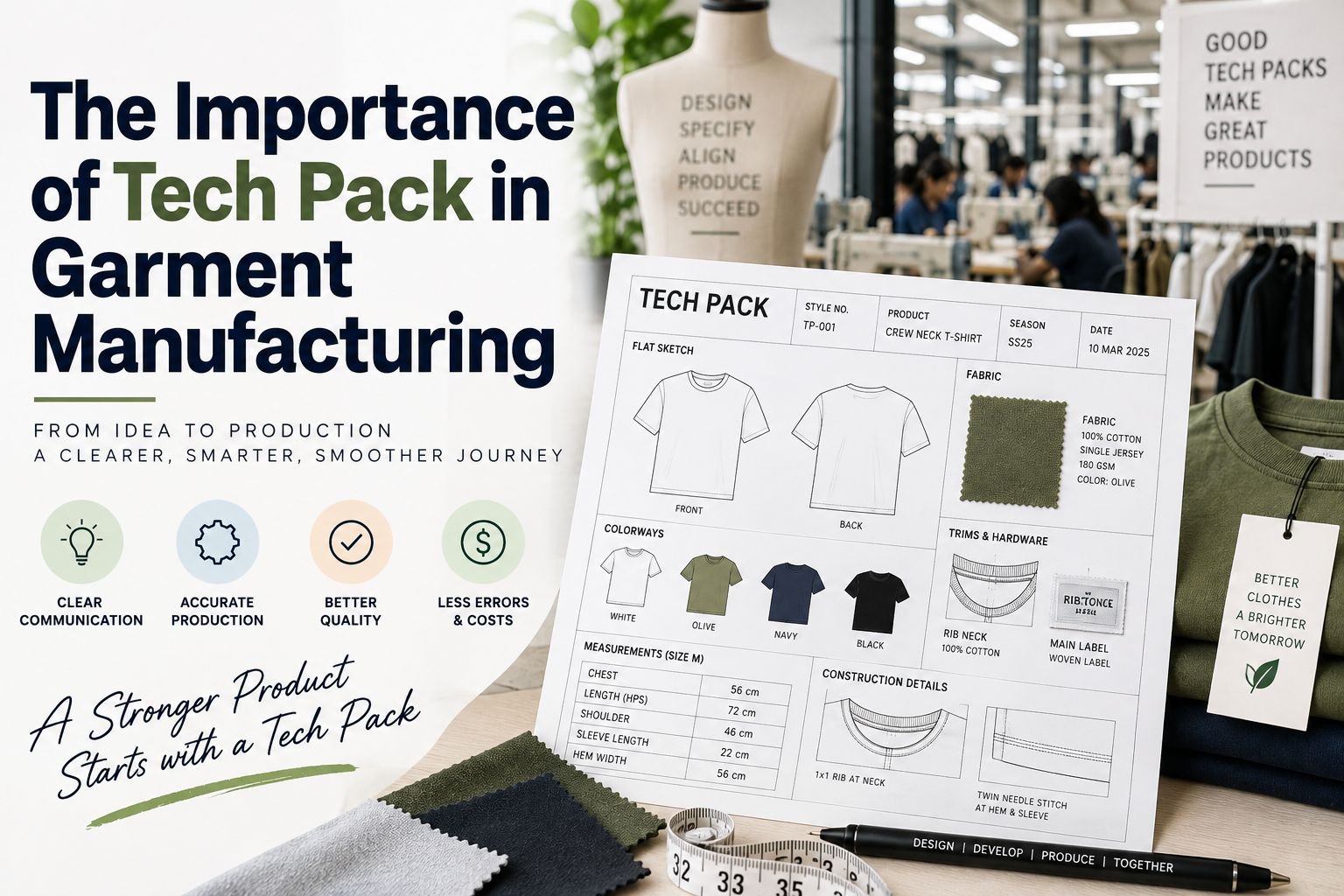
A tech pack for a basic tee doesn’t need to be 40 pages. For most brands, 6–10 pages covering the following sections is enough to be factory-ready.
1. Cover Page / Style Information
The first page gives the factory a quick-reference summary: style name, style number, season, brand name, date, and designer or contact name. This becomes the index every other page refers back to, and it’s what keeps multiple styles from getting confused once you’re running more than one SKU.
2. Technical Flat Sketch
This is a flat, proportionally accurate line drawing of the shirt — front and back, unstyled, no shading or model. Every design detail that isn’t obvious from fabric alone gets called out directly on the sketch with leader lines: stitch lines, label placement, seam types, pocket position if there is one.
A photo of a reference garment is not a substitute for this. Photos carry lighting, draping, and model-body distortion that a flat sketch removes entirely.
3. Fabric & GSM Specification
This is the section founders skip most often, and it’s the one that changes the entire hand-feel of the finished shirt. At minimum, specify:
- Fiber content (e.g., 100% combed cotton, or a cotton/poly/spandex blend)
- Fabric construction (single jersey, interlock, French terry, slub)
- GSM — most tees fall between roughly 160 and 220 GSM for everyday wear, with heavier “boxy” or streetwear-style tees running 220–280+ GSM
- Fabric finish (enzyme washed, garment dyed, peached, etc., if applicable)
Leaving GSM unspecified is one of the single biggest reasons a sample “feels cheaper” or “feels heavier” than what a founder pictured.
4. Point of Measure (POM) Spec Sheet & Graded Size Chart
This is the technical heart of the tech pack. It lists every measurement point — chest width, body length, sleeve length, shoulder width, neck width, neck drop, armhole, hem width, sleeve opening — each with an exact measurement and an acceptable tolerance (typically ± 1/4″ to ± 1/2″ per point).
For any size run beyond a single sample size, this section also needs a grading rule: how much each measurement increases or decreases per size, so a Medium and a Large aren’t just “roughly bigger” but follow a consistent, repeatable logic across the whole size range.
5. Construction & Stitch Details
This section specifies exactly how the garment is sewn together, not just what it measures:
- Seam types used at the shoulder, side seam, and sleeve (e.g., overlock vs. flatlock)
- Neck construction — self-fabric binding vs. a separate ribbed neckband, and the rib ratio
- Hem finish — typically a coverstitch hem on both the bottom hem and sleeve openings for a clean, non-curling edge
- Topstitching details, if any, and thread color/weight
For a deeper breakdown of individual stitch types and when each one applies, this is worth pairing with a dedicated stitch-type reference — it’s one of the fastest ways to eliminate the “that’s not how I wanted it sewn” surprise.
6. Trims & Labels
Even a basic tee usually has at least a main (brand) label and a care/content label, and sometimes a hang tag. This section specifies label type (woven vs. printed), exact placement (e.g., “centered at back neck, 1″ below collar seam”), and any additional trims like a woven size tab at the side seam.
7. Colorways
If the same style will be produced in more than one color, this page lists every colorway with exact color references — ideally Pantone (PMS) codes for both the body fabric and any contrast elements like ribbing or thread, so “black” from one dye lot matches “black” from the next.
8. Bill of Materials (BOM)
The BOM is a simple table listing every physical component that goes into the garment — main fabric, ribbing, thread, main label, care label, hang tag, poly bag — along with the supplier, material composition, and placement/usage for each. This is what a factory uses to source materials and what you use to sanity-check your landed cost.
9. Packing & Packaging Instructions
The last section covers how finished units get folded, bagged, and labeled for shipment — poly bag size, fold method, barcode/hang tag placement, and units per carton if you’re shipping in bulk. Skipping this section is usually harmless for a small first sample run, but it becomes important fast once you move into full production.
How to Build a Simple T-Shirt Tech Pack: Step by Step
- Start from a reference garment. Choose a tee that’s as close as possible to your intended fit and measure it flat, point by point, rather than guessing at numbers.
- Sketch the flat. Draw (or have someone draw) a clean technical flat, front and back, and mark every design detail directly on it.
- Lock your fabric spec. Decide fiber content, construction, and GSM before anything else — this single decision affects hand-feel, drape, and cost more than almost any other choice.
- Build your POM chart. List every measurement point for your sample size, then apply a grading rule if you need multiple sizes.
- Document construction. Specify seam types, neck construction, and hem finish in plain, unambiguous language — assume the factory will do exactly what’s written and nothing more.
- Add trims, labels, and colorways. Even for a one-color, one-size sample run, get label placement in writing.
- Compile the BOM. Cross-check that every material mentioned elsewhere in the tech pack also appears in the BOM.
- Review before sending. Read it once as if you were a factory pattern maker seeing it cold — if any instruction could be interpreted two different ways, it will be.
Common Mistakes Founders Make With T-Shirt Tech Packs
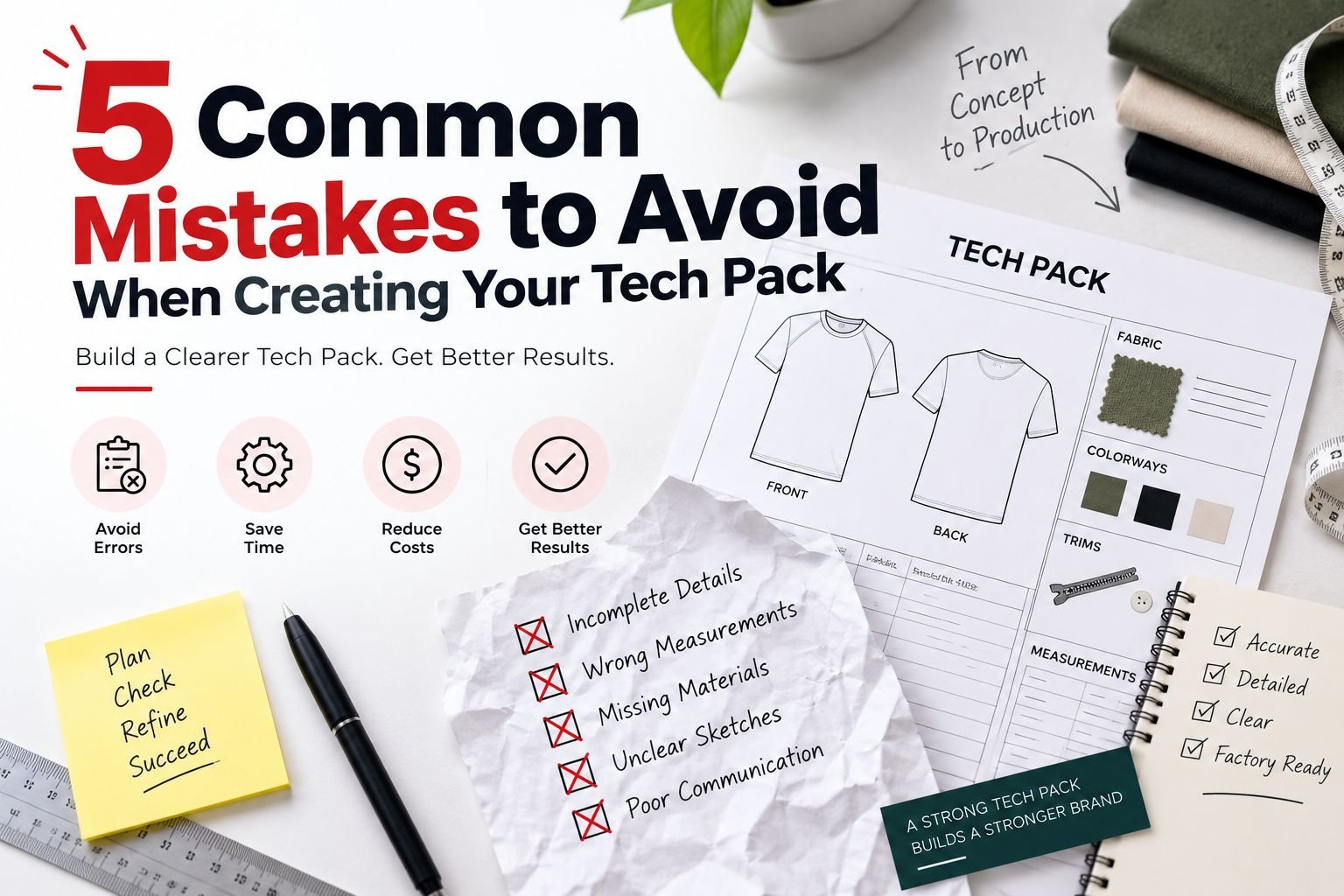
- Sending a photo instead of a flat sketch. Photos distort proportions and hide construction details a factory needs to see clearly.
- Skipping GSM entirely. “Soft cotton” means something different to every mill — GSM is the number that removes the ambiguity.
- Giving one size of measurements and assuming the factory will “figure out” the rest. Without a grading rule, sizes often come back inconsistent.
- Leaving tolerances out of the spec sheet. Every measurement needs an acceptable ± range, or minor manufacturing variance gets treated as a defect (or vice versa).
- Not specifying hem and neck construction. These two details affect the finished look of a basic tee more than almost anything else, yet they’re the most commonly omitted.
Quick-Reference Checklist
- Cover page with style name, number, and season
- Front and back technical flat sketch
- Fiber content, fabric construction, and GSM
- Full POM spec sheet with tolerances
- Grading rule across sizes (if multiple sizes)
- Seam types called out at shoulder, side, and sleeve
- Neck construction method specified
- Hem and sleeve-opening finish specified
- Label type and exact placement
- Colorway list with Pantone references
- Complete Bill of Materials
- Packing instructions (if moving to bulk production)
FAQ
Do I really need a full tech pack for just one simple tee?
Yes — a tech pack matters most for simple garments precisely because there’s nothing else to hide a construction or measurement error. Even a one-color, one-size first sample benefits from a proper spec sheet and flat sketch.
What GSM should a basic t-shirt be?
Most everyday tees fall between 160–220 GSM. Lighter weights (160–180 GSM) suit fitted or summer-weight tees, while heavier weights (220–280+ GSM) are common for boxy, oversized, or streetwear-style fits.
Can I make a tech pack myself without design software?
Yes, for a genuinely simple tee, a clear hand-drawn or basic-software flat sketch plus a well-organized spec sheet is often enough — the completeness of the information matters far more than the polish of the software used to present it.
What’s the difference between a tech pack and a size chart?
A size chart is just one page inside a tech pack. A full tech pack also covers fabric, construction, trims, colorways, and materials — everything needed to actually produce the garment, not just size it.
Getting It Right the First Time
A simple tee only stays simple if the tech pack behind it is done properly. Skip it, and you’re relying on a factory to guess correctly across a dozen small decisions — fabric weight, neck construction, hem finish, grading — any one of which can turn a “basic” first sample into a wasted production run.
If you’d rather hand this off to someone who builds t-shirt tech packs for a living, that’s exactly what we do at TechPackGenius — factory-ready tech packs, fast turnaround, unlimited revisions until manufacturers stop asking questions.
Ready for Production?
Get a professional tech pack for your fashion design.
Table of Contents