How Do I Brief a Tech Pack Designer on My Vision? (A Founder’s Complete Guide)
You’ve sketched the design a hundred times in your notes app. You know exactly how the fabric should fall, where the seams should sit, what the print should feel like under your fingers. And then you send it to a designer or a factory… and what comes back looks nothing like what was in your head.
If that’s ever happened to you, you’re not alone. It’s the single most common (and most expensive) mistake new clothing brand founders make. And almost every time, the problem isn’t the designer. It’s the brief.
Let’s fix that today.
What Does “Briefing a Tech Pack Designer” Actually Mean?
A tech pack designer isn’t a mind reader. They’re a translator. Their job is to take your vision — the one living in your head, your Pinterest board, or your half-finished sketch — and turn it into a document a factory can actually manufacture from.
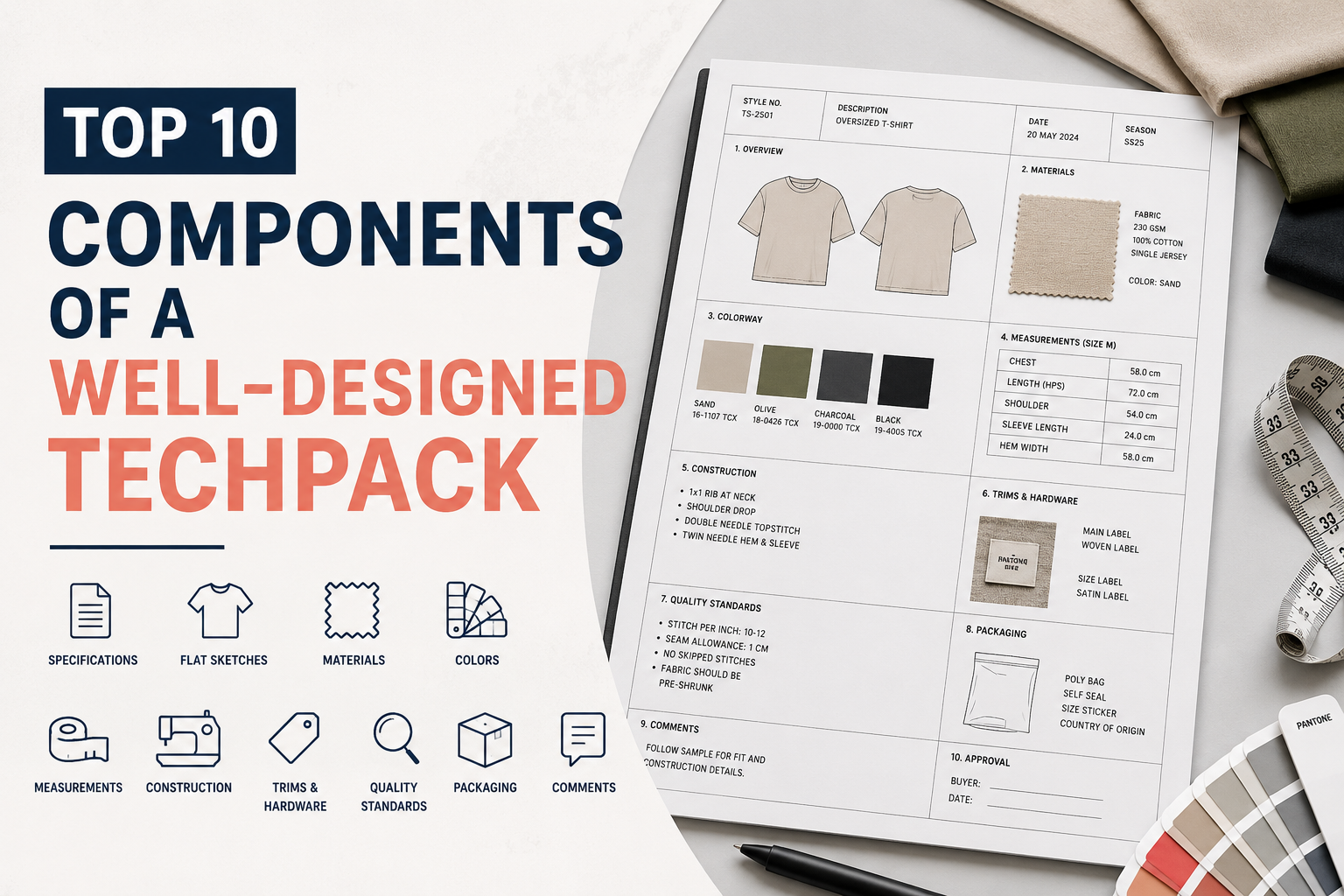
A tech pack (short for technical package) is basically the manufacturing blueprint of your garment. It includes measurements, materials, construction details, labels, trims, colors, and grading — everything a factory needs to produce your product correctly, without guessing.
So when you “brief” a tech pack designer, you’re not just handing over a picture. You’re handing over the why, the how, and the what exactly behind your design. The clearer that handoff is, the closer your final product will match your original vision.
Think of it like ordering a custom cake. If you just say “make it nice,” you might get vanilla with white frosting. But if you say “three layers, chocolate sponge, raspberry filling, matte pink fondant, gold leaf on top” — you’ll get exactly what you imagined.
Why This Step Quietly Makes or Breaks New Brands
Here’s something most first-time founders don’t realize: a bad brief costs more than a bad design.
When a tech pack designer misunderstands your vision, here’s what usually happens:
- You get a first draft that’s “close but not right.”
- You spend days going back and forth explaining what you meant.
- The sample production gets delayed while things get corrected.
- You end up paying for revisions that shouldn’t have been needed.
- In the worst cases, you approve a tech pack that still has gaps, and the factory sample comes out wrong.
None of this is because the designer is careless. It’s because vision was never fully transferred from your head onto paper. Your job as a founder isn’t to draw a perfect sketch — it’s to communicate clearly enough that nothing gets left to guesswork.
Before You Brief Anyone: Get Clear With Yourself First
A lot of founders jump straight into messaging a designer without slowing down to organize their own thoughts. This is where things go sideways early.
Before you type a single message to your tech pack designer, sit with these questions:
- What is the core idea of this garment? (Streetwear hoodie? Minimalist blazer? Athleisure legging?)
- Who is this for? (Age group, lifestyle, price point)
- What’s the one detail that must be perfect, even if everything else is flexible?
- Do I have any reference garments I already own that are close to this?
You don’t need fancy design language for this. Just honesty and clarity. If you can explain your vision to a friend over coffee in two minutes, you can brief a designer.
The 7 Things Every Tech Pack Designer Needs From You
This is the part most founders skip — and it’s the part that matters most. Here’s exactly what to prepare before your first conversation with a designer.
1. Reference Images (Not Just One)
One photo tells a designer almost nothing. Three to five references tell a full story.
Send:
- A garment silhouette you like (even from a different brand)
- A fabric texture you’re drawn to
- A stitching or finishing detail you admire
- A color palette or mood board
Pro tip: Label each image with what you like about it. “I love the oversized sleeve here” is far more useful than sending the photo alone.
2. Fit and Silhouette Description
Is it oversized, regular, slim, cropped, boxy? Say it in plain words.
For example: “I want it to sit slightly loose on the shoulders, but taper in at the waist — like an athletic fit, not baggy streetwear.”
This single sentence saves hours of back-and-forth later.
3. Fabric Type and Weight (Even If You’re Not 100% Sure)
You don’t need to know GSM numbers by heart. Just describe how it should feel and behave.
Say things like:
- “Soft and stretchy, like activewear leggings”
- “Structured and slightly stiff, like a denim jacket”
- “Breathable and lightweight, for hot climates”
A good tech pack designer will translate your description into the correct fabric composition and technical specs (like GSM — grams per square meter, which measures fabric weight and thickness).
4. Measurements or a Size Reference Garment
If you already have a size chart in mind, share it. If not, send a garment you own that fits close to what you’re imagining, and say: “I want it similar to this, but slightly longer in the torso.”
This gives the designer a real, physical anchor point instead of guessing from scratch.
5. Construction and Stitching Details
This is where a lot of vision gets lost. Do you want:
- Flatlock seams (flat, smooth stitching often used in activewear)?
- Topstitching (visible decorative stitching on the surface)?
- French seams (a clean, enclosed seam finish used in premium garments)?
- Raw or exposed seams (an intentional unfinished look, common in streetwear)?
If you don’t know the technical names, that’s completely fine — describe what you see and let the designer name it correctly.
6. Trims, Labels, and Branding Details
This includes:
- Woven or printed labels
- Zipper type and color
- Buttons, drawstrings, or hardware
- Care label and size label placement
Founders often forget this section entirely, and it becomes a rushed afterthought later. Include it from day one — it affects both cost and production timeline.
7. Your Budget Range and Target Price Point
This might feel awkward to share, but it’s one of the most important pieces of information you can give. A $15 fabric doesn’t belong in a $25 retail garment, and a designer who knows your price point can guide material choices that actually make financial sense for your brand.
A Real Example: Two Founders, Two Very Different Briefs
Let’s say two founders both want a similar oversized streetwear hoodie.
Founder A sends this message: “I want a cool oversized hoodie, kind of streetwear style, thanks!”
Founder B sends this: “Oversized fit like the reference photo attached, heavyweight 400 GSM fleece, dropped shoulder seam, ribbed cuffs and hem, kangaroo pocket, drawstring hood in a contrast color, woven label on the left hem, targeting a $45 retail price point.”
Founder A will likely get three rounds of confused revisions before the tech pack feels right. Founder B will likely get a near-perfect first draft, because the designer had everything needed to make real decisions, not guesses.
This is the entire difference between a smooth process and a frustrating one — and it has nothing to do with budget or brand size. It’s purely about communication.
Common Mistakes Founders Make When Briefing a Designer
Even passionate, detail-oriented founders fall into these traps. Watch out for:
- Assuming the designer can “just imagine it.” Vision in your head isn’t vision on paper until you describe it.
- Sending only one inspiration image. It leaves too much open to interpretation.
- Skipping fabric details entirely. Fabric affects fit, drape, and cost — it can’t be an afterthought.
- Not mentioning your target market. A garment for a cold-climate brand needs different specs than one for a tropical market.
- Changing the brief mid-process without updating the designer fully. Small unspoken changes create big miscommunications.
- Being vague about must-haves vs. nice-to-haves. Tell the designer what’s non-negotiable and what’s flexible.
A Simple Briefing Template You Can Copy Today
Here’s a beginner-friendly format you can literally copy, fill in, and send to any tech pack designer:
Garment type: (e.g., crewneck sweatshirt) Target customer: (e.g., women, 20–30, casual streetwear buyers) Fit/silhouette: (e.g., relaxed, boxy fit) Fabric feel: (e.g., soft, warm, medium-weight) Reference images: (attach 3–5 with notes) Key construction details: (e.g., ribbed cuffs, raglan sleeve) Trims/labels: (e.g., woven brand label, metal zipper) Target retail price: (e.g., $40–50) Must-have detail: (the one thing that can’t be compromised) Flexible details: (what you’re open to adjusting based on cost or feasibility)
Save this template. Use it for every future style you design — it keeps your brand consistent and saves you from repeating the same explanations every single time.
What Happens After You Send a Great Brief?
Once your tech pack designer has this information, a good process usually looks like this:
- They ask a few clarifying questions (a sign of a thorough designer, not a confused one).
- They draft the initial tech pack with sketches, measurements, and specs.
- You review it and request adjustments — this is normal and expected.
- The tech pack gets finalized and sent to your factory for sampling.
A clear brief doesn’t eliminate revisions completely, but it dramatically reduces how many rounds you’ll need — which means faster samples, lower costs, and less waiting around.
Final Thoughts: Your Vision Deserves a Clear Voice
Your idea for this garment matters. The way you imagined it, down to the smallest stitch, deserves to actually make it into the real, physical product — not get lost somewhere between your head and the factory floor.
The good news? You don’t need design school or years of industry experience to brief a tech pack designer well. You just need clarity, a few good reference images, and the honesty to say what matters most to you.
Start with the template above. Fill it out before your next design idea leaves your notes app. You’ll notice the difference immediately — in how fast your samples come back, and in how closely they match what you pictured in the first place.
If you’re ready to turn your vision into a factory-ready tech pack without the back-and-forth confusion, that’s exactly what we help founders do every day.
Frequently Asked Questions
1. Do I need technical fashion knowledge to brief a tech pack designer? No. You just need to describe your vision clearly using simple, everyday language. A skilled designer will translate your description into the correct technical terms and specs.
2. How many reference images should I send? Aim for 3–5 images covering silhouette, fabric texture, color, and any specific detail you love. One image alone usually isn’t enough context.
3. What if I don’t know my fabric composition or GSM? That’s completely normal. Just describe how you want the fabric to feel and behave (soft, stretchy, structured, lightweight), and the designer will recommend suitable options.
4. Can I brief a designer with just a sketch and no reference photos? Yes, but it’s harder to get an accurate result. Sketches combined with real reference images give designers much stronger accuracy than sketches alone.
5. How long does it take to create a tech pack after a good brief? This varies by complexity, but a clear, complete brief significantly shortens the process compared to a vague one, since fewer revision rounds are needed.
6. What’s the biggest mistake founders make when briefing designers? Assuming the designer can fill in the gaps themselves. Every unclear detail becomes a guess, and guesses rarely match your original vision perfectly.
7. Should I mention my budget when briefing a tech pack designer? Yes. Sharing your target retail price helps the designer suggest fabrics and construction methods that fit your budget realistically, instead of specifying something too costly to produce.
Table of Contents