
Best Apparel Tech Pack Design Services for Startups: How to Choose the Right One and Save Your First Collection
When a fashion startup launches, the dream is usually big. A beautiful collection. A strong brand. A customer who instantly “gets it.”
But between the idea and the finished product, many brands lose time, money, and confidence because one thing is missing: a proper tech pack.
A tech pack is not just a document. It is the language that turns your design into a product a factory can actually make. Without it, even a brilliant design can become expensive guesswork.
What a tech pack really is, in simple words
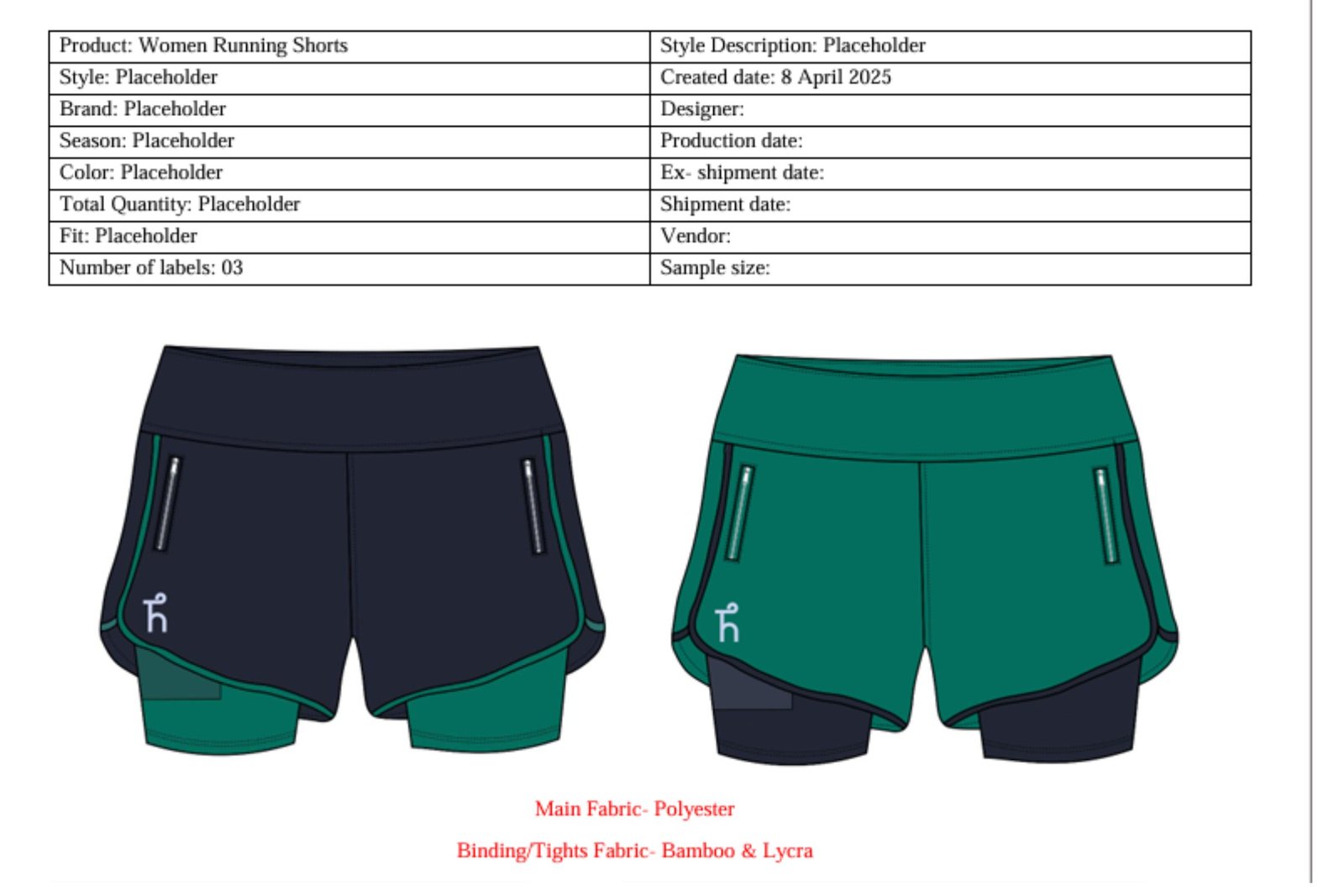
A tech pack, or technical package, is the blueprint of your garment. It tells the manufacturer exactly how your product should look, fit, feel, and be constructed. It usually includes fashion flats, measurements, bill of materials, colorways, construction notes, grading, cost details, and revision history.
A garment spec sheet is only one part of that bigger file. The spec sheet focuses mainly on measurements, construction details, and tolerances, while the full tech pack covers everything needed to manufacture the product correctly.
For a startup, this matters more than almost anything else in product development. A clear tech pack helps reduce miscommunication, minimize sample rounds, and speed up the path from concept to production. Factories also often expect this level of detail before they accept an order.
Why startups need professional apparel tech pack design services
Many founders begin with a sketch, a mood board, or a strong product idea. That is a great start. But factories do not manufacture mood boards. They manufacture specs.
This is where professional tech pack design services become valuable. They take your creative vision and translate it into production-ready instructions.
For a startup, that can mean:
- fewer back-and-forth messages with the factory
- fewer confusing sample corrections
- better fit consistency across sizes
- less risk of production mistakes
- faster launch timelines
In other words, the right service can save you from the expensive “we thought you meant something else” problem.
A good tech pack also helps you think like a real brand, not just a designer. It forces clarity around fabric choice, trims, stitching, measurements, and finishing. That clarity often improves the product itself.
What the best apparel tech pack design services should include
Not every tech pack service is the same. Some only create pretty pages. The best ones create documents that factories can actually use.
A strong apparel tech pack service should include these core elements:
1. Technical flat sketches
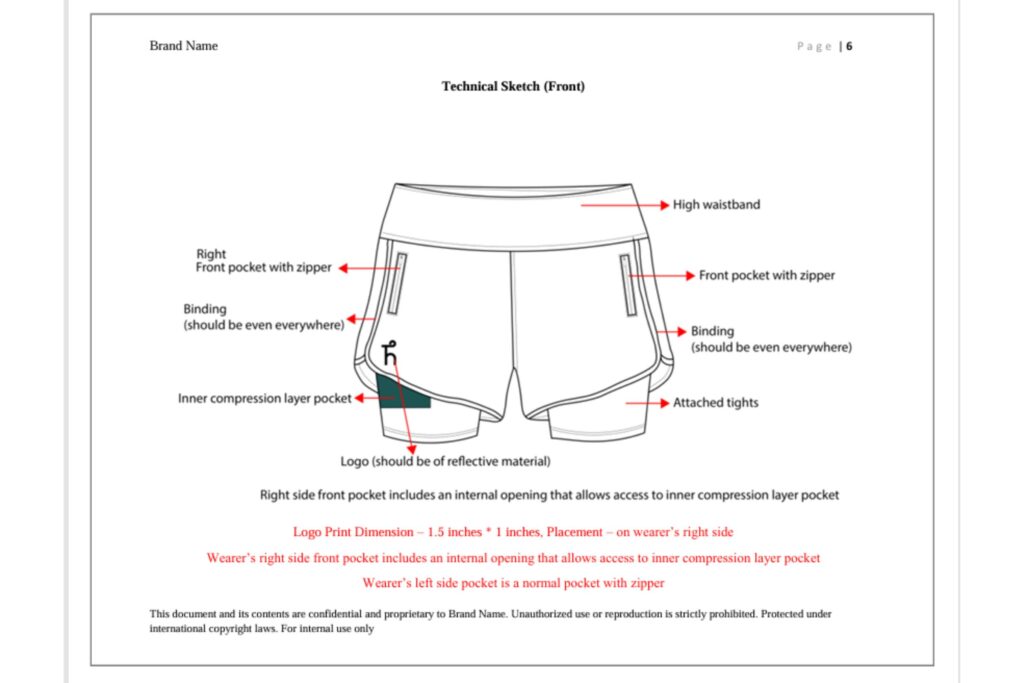
These are clean front, back, and sometimes side-view drawings of the garment. They show construction details clearly, not artistically. The goal is accuracy, not decoration.
2. Bill of Materials
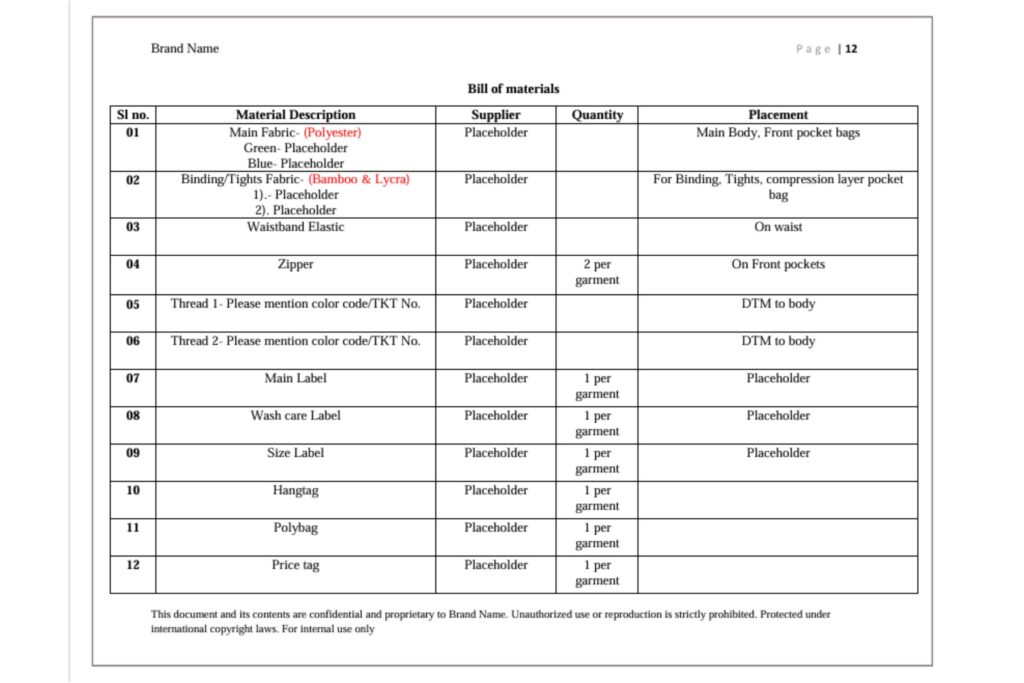
This is the list of every material used in the product: main fabric, lining, thread, labels, zippers, buttons, trims, packaging, and more. A complete BOM helps the factory source correctly and calculate cost more accurately.
3. Measurement specifications

This is where the exact garment measurements are listed for each size. A good spec sheet should clearly show points of measure and size differences.
4. Tolerances
Tolerances tell the factory the acceptable plus or minus variation in a measurement. For example, a bust measurement may allow a small difference without being considered defective. This is critical for quality control.
5. Construction details
This section explains how the garment should be sewn and assembled. It may include seam type, stitch type, placement of labels, hems, finishes, and special instructions.
6. Colorways and artwork details
If you are creating multiple color versions, your tech pack should clearly show them. If your product has prints, graphics, embroidery, or placement artwork, those details should be specified too.
7. Revision history
Startups often revise designs after comments from the factory. A good service keeps the file organized so changes are tracked, not lost.
The best service is not always the cheapest one
This is one of the biggest mistakes first-time founders make.
A cheap tech pack that confuses the factory is not a bargain. It is a delay.
The best apparel tech pack design services for startups usually offer the right balance of:
- technical accuracy
- fast turnaround
- clear communication
- fashion understanding
- manufacturing knowledge
- flexibility for startup budgets
In practice, this often means hiring someone who understands both design and production, not just illustration.
For example, a startup in London making premium activewear needs a very different tech pack from a POD creator in California launching oversized graphic tees. A good service knows the difference and builds accordingly.
Types of apparel tech pack services startups can choose from
There is no single “best” option for everyone. The right choice depends on your stage, budget, and product complexity.
1. Freelance tech pack designer
Best for: early-stage founders with a small number of styles
This is usually the most flexible option. A freelancer can help you build custom tech packs without locking you into a large system. The downside is that quality varies a lot, so you need to check their fashion manufacturing experience carefully.
2. Tech pack agency or studio
Best for: startups launching multiple styles or a full first collection
An agency often provides a more structured process, better quality control, and faster scaling. This can be useful if you are building a serious brand and need consistency across many products.
3. Product development specialist
Best for: founders who need more than just documentation
Some experts do not just create tech packs. They also help with fit, sourcing, sampling, and factory communication. This is ideal if you are new to apparel production and need guidance through the process.
4. Tech pack software with expert support
Best for: brands that want more control and repeatability
Some startups prefer software-based workflows because they make updates and collaboration easier. Techpacker, for example, positions itself as tech pack software built for fashion creators, with tools for sketches, specs, materials, and product development.
How to choose the right tech pack design service for your startup
Here is the simple filter I would use if I were starting a brand today.
Look for real apparel knowledge
You do not need someone who only knows design software. You need someone who understands how garments are made.
A good service should be able to talk about fit, stitching, trims, fabric behavior, tolerances, and sampling.
Ask for sample work
Before hiring, review previous tech packs. A good sample should look clean, organized, and easy for a factory to follow. If it is visually impressive but technically weak, that is a warning sign.
Check if they understand your product category
A swimwear tech pack is different from a hoodie tech pack. A woven shirt is different from a streetwear tee. A service that understands your exact category will usually save you many corrections later.
Make sure they can communicate simply
If a tech pack designer cannot explain things in simple language, the process may become painful. For startups, clarity matters more than jargon.
See how they handle revisions
Fashion products change. A good service should have a clean revision workflow so every update is documented.
Judge their factory mindset
The best tech pack services do not just make files for the client. They make files for the manufacturer. That is the real difference.
Common mistakes startups make with tech packs
Many new brands lose money because they treat the tech pack like a design formality. It is not.
Here are the most common mistakes:
- using a vague sketch instead of a technical flat
- forgetting seam, stitch, or trim details
- leaving measurements incomplete
- not specifying tolerances
- mixing inspiration images with production instructions
- changing design details without updating the file
- sending a tech pack that looks polished but is technically unclear
These mistakes create sampling confusion. And sampling confusion creates delay.
One missing measurement may lead to one extra sample. One unclear material choice may lead to one wrong production run. For a startup, that can hurt cash flow fast.
A practical process for getting your first tech pack done right
If you are starting from scratch, use this workflow:
Step 1: Finalize the product idea
Do not create a tech pack for a design that keeps changing every day. First lock the product direction.
Step 2: Collect reference points
Share sketches, inspiration images, fit goals, and target customer details. Be clear about the market you are designing for.
Step 3: Decide your fabric and finish level
A luxury dress, a budget tee, and a performance jacket all require different materials and construction standards.
Step 4: Build the measurements
This is where the tech pack starts becoming real. Include base size measurements and size grading logic.
Step 5: Add construction details
Explain how the garment should be sewn, finished, and labeled.
Step 6: Review for clarity
Read the file like a factory owner would. Ask: is anything open to interpretation?
Step 7: Update after sample feedback
Your tech pack should evolve after each fit sample or factory note.
Why good tech pack services matter even more for POD creators
Print-on-demand founders sometimes think tech packs are only for traditional garment factories. That is not true.
If you are building custom apparel products, you still need clear technical communication. Even when production is more simplified, the garment shape, print placement, sizing, fabric choice, and finish details still need structure.
For POD creators, a tech pack can help you stay consistent when you move from one supplier to another or expand into custom cuts and premium blanks.
The real value of a strong tech pack service
A strong tech pack service does more than create a document. It protects your idea.
It gives your factory less room to guess.
It gives your team a cleaner workflow.
It gives your brand a more professional production process.
And for a startup, that professionalism is powerful. It can be the difference between a messy first launch and a collection that feels truly ready for the market.
Conclusion: build with clarity, not confusion
If you are serious about launching an apparel brand, the smartest place to invest early is not only in logos, photos, or ads. It is in product clarity.
The best apparel tech pack design services for startups help you turn your idea into something factories can understand, sample, and produce with confidence. That means fewer mistakes, better quality, and a stronger chance of launching well.
Start simple. Choose the right service. Ask the right questions. And make sure every detail in your product has a reason.
That is how great clothing brands begin.
FAQs
1. What is the main purpose of a tech pack?
A tech pack tells the manufacturer exactly how to make your garment. It reduces confusion and helps keep production accurate.
2. Do startups really need a tech pack?
Yes. Startups need it even more because they usually have fewer chances to correct mistakes later. A good tech pack helps reduce sample errors and wasted time.
3. What should be inside an apparel tech pack?
Usually flat sketches, measurements, BOM, construction notes, colorways, tolerances, and revision history.
4. Is a spec sheet the same as a tech pack?
No. A spec sheet is only one part of a tech pack. The tech pack is the full production document.
5. How do I know if a tech pack service is good?
Check if they understand garment construction, your product category, factory communication, and revision handling. Ask for samples before hiring.
6. Can a beginner founder create a tech pack?
Yes, but it takes patience and learning. Many startups also hire professionals because the technical details can get complicated quickly.
7. What is the biggest mistake in tech pack creation?
Being vague. A tech pack should remove guesswork, not create it. Missing measurements, unclear materials, and weak construction notes cause the most problems.
Table of Contents
Pingback: Tech Pack For Accessories: Purses, Bags, And More
Pingback: What Should Be My Tech Pack File Format?