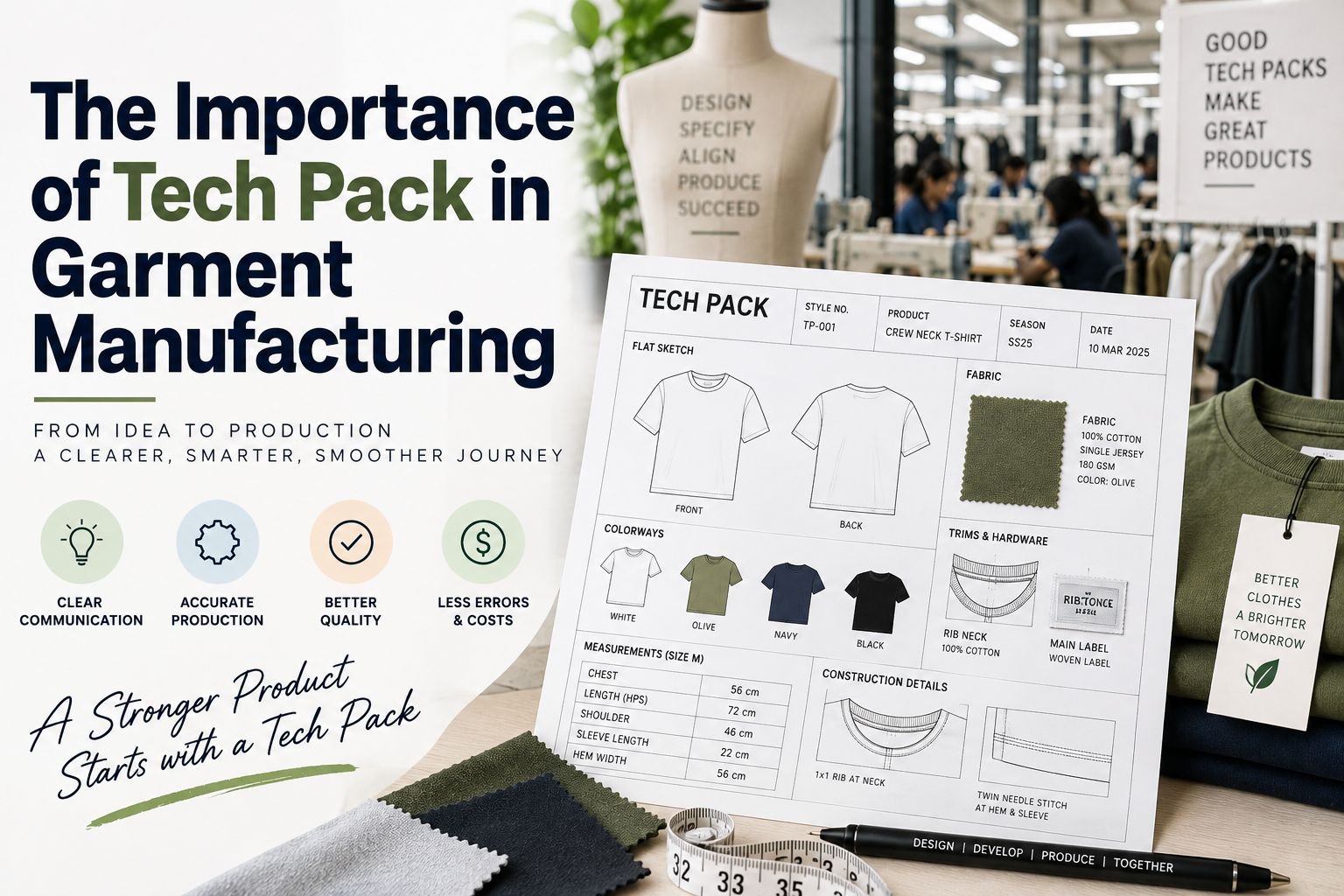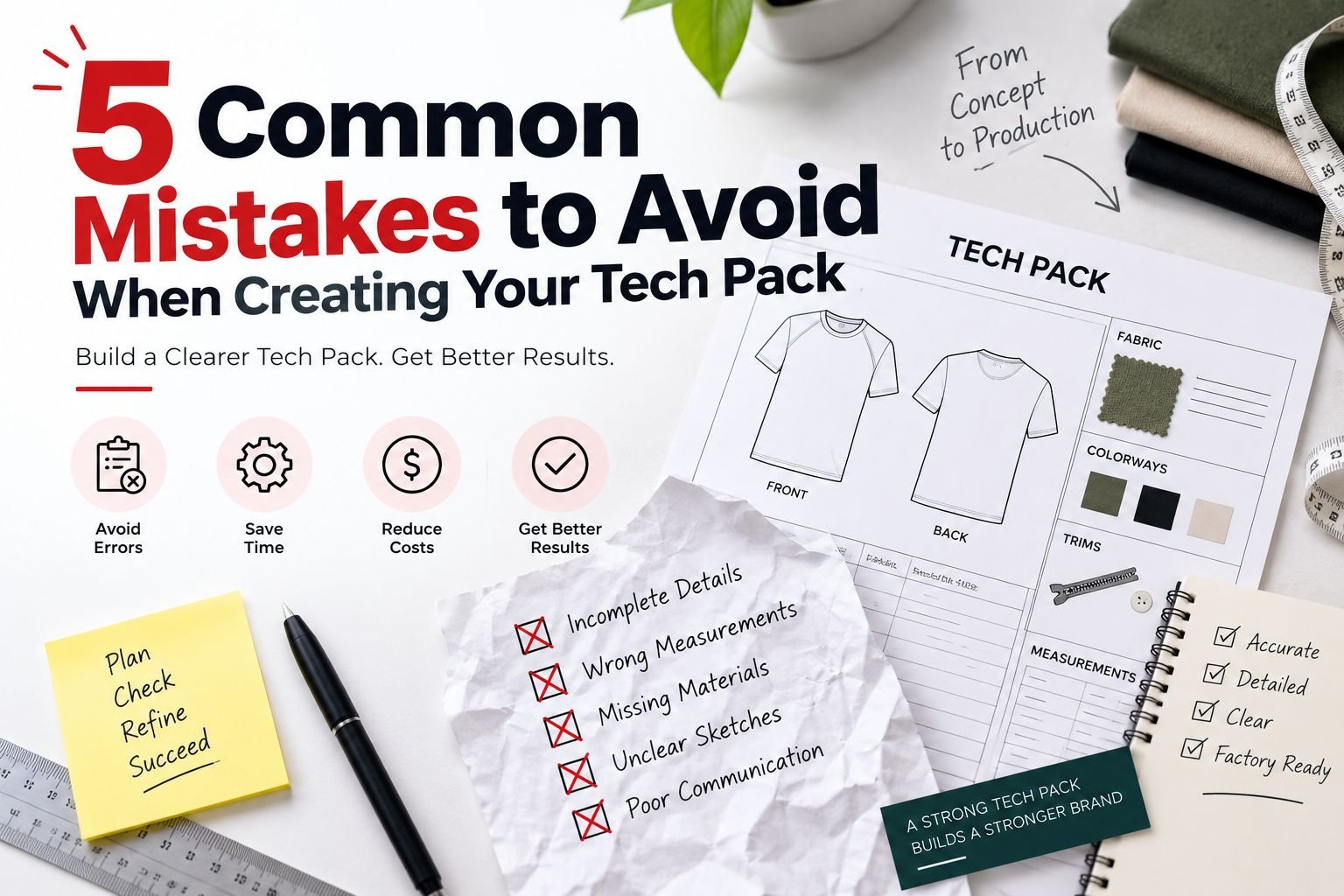
learn How to make Tech Pack for Accessories: Purses, Bags, and More (2026)
Most founders discover tech packs through apparel. They read a guide, download a template, and picture a flat sketch of a t-shirt surrounded by measurement callouts. Then they start developing a bag, a wallet, or a belt — and realize the template doesn’t fit.
It shouldn’t. A tech pack for accessories carries the same DNA as an apparel tech pack — one document, one source of truth, zero ambiguity for the factory — but the content inside it changes almost completely. There’s no size grading in the way apparel has it. There’s no fit model. Instead, there’s hardware tooling, edge finishing, gusset construction, and stitch-per-inch counts that determine whether a bag survives daily use or falls apart after three weeks.
If you’re building a purse line, a backpack collection, or any non-apparel accessory, this guide breaks down exactly how a tech pack works for these products — what goes in it, what’s different from garment tech packs, and where founders most often get it wrong.
Why Accessories Need a Different Kind of Tech Pack
Apparel tech packs are built around the body: grading across sizes, ease at the chest and waist, seam allowances that account for movement and fit. Accessories don’t have a body to fit. Instead, they have to survive structural stress — a strap holding 8 kilos of laptop and books, a zipper opening and closing thousands of times, a base sitting flat on a wet sidewalk.
That means an accessory tech pack has to answer questions an apparel tech pack never touches:
- What hardware finish is specified, and does it match across every metal component on the bag?
- How is the strap attached, and how many stress points does that attachment need to survive?
- Is the base reinforced, and with what?
- How is the edge finished — folded, bound, or painted — and what’s the tolerance for that finish?
None of this is covered by a generic sewing spec sheet. A factory that only receives a photo and a one-line brief will make its own decisions on all of the above — usually the cheapest ones, not the ones you’d choose. That’s the core reason bag and accessory brands lose money on their first production run: the tech pack didn’t specify anything a garment tech pack would normally leave out, because on a bag, those details are the product.
The Core Components of an Tech Pack for Accessories
A complete tech pack for a bag, purse, or accessory typically includes the sections below. Some overlap with apparel tech packs in structure only — the content inside each section is built for hard goods, not soft goods.
1. Cover Page and Style Overview
This page identifies the style number, style name, season, designer, and a full front, back, and three-quarter view of the product. For accessories, it’s worth adding an open/interior view here too — bags are judged as much by their interior (lining, pockets, compartments) as their exterior, and factories need to see both from page one.
2. Bill of Materials (BOM)
The BOM for an accessory tech pack is longer and more component-heavy than a typical apparel BOM. It usually separates into:
- Shell/outer material — leather, PU, canvas, nylon, with weight/thickness specified (leather in oz or mm, fabric in GSM or denier)
- Lining material — often a different fabric entirely, plus any foam, felt, or buckram interlining used for structure
- Hardware — zippers, D-rings, O-rings, swivel clasps, magnetic snaps, turn locks, feet/studs, buckles, chains
- Trims — piping, webbing, elastic, cord, woven or printed labels
- Thread — type and weight, since accessory stitching often needs heavier thread than apparel
Every hardware line needs a finish callout (gold, gunmetal, antique brass, matte silver) and, ideally, a Pantone metallic reference. Hardware that doesn’t match in finish across zip pulls, D-rings, and feet is one of the most common quality complaints on a first production run — and it’s entirely preventable at the tech pack stage.
3. Hardware Specification Sheet
Because hardware is often what makes or breaks an accessory’s perceived quality, it deserves its own dedicated page rather than a single BOM line. This sheet typically includes:
- Exact hardware dimensions (zipper pull length, D-ring diameter, buckle width)
- Finish and plating specification
- Attachment method (riveted, sewn, molded)
- Approved vendor or reference part number, if you’ve already sourced one
If you’re using custom hardware — a branded zipper pull or engraved buckle, for example — this is also where tooling requirements and minimum order quantities for that specific hardware piece get flagged, since custom tooling often adds weeks to a factory’s lead time.
4. Construction Details and Exploded View
This is the single most important section in an accessory tech pack, and the one most templates from apparel-first sources leave underdeveloped. It should call out:
- Stitch type and stitches per inch (SPI) at load-bearing seams like strap attachments and base corners
- Edge finishing method — raw edge, folded and stitched, painted, or bound — with a sample or reference photo where possible
- Reinforcement points — bar tacks or box stitching at strap ends, corners, and zipper stops
- Base construction — whether the base is reinforced with a stiffener, foam board, or metal feet, and how it’s attached to the body
- Gusset and seam construction — how side panels meet the base and front/back panels, since this is where structured bags most often fail in production
An exploded, callout-style diagram works far better here than a written paragraph. Number each construction detail and reference it against a numbered list, exactly the way an apparel tech pack calls out a collar or a cuff.
5. Points of Measure (POM) for Accessories
Accessories are measured completely differently from garments. There’s no bust, waist, or hip point — instead, POM for a bag or accessory typically includes:
| Measurement Point | What It Captures |
|---|---|
| Overall width / height / depth | Outer dimensions of the bag body |
| Base width and depth | Footprint of the bag when set down |
| Gusset depth | How much the bag expands at the sides |
| Handle drop | Distance from the top of the bag to the top of the handle loop |
| Strap length (min/max if adjustable) | Range for crossbody or adjustable straps |
| Strap width | Width of webbing or leather strap |
| Handle circumference | Grip comfort, especially for handheld styles |
| Zipper/opening length | Length of the main closure |
| Interior pocket dimensions | Sizing for laptop sleeves, phone pockets, etc. |
These points of measure should be pulled directly onto the flat sketch with callout lines, exactly the way an apparel spec sheet marks chest width or sleeve length — just measuring a completely different set of points.
6. Colorways and Material Reference
Every colorway needs a Pantone reference for both the shell material and the hardware finish, listed side by side so the factory can match them as a set rather than sourcing each independently. If you’re running more than one colorway, this section should show all of them on a single grid, since colorway mismatches between shell, lining, and hardware are a frequent cause of rejected samples.
7. Labeling, Branding, and Placement
Accessories often carry branding in ways apparel doesn’t: embossed or debossed logos on leather, hot-stamped foil branding, engraved hardware, or woven labels stitched into the lining. Each of these needs its own callout — exact placement measured from a fixed reference point (like a corner or seam), size, and technique. A logo that’s “somewhere on the front” without a measured placement point will land in a different spot on every unit.
8. Packaging Specifications
Bags and accessories are more likely than apparel to ship with branded packaging as part of the customer’s first impression — a dust bag, a printed box, or tissue paper with a specific fold. If packaging is part of your product experience, it belongs in the tech pack with material, print method, and dimensions specified, not left to a follow-up email after the samples are already made.
Key takeaway: An accessory tech pack succeeds or fails on the sections a generic apparel template skips — hardware specification, construction callouts, and points of measure built around structure rather than fit.
Category-Specific Considerations
The core sections above apply across categories, but each accessory type has its own points of failure worth specifying in detail.
Purses and Handbags
Structured handbags need explicit callouts for internal stiffening (foam, buckram, or plastic inserts) and how that stiffening is anchored so it doesn’t shift or bunch after repeated use. Unstructured or slouchy styles need the opposite specification — exact drape and softness references, since “soft” without a defined material weight is subjective and will vary batch to batch. Closures (zip-top, magnetic snap, turn lock, or open-top) each have their own hardware and reinforcement requirements that should be spelled out individually.
Totes and Shoppers
Totes carry the heaviest loads of any bag category, which makes handle attachment and base reinforcement the two highest-risk construction points. Specify handle attachment method (riveted through a reinforced tab, box-stitched directly to the body, or both) and confirm the base includes either a stiffener board or a bonded reinforcement layer. Without this, totes are the accessory category most likely to fail at the handle seam within the first few uses.
Backpacks
Backpacks add adjustable strap hardware (sliders, triglides, or ladder locks), padding specifications for straps and back panels, and often multiple compartments with their own zipper and pocket callouts. Strap webbing width and the load rating of the adjuster hardware both deserve explicit specification, since underrated hardware is a common cause of strap failure under weight.
Wallets and Small Leather Goods
Small leather goods are unforgiving on tolerance — a card slot that’s 2mm off spec either won’t hold a card securely or won’t fit in a coat pocket. These items need tighter POM tolerances than larger bags, along with explicit stitching specifications for compartment dividers, since these are typically the first seams to fail on a wallet.
Belts
Belts need buckle attachment method (riveted, snap-on, or sewn), hole spacing and hole reinforcement (grommets), and a defined length grading system — belts are one of the few accessory categories that still use a size range, though it’s based on waist measurement rather than apparel’s standard size chart.
Material Specifications That Matter Most for Accessories
Apparel tech packs typically specify fabric by GSM and content. Accessories need a more detailed material callout, because the wrong grade of leather or the wrong denier of nylon changes both the hand-feel and the durability of the finished product.
- Leather — specify whether the shell is full-grain, top-grain, split leather, or bonded leather, along with thickness in ounces or millimeters. Full-grain and top-grain hold shape and wear differently from split or bonded leather, and factories will substitute a lower grade if the tech pack doesn’t lock this down.
- PU and PVC — these synthetic alternatives vary widely in backing fabric, coating thickness, and finish (smooth, pebbled, saffiano). Referencing a swatch number or supplier code prevents the factory from sourcing a visually similar but structurally different substitute.
- Canvas and nylon — specify denier (600D, 1000D, or ballistic-grade nylon are common in bag production) along with any coating, such as PU or PVC backing for water resistance. Denier has a much bigger impact on a bag’s durability than it does on apparel, since accessories take far more abrasion and load-bearing stress.
- Interlining and stiffeners — buckram, foam board, plastic sheet, or fusible interlining used to hold a bag’s shape should be specified by type and thickness, not left as “stiffener,” since the choice affects both structure and long-term shape retention.
Locking in these specifications at the tech pack stage is what separates a sample that matches your reference and a sample that technically fits the brief but feels like a different product in hand.
Grading and Sizing for Accessories
Most accessories are produced as one size, which is one of the biggest structural differences from apparel tech packs — there’s no size run to grade across. But “one size” doesn’t mean sizing disappears entirely. What replaces grading in an accessory tech pack is usually:
- Adjustability range for straps (minimum and maximum length)
- Capacity variations across a collection — a mini, a medium, and a large version of the same silhouette, each needing its own full spec sheet rather than a scaled version of one
- Tolerance on hard-good measurements, which tends to be tighter than apparel tolerance since there’s no fabric give to absorb small production variances
If you’re developing a bag in multiple sizes, treat each size as its own style with its own tech pack rather than assuming the factory will scale proportionally — hardware doesn’t scale the way fabric does, and a buckle sized for a mini bag will look wrong, structurally and visually, on a large tote.
Sourcing Considerations for Accessory Production
Bag and leather goods factories are frequently different vendors from the CMT (cut-make-trim) factories that produce apparel, and they operate on different timelines and minimums:
- Hardware lead times often run longer than fabric lead times, especially for custom or plated hardware, and should be sequenced into your production timeline separately from material sourcing
- MOQs are frequently set per hardware color, not just per style — meaning a bag offered in three metal finishes may effectively need three times the minimum order quantity unless the factory can pool orders
- Sample rounds for structured bags often take longer than an apparel fit sample, since internal stiffening and base construction need physical testing that a flat sketch can’t fully predict
A tech pack that flags these sourcing realities up front — rather than discovering them mid-production — is one of the clearest ways an accessory founder avoids the timeline surprises that sink a launch date.
Common Mistakes Founders Make Briefing Accessory Factories
The same handful of gaps show up again and again in accessory development:
- Sending an apparel-style spec sheet with grading and fit notes that don’t apply, while leaving out hardware and construction detail that does
- Listing hardware by finish name only (“gold”) without a Pantone metallic reference, resulting in finish mismatches across zip pulls, D-rings, and feet
- Skipping construction callouts on the base and strap attachment, the two most common failure points in bag production
- Assuming a factory will “figure out” branding placement, resulting in logos landing in different positions across units
- Treating one size as no sizing at all, and leaving strap adjustability or capacity variation unspecified
Every one of these is a five-minute fix at the tech pack stage and a full re-sample cycle if caught after production starts.
Why a Professional Tech Pack Pays for Itself on Accessories
Accessory production runs on tighter tolerances and less forgiving materials than apparel — there’s no seam allowance to hide a construction shortcut on a rigid leather base the way a knit fabric can absorb a slightly uneven seam. That makes the cost of an incomplete tech pack higher, not lower, than it is for a t-shirt or dress: a missed hardware spec or an unclear construction callout typically means a full re-sample, not a quick revision.
A complete, accessory-specific tech pack gives a factory everything it needs to quote accurately, source hardware correctly, and build a first sample that’s close enough to approve without a second or third round — which is exactly where the real cost and time savings show up.
Frequently Asked Questions
Do bags and purses need a tech pack the same way clothing does?
Yes. The document structure is similar — a cover page, bill of materials, construction detail, and measurement points — but the content is built around hardware, structure, and load-bearing construction rather than body fit.
What’s the biggest difference between an apparel tech pack and an accessory tech pack?
Apparel tech packs are built around grading and fit across body sizes. Accessory tech packs are built around structural construction, hardware specification, and one-size (or adjustable) sizing rather than a graded size run.
Do accessories need points of measure (POM) like clothing does?
Yes, but the measurement points are different — width, height, depth, gusset, strap length, and handle drop replace bust, waist, and inseam.
What’s the most commonly missed section in a DIY accessory tech pack?
Construction detail on the base and strap attachment points. These are the two most common failure points in bag production, and they’re the details a generic apparel template rarely includes.
Can one tech pack cover a bag offered in multiple sizes?
It’s best not to. Hardware and proportions don’t scale linearly the way fabric does, so each size in a collection typically needs its own dedicated spec sheet rather than a scaled version of one.
Final Thoughts
A tech pack for accessories does the same job an apparel tech pack does — it removes ambiguity between your design and the factory floor — but it has to be built for hard goods, not soft goods. Hardware specification, construction callouts, and structure-based points of measure matter more here than grading ever will.
If you’re developing a bag, purse, or accessory line and need a factory-ready tech pack built specifically around these categories, TechPackGenius puts together accessory tech packs with the same fast turnaround and unlimited revisions we use for apparel — built by a team that knows the difference between a garment spec sheet and a hardware BOM. Get in touch to see how a properly built tech pack can shorten your sample rounds and get your accessory line into production faster.
Ready for Production?
Get a professional tech pack for your fashion design.
Table of Contents