
Introduction
Fast fashion is a business model in the clothing industry that focuses on producing trendy clothing quickly, selling it at relatively low prices, and frequently introducing new styles. Instead of producing a limited number of collections each year, fast fashion companies use highly responsive supply chains to bring new designs to consumers rapidly.
In simple terms, fast fashion means fashion that moves fast—from trend to design, manufacturing, retail, and eventually consumption.
The model has transformed the global fashion industry by making current trends more accessible and affordable. However, its emphasis on speed, low prices, high volumes, and short product lifecycles has also raised significant questions about textile waste, resource consumption, pollution, working conditions, and overconsumption.
What Is Fast Fashion?
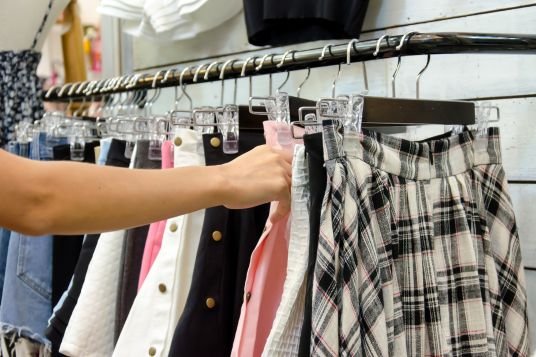
Fast fashion is the rapid production and sale of inexpensive, trend-focused clothing designed to respond quickly to changing consumer preferences.
The fast fashion business model connects several parts of the apparel supply chain:
Trend → Design → Product Development → Manufacturing → Distribution → Retail → Consumer
The objective is to reduce the time between identifying a popular trend and putting a similar product in front of shoppers.
Unlike traditional fashion models that may operate around seasonal collections, fast fashion businesses can introduce new products much more frequently. Their competitive advantage comes from combining short production cycles, responsive supply chains, data, trend monitoring, affordable materials, and high-volume sales.
Fast Fashion Definition in Simple Words
If you want a simple fast fashion definition, think of it this way:
Fast fashion is the production of inexpensive, trendy clothing at high speed so consumers can buy new styles frequently.
The important characteristics are not simply that clothing is cheap or that a brand produces a lot of clothes. Fast fashion is primarily a business and production model built around speed, trend responsiveness, affordability, and frequent product turnover.
How Does Fast Fashion Work?
The fast fashion industry relies on a highly responsive supply chain.
A simplified fast fashion production process looks like this:
- Identify emerging trends
- Develop designs quickly
- Source fabrics and components
- Create samples and tech packs
- Manufacture garments
- Distribute products rapidly
- Market them through stores, websites and social media
- Analyze customer demand
- Increase or reduce production
- Introduce the next wave of products
This approach allows brands to respond to actual customer behavior instead of relying entirely on long-range forecasts.
Quick-response manufacturing and dynamic assortment planning are important elements of this model because they help companies reduce the time between design decisions and products reaching consumers.
The Role of Technology
Technology has made the fast fashion model even faster.
Modern fashion companies can use:
- Search trends
- Social media activity
- Customer reviews
- Website behavior
- Sales data
- Artificial intelligence
- Demand forecasting
- Digital product development
- Automated inventory systems
Some newer ultra-fast fashion businesses use demand-driven supply chains and small production batches to test consumer interest before scaling successful products.
This represents an evolution from traditional fast fashion toward what is often called ultra-fast fashion.
Why Is Fast Fashion So Popular?
One of the biggest reasons fast fashion has grown is simple: consumers want fashionable clothing at affordable prices.
Fast fashion provides several advantages to shoppers.
1. Affordable Prices
Low prices make current fashion trends accessible to a much larger audience.
Consumers can experiment with different styles without making the financial commitment associated with luxury or designer clothing.
2. Frequent New Styles
Fast fashion retailers constantly refresh their product selections.
This creates a sense that shoppers need to return frequently because something new may be available.
3. Trend Accessibility
A trend appearing on social media, at a fashion event, or among celebrities can quickly influence mainstream apparel.
Fast fashion helps shorten the distance between fashion trends and everyday consumers.
4. Convenience
E-commerce has made fast fashion even more accessible.
Consumers can discover hundreds or thousands of styles through websites and mobile apps without visiting physical stores.
5. Social Media Influence
Instagram, TikTok, Pinterest, influencers and other digital platforms can accelerate fashion trends.
The result is a much faster cycle of:
See → Want → Buy → Wear → Share → Repeat
Research has also identified social media and influencer-driven trend cycles as important forces accelerating contemporary fashion consumption.
What Are Examples of Fast Fashion?
Some widely recognized examples associated with the fast fashion model include:
- Zara
- H&M
- Shein
- Forever 21
- Primark
- Fashion Nova
However, it is important to understand that not every affordable fashion company operates in exactly the same way, and the term “fast fashion” describes a business model rather than a simple list of brands.
For example, traditional affordable basics and fast fashion are not necessarily identical. Fast fashion is particularly associated with frequent trend changes, rapid product turnover, and low-cost production.
What Is Ultra-Fast Fashion?
Ultra-fast fashion is an even more accelerated version of the fast fashion business model.
Traditional fashion may operate on relatively long development calendars. Fast fashion shortened those cycles considerably. Ultra-fast fashion uses digital platforms, real-time consumer data, small production batches and highly responsive suppliers to shorten them further.
The OECD describes ultra-fast fashion supply chains as demand-driven systems that can operate with lead times ranging from only a few days to around two weeks in some cases.
This model can allow companies to test numerous designs, identify products that attract demand and rapidly increase production of successful styles.
What Is the Environmental Impact of Fast Fashion?
The environmental impact of fast fashion is one of the biggest criticisms of the industry.
Fashion requires raw materials, energy, water, transportation, chemicals, packaging and manufacturing. When clothing is produced in increasingly large quantities and used for shorter periods, the environmental burden can increase.
Major concerns include:
Textile Waste
Short clothing lifecycles can contribute to large quantities of discarded garments.
Research published in Nature Reviews Earth & Environment estimates that the broader fashion industry generates more than 92 million tonnes of waste annually and consumes enormous quantities of water across its value chain.
Water Consumption
Textile production can require substantial amounts of water, particularly during fiber production, dyeing and finishing.
Chemical Pollution
Dyeing, finishing and other textile-processing activities can involve chemicals that create environmental risks if poorly managed.
Greenhouse Gas Emissions
Emissions can occur throughout the clothing lifecycle—from raw-material production and manufacturing to transportation and end-of-life disposal.
Synthetic Fibers
Materials such as polyester are widely used because they can be relatively inexpensive, versatile and durable. However, polyester is fossil-fuel based and can contribute to microplastic pollution.
Overproduction
Perhaps the fundamental issue is the relationship between rapid production and rapid consumption.
When companies can quickly create new products and consumers are encouraged to buy them frequently, the result can be a cycle of production → consumption → disposal → replacement.
The European Environment Agency identifies textile consumption as a major source of environmental pressure and notes that the evolution toward inexpensive, short-lived clothing has contributed to these impacts.
What Are the Social Problems With Fast Fashion?
The discussion around fast fashion isn’t limited to the environment.
The industry’s cost pressures and compressed production schedules can also create challenges related to worker wages, working conditions, occupational safety and labor rights.
Fast fashion supply chains can span multiple countries and involve numerous suppliers and subcontractors, making transparency and oversight particularly important.
This is why discussions about ethical fashion increasingly focus on supply-chain transparency, worker protections and responsible purchasing practices rather than looking only at the final garment.
Advantages and Disadvantages of Fast Fashion
| Advantages | Disadvantages |
|---|---|
| Affordable clothing | Increased textile waste |
| Quick access to trends | Environmental pressure |
| Large variety of styles | Shorter garment lifecycles |
| Convenient online shopping | Resource consumption |
| Makes fashion accessible | Potential labor concerns |
| Rapid response to consumer demand | Encourages frequent consumption |
The important point is that fast fashion has genuine consumer benefits while also creating substantial external costs.
It has democratized access to fashion, but its speed and volume create sustainability challenges that the industry must address.
Fast Fashion vs. Slow Fashion
The easiest way to understand the difference between fast fashion and slow fashion is to compare their priorities.
| Fast Fashion | Slow Fashion |
|---|---|
| Speed | Longevity |
| Low prices | Value and durability |
| Frequent trends | Timeless designs |
| High product turnover | Lower product turnover |
| Large production volumes | More controlled production |
| Shorter product lifecycles | Longer product lifecycles |
| Trend-driven consumption | Conscious consumption |
Slow fashion focuses on designing, producing and purchasing clothing with greater emphasis on durability, responsible production and longer use.
It doesn’t necessarily mean that every slow-fashion garment is perfect or environmentally harmless. Rather, it represents a different philosophy: buy less, choose better, and keep garments longer.
Is Fast Fashion Sustainable?
In its conventional form, fast fashion faces significant sustainability challenges.
The fundamental tension is that sustainability generally encourages longer product lifespans, reduced resource consumption and less waste, while the fast fashion model is built around frequent product introduction and high consumption.
That does not mean every fast fashion product has exactly the same environmental footprint.
Material selection, manufacturing efficiency, transportation, garment durability, repairability and consumer use all matter.
For example, a recent life-cycle assessment of fast-fashion T-shirts found that extending garment lifespan could substantially reduce emissions, illustrating why how long clothing is used matters alongside how it is produced.
How Can Fashion Brands Become More Sustainable?
Fashion brands looking to move toward more sustainable practices can consider:
Better Product Development
Investing in accurate tech packs, specifications and sampling can reduce production errors, material waste and unnecessary sample iterations.
Higher-Quality Garments
Clothing designed for durability can potentially remain in use longer.
Responsible Material Selection
Brands can evaluate materials based on their environmental impacts, durability, recyclability and intended use.
Demand-Based Production
Producing closer to actual demand can help reduce unnecessary inventory and overproduction.
Supply-Chain Transparency
Brands should understand where their fabrics, trims and garments come from and establish appropriate supplier standards.
Circular Fashion
Repair, resale, recycling, upcycling and other circular approaches can help extend the useful life of garments.
What Can Consumers Do About Fast Fashion?
Consumers don’t necessarily have to stop buying all affordable fashion overnight.
Instead, practical changes can include:
- Buy fewer pieces.
- Choose durable clothing.
- Avoid impulse purchases.
- Wear garments for longer.
- Repair damaged clothing.
- Buy secondhand where practical.
- Donate responsibly.
- Resell unwanted garments.
- Look for transparent brands.
- Consider fabric composition and garment quality.
- Ask whether a trend will still be appealing after a few months.
The biggest opportunity is often extending the useful life of clothing rather than simply replacing one purchase with another.
Frequently Asked Questions About Fast Fashion
What does fast fashion mean?
Fast fashion means a clothing business model focused on rapidly producing affordable, trend-driven garments and frequently introducing new products.
Why is fast fashion called fast fashion?
It is called fast fashion because the model prioritizes speed—from identifying trends and developing designs to manufacturing, distribution and retail.
Is Zara fast fashion?
Zara is widely associated with the fast fashion business model because of its emphasis on rapid product turnover, responsive supply chains and frequent assortment changes.
Is Shein fast fashion?
Shein is commonly described as an ultra-fast fashion retailer because its digital, demand-driven model can test and introduce products extremely rapidly.
Why is fast fashion bad for the environment?
Fast fashion can contribute to environmental problems through high production volumes, resource consumption, chemical pollution, greenhouse gas emissions, transportation, textile waste and short garment lifecycles.
What is the opposite of fast fashion?
Slow fashion is generally considered the alternative to fast fashion. It emphasizes durability, longer garment lifecycles, responsible production and more conscious consumption.
Is all cheap clothing fast fashion?
No. Low price alone doesn’t define fast fashion. The model is better understood by looking at factors such as production speed, trend turnover, supply-chain responsiveness, product volume and consumption patterns.
Final Thoughts
So, what is fast fashion?
Fast fashion is more than inexpensive clothing. It is a business model built around speed, affordability, trend responsiveness and frequent product turnover.
It has changed how consumers discover, purchase and replace clothing. At the same time, its rapid production and consumption cycles have created significant environmental and social challenges.
The future of fashion is therefore unlikely to be about simply choosing between “fast” and “slow.” The bigger opportunity is to develop a fashion industry that combines efficient technology, better product development, responsible manufacturing, higher-quality garments, transparent supply chains and longer product lifecycles.
For fashion brands, this shift begins long before a garment reaches the store. Better design, accurate specifications, smarter material selection and efficient tech-pack development can help create products that are easier to manufacture correctly and designed with their intended lifecycle in mind.
Ready for Production?
Get a professional tech pack for your fashion design.
Table of Contents