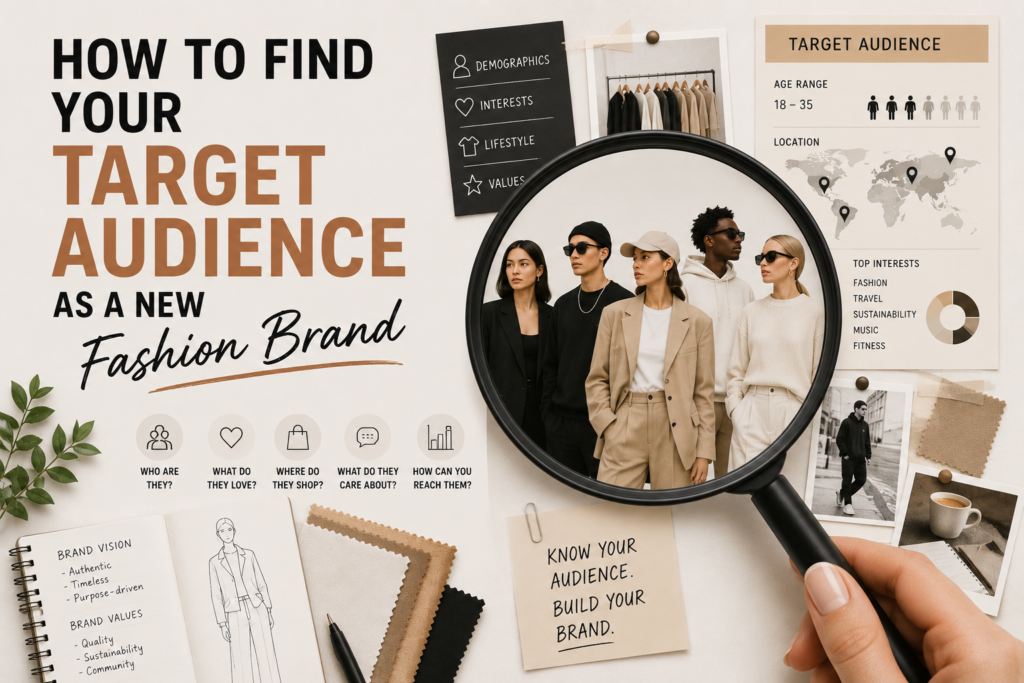
How to Find Your Target Audience as a New Fashion Brand (Step-by-Step Guide for Global Success)
You don’t need millions of followers to build a successful fashion brand.
You need the right people who truly connect with what you create.
Many new fashion entrepreneurs fail not because their designs are bad — but because they try to sell to everyone.
Fashion success is not about popularity.
It is about relevance.
When your brand speaks directly to the right audience, everything becomes easier:
- Marketing becomes cheaper
- Sales become faster
- Customers become loyal
- Your brand develops a strong identity
This guide will help you clearly understand how to find your target audience as a new fashion brand, even if you are starting from zero.
What is a Target Audience in Fashion?
Your target audience is the group of people most likely to buy your clothing.
These are people who:
- Like your design style
- Can afford your pricing
- Feel emotionally connected to your brand
- Have a reason to wear your products
- Share similar lifestyle preferences
Example:
A brand selling luxury silk sarees is not targeting teenagers.
A brand selling oversized streetwear hoodies is not targeting corporate professionals.
Trying to sell everything to everyone creates confusion.
Clear brands attract clear customers.
Why Identifying Your Target Audience is Critical for Fashion Brand Success
Many new clothing brands focus only on product design.
But successful brands focus on customer understanding first.
When you know your audience:
1. Your designs become more appealing
You create products people already want.
2. Your marketing becomes easier
Your ads speak directly to the right people.
3. Your pricing becomes clear
Luxury audience vs budget audience = different pricing strategies.
4. Your brand voice becomes stronger
Luxury brands sound different from streetwear brands.
5. Your website converts better
Clear messaging attracts serious buyers.
This is why global brands invest heavily in market research before launching collections.
Step 1: Start with the Problem Your Fashion Brand Solves
Every successful brand solves a problem.
Ask yourself:
Why should someone buy from your brand instead of others?
Common fashion problems:
- Can’t find affordable premium-looking clothes
- Need comfortable office wear
- Want modest fashion with modern style
- Want sustainable clothing
- Need plus-size fashionable outfits
- Want gym wear that fits well
- Need travel-friendly wrinkle-free clothes
Example:
A brand selling wrinkle-free shirts targets:
- business travelers
- corporate professionals
- frequent flyers
A brand selling organic cotton baby clothing targets:
- new parents
- eco-conscious families
Your target audience depends on the problem you solve.
Step 2: Define Your Ideal Customer Profile (ICP)
An Ideal Customer Profile describes your perfect buyer.
You don’t need thousands of customers.
You need clarity about one perfect customer.
Example Ideal Customer Profile
Name: Sarah
Age: 28
Location: London
Profession: Marketing Manager
Income: Middle-high income
Lifestyle: Busy, social, fitness conscious
Fashion Preference: Minimalist, comfortable, premium basics
Shopping Platforms: Instagram, Shopify stores
Buying Motivation: Wants stylish clothes she can wear daily
When you know your ideal customer:
Design decisions become easy.
Step 3: Choose Your Fashion Niche
Fashion niche means a focused segment of market.
General brands struggle.
Focused brands grow faster.
Popular global fashion niches
Streetwear
- oversized t-shirts
- hoodies
- graphic prints
- sneaker culture
Sustainable Fashion
- organic fabrics
- eco-friendly dyes
- ethical manufacturing
Athleisure
- gym wear
- yoga wear
- active lifestyle clothing
Luxury Fashion
- premium fabrics
- handcrafted garments
- limited collections
Modest Fashion
- covered silhouettes
- elegant styling
- cultural preferences
Plus Size Fashion
- stylish extended sizing
- body positive designs
Kidswear
- comfortable
- safe fabrics
- playful designs
POD (Print on Demand)
- graphic designs
- slogan clothing
- custom artwork apparel
Focused niche = focused audience.
Step 4: Understand Demographics vs Psychographics
Many beginners only look at age and gender.
But fashion buying decisions are emotional.
Demographics (basic information)
- Age
- Gender
- Country
- Income level
- Education
- Occupation
Psychographics (deep information)
- Personality
- Lifestyle
- values
- interests
- shopping habits
- social media behavior
Example:
Two women aged 25 can have totally different fashion preferences.
One likes luxury brands.
One prefers thrift fashion.
Understanding psychology improves marketing accuracy.
Step 5: Study Your Competitors’ Audience
Competitor research saves time.
Observe brands selling similar products.
Check:
- Who follows them on Instagram?
- What comments customers write?
- Which products get most likes?
- Which posts go viral?
- What price range they use?
Example:
If a streetwear brand has:
- mostly Gen Z followers
- strong engagement on bold graphics
Then their audience prefers expressive fashion.
Competitor research gives direction.
Not copying — learning.
Step 6: Use Social Media Insights to Identify Audience
Social media platforms provide free audience data.
Instagram Insights shows:
- Age range
- Country
- Gender
- Active hours
- Content engagement
TikTok shows:
- trending fashion interests
- popular styles
- viral clothing ideas
Pinterest shows:
- trending colors
- seasonal styles
- fashion mood boards
Social media reveals real customer behavior.
Step 7: Identify Where Your Customers Spend Time Online
Different audiences use different platforms.
Platform-wise fashion audience behavior
- fashion lovers
- influencers
- brand discovery
- design inspiration seekers
- wedding fashion
- aesthetic lovers
TikTok
- Gen Z audience
- viral fashion trends
- corporate clothing brands
- professional wear
Amazon / Etsy
- ready-to-buy customers
Shopify stores
- independent brand lovers
Understanding platforms improves marketing ROI.
Step 8: Talk Directly to Potential Customers
Direct feedback is powerful.
Ask questions like:
- What type of clothing do you struggle to find?
- Which brands do you like?
- What price range feels comfortable?
- What fabric do you prefer?
- Which occasions you buy clothes for?
You can ask via:
- Instagram polls
- WhatsApp groups
- Reddit communities
- fashion forums
- email surveys
Customers love sharing opinions.
Listening builds strong brands.
Step 9: Analyze Buying Behavior
Understanding buying behavior improves product success.
Questions to consider:
- Do customers buy frequently or occasionally?
- Do they prefer trendy or timeless designs?
- Do they compare prices?
- Do they follow influencers?
- Do they wait for discounts?
Example:
Luxury buyers value exclusivity.
Budget buyers value deals.
Athleisure buyers value comfort.
Each audience has unique expectations.
Step 10: Create a Customer Persona Document
Document your target audience clearly.
Include:
- Age group
- gender
- location
- lifestyle
- fashion preferences
- price sensitivity
- buying triggers
- social platforms used
- fabric preferences
- style inspiration
This document guides:
- design team
- marketing team
- website copywriting
- product photography style
Step 11: Test Your Audience Before Full Launch
Smart brands test before scaling.
Ways to test audience:
- Launch 5–10 sample designs
- Run small Instagram ads
- create pre-order campaign
- collect feedback
- track engagement
- observe click rates
Small testing prevents big losses.
Step 12: Identify Emotional Connection with Customers
Fashion is emotional.
People buy clothing because it makes them feel:
- confident
- attractive
- comfortable
- unique
- premium
- powerful
Example:
Gym wear buyers want confidence.
Luxury buyers want status.
Streetwear buyers want identity.
Emotional branding increases loyalty.
Step 13: Understand Global vs Local Audience Differences
Fashion preferences vary by region.
USA market
- casual fashion popular
- athleisure demand high
European market
- minimalist designs popular
- neutral colors preferred
Middle East market
- modest fashion demand high
- premium fabrics preferred
Indian market
- ethnic fusion trending
- festive wear demand strong
Understanding geography improves product relevance.
Step 14: Use Data Tools to Find Audience Trends
Helpful tools:
- Google Trends
- Meta Audience Insights
- Pinterest Trends
- Amazon Best Sellers
- TikTok Creative Center
These tools show what customers are searching.
Data reduces guesswork.
Step 15: Align Your Branding with Your Target Audience
Your brand identity should match your audience preferences.
Brand elements include:
- logo style
- color palette
- typography
- packaging style
- website design
- photoshoot aesthetic
- brand messaging tone
Example:
Luxury brand:
- minimalist logo
- neutral colors
- premium packaging
Streetwear brand:
- bold fonts
- vibrant colors
- expressive visuals
Consistency builds trust.
Real-Life Example of Target Audience Clarity
A startup launched oversized hoodies for everyone.
Sales were slow.
Later they focused only on:
“anime lovers aged 16–30”
They created:
- anime inspired graphics
- relatable captions
- targeted Instagram ads
Sales increased 3x in 3 months.
Clarity creates growth.
Common Mistakes New Fashion Brands Make
Targeting everyone
Confuses messaging.
Ignoring customer feedback
Leads to unsold inventory.
Copying competitors blindly
Loses brand uniqueness.
Choosing too broad niche
Increases marketing cost.
Pricing mismatch with audience
Reduces conversion rate.
Avoiding these mistakes saves time and money.
Quick Checklist to Identify Your Target Audience
✔ What problem does your clothing solve?
✔ Who needs this solution most?
✔ What age group relates to your design?
✔ What price range suits your customer?
✔ Where does your audience shop online?
✔ What brands do they already follow?
✔ What emotions does your product create?
Clear answers = clear audience.
Final Thoughts: Your Brand is Not for Everyone — And That’s Good
Trying to please everyone weakens your brand.
Strong brands focus on a specific group and serve them extremely well.
When your audience feels understood, they become loyal customers.
Start small.
Stay consistent.
Listen to your customers.
Your ideal audience already exists.
You just need to identify them clearly.
If you build for them, they will support you.
FAQs: Finding Target Audience for Fashion Brand
1. What is the easiest way to find target customers for clothing brand?
Start with your niche and problem you solve. Research similar brands and observe their audience behavior.
2. Can a fashion brand have multiple target audiences?
Yes, but beginners should focus on one core audience first for clarity and stronger branding.
3. How long does it take to identify target audience?
Basic clarity can be achieved in 1–2 weeks using research, surveys, and competitor analysis.
4. Is target audience important for small clothing brands?
Yes. Small brands benefit even more because focused marketing reduces cost and increases sales.
5. Should pricing depend on target audience?
Absolutely. Luxury audience expects premium pricing, while budget audience prefers affordability.
6. Can target audience change over time?
Yes. As brand grows, audience segments may expand or evolve.
7. What tools help identify fashion customer trends?
Google Trends, Instagram Insights, Pinterest Trends, and competitor research are very effective.
Table of Contents