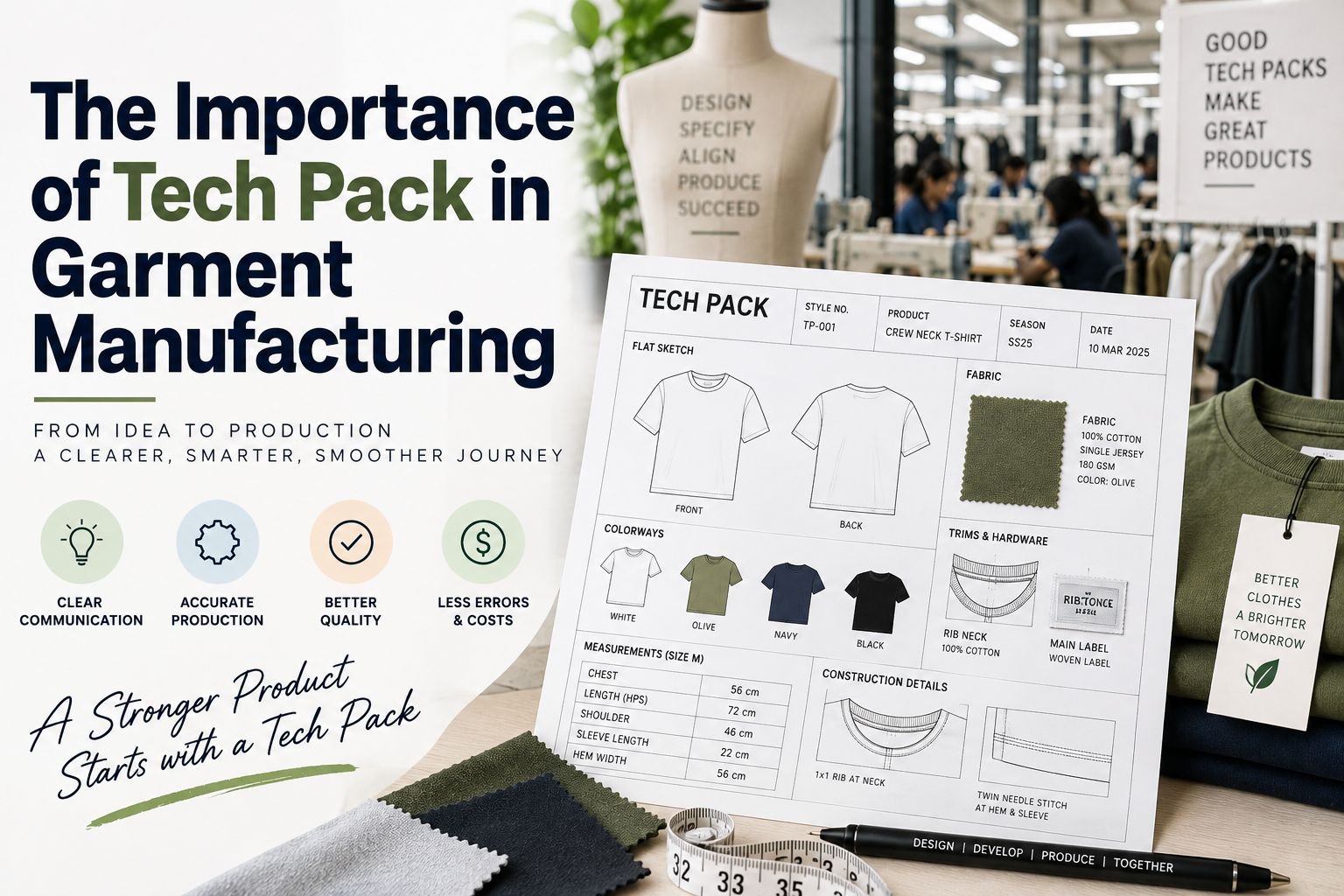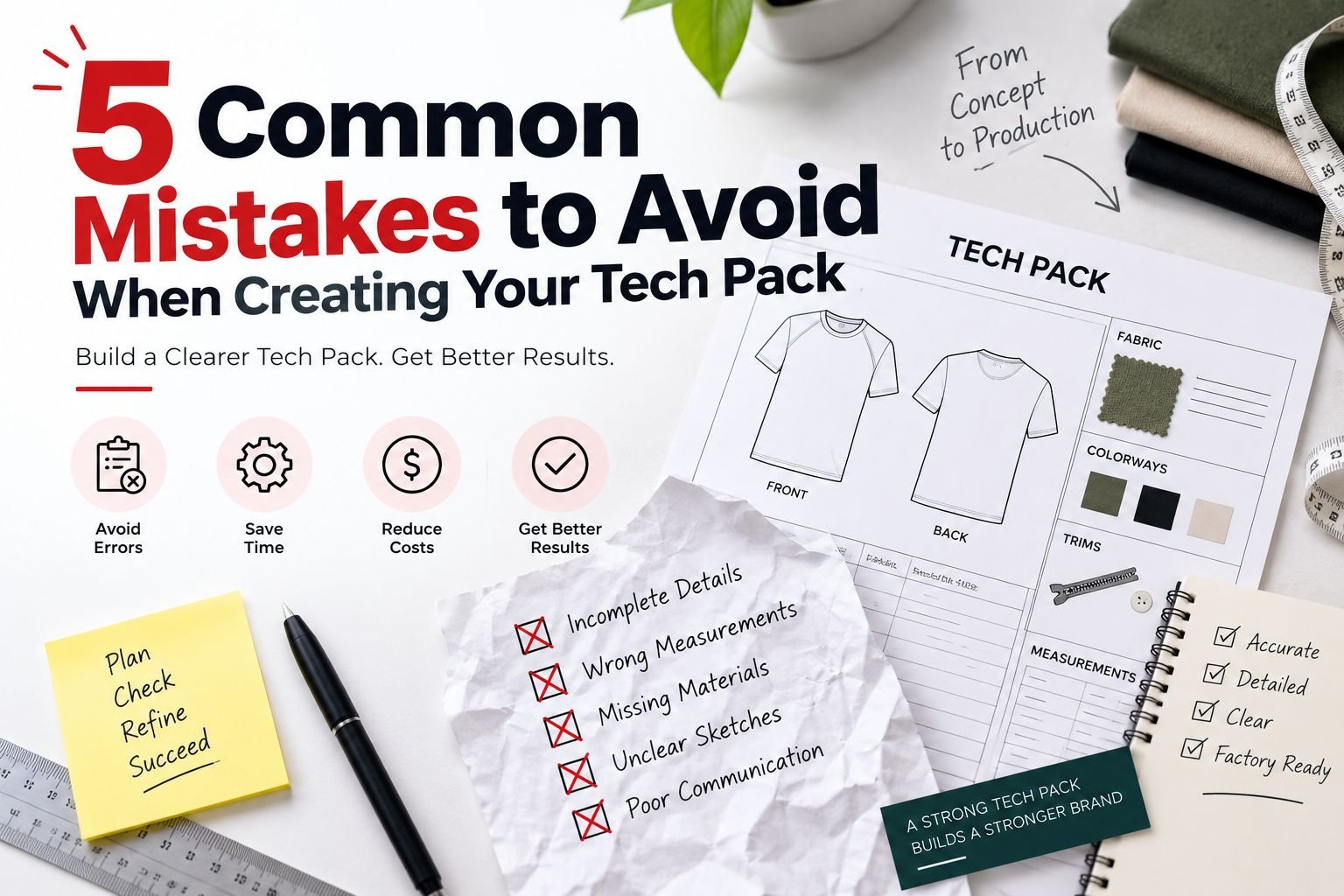
How long it takes to create a tech pack for clothing manufacturing 2026
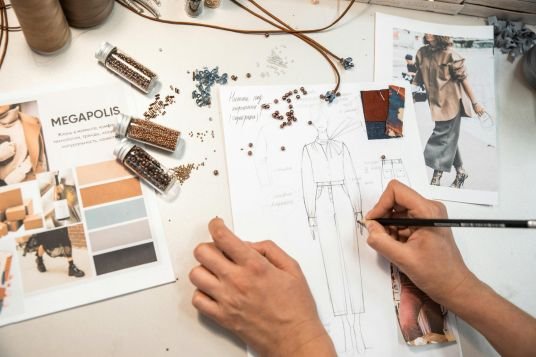
Imagine spending months designing the perfect clothing collection.
You have the vision. You have the sketches. You have the fabric ideas.
Then you send everything to a manufacturer—and receive a sample that looks nothing like what you imagined.
This is one of the most common and expensive mistakes in the fashion industry.
The missing piece is often a well-prepared tech pack.
But before investing in one, many fashion entrepreneurs ask the same question:
“How long does it take to create a tech pack?”
The answer depends on several factors, including garment complexity, available design details, revisions, and the experience of the tech pack designer. In some cases, a tech pack can be completed within a day. In others, it may take several weeks.
In this guide, we’ll break down the entire process, explain what affects timelines, and help you understand what to expect when creating a professional apparel tech pack.
The Short Answer: How Long Does It Take to Create a Tech Pack?
For most clothing products, creating a professional tech pack takes:
| Garment Type | Average Timeline |
|---|---|
| Basic T-shirt | 4–8 hours |
| Hoodie | 1–2 days |
| Leggings | 1–2 days |
| Dress | 2–4 days |
| Jacket | 3–7 days |
| Outerwear | 5–10 days |
| Complex Fashion Collection | 2–6 weeks |
However, these timelines assume that the designer already has sufficient information.
If important details are missing, the process can take significantly longer.
Why Tech Pack Timelines Vary So Much
Many first-time clothing brand owners assume every tech pack takes the same amount of time.
In reality, creating a tech pack for a simple oversized T-shirt is completely different from creating one for a waterproof technical jacket.
Several factors influence the timeline.
1. Complexity of the Garment
This is the biggest factor.
A basic T-shirt usually contains:
- One body panel
- Basic seams
- Minimal trims
- Standard measurements
A technical jacket may contain:
- Multiple panels
- Specialized stitching
- Waterproof zippers
- Adjustable components
- Custom hardware
- Performance features
More details require more documentation.
As complexity increases, so does the time needed to build the tech pack.
2. Availability of Design Information
Many fashion startups approach tech pack designers with only an idea.
For example:
“I want an oversized streetwear hoodie.”
That statement alone isn’t enough.
The tech pack designer still needs:
- Front and back design
- Measurements
- Fabric preferences
- Pocket details
- Rib specifications
- Drawcord information
- Branding placements
If these details aren’t available, additional meetings and revisions become necessary.
This extends the timeline.
3. Number of Revisions
Rarely is a tech pack approved on the first draft.
Most brands request adjustments such as:
- Changing measurements
- Updating artwork
- Modifying trims
- Revising construction methods
- Adding additional colorways
Each revision cycle adds extra time.
Experienced fashion businesses often plan for at least one or two revision rounds before final approval.
4. Product Category
Different product categories require different levels of documentation.
For example:
Easy Categories
- T-shirts
- Tank tops
- Sweatshirts
- Joggers
Moderate Categories
- Dresses
- Denim
- Activewear
- Swimwear
Advanced Categories
- Outerwear
- Technical apparel
- Workwear
- Sports performance garments
The more technical the product, the longer the development process.
The Typical Tech Pack Creation Process
To understand timing better, let’s look at the complete workflow.
Step 1: Design Discovery
Average Time: 1–3 Days
This is where ideas become clear.
The designer gathers information about:
- Product vision
- Target customer
- Market positioning
- Fabric preferences
- Design inspiration
For example, a luxury streetwear brand and a budget POD brand may require completely different specifications.
The clearer the brand’s vision, the faster this stage moves.
Step 2: Technical Sketch Development
Average Time: 4–12 Hours
Technical sketches are clean, detailed drawings that show the garment from multiple angles.
Unlike fashion illustrations, technical sketches focus on construction.
They show:
- Seams
- Panels
- Stitching
- Closures
- Pockets
- Design details
These sketches become the foundation of the entire tech pack.
Step 3: Measurement Specification Sheet
Average Time: 2–8 Hours
The measurement specification sheet defines the size of every garment component.
Examples include:
- Chest width
- Sleeve length
- Body length
- Shoulder width
- Hem opening
Factories use these measurements to create samples.
Even small errors can lead to poor-fitting garments.
This stage requires precision.
Step 4: Construction Details
Average Time: 3–10 Hours
This section explains how the garment should be assembled.
Examples:
- Stitch type
- Seam construction
- Edge finishing
- Reinforcement methods
- Topstitching requirements
A good tech pack removes uncertainty from manufacturing.
The goal is to eliminate guessing.
Step 5: Material and Trim Specifications
Average Time: 2–6 Hours
Manufacturers need to know exactly what materials to use.
This section includes:
- Fabric composition
- GSM (fabric weight)
- Color references
- Zippers
- Buttons
- Drawcords
- Labels
- Packaging materials
For example:
Instead of writing “black fabric,” a professional tech pack may specify:
“100% Cotton French Terry, 400 GSM, Pantone Black C.”
The more specific the details, the better the manufacturing outcome.
Step 6: Artwork and Branding Placement
Average Time: 1–5 Hours
This stage defines:
- Logo placement
- Print dimensions
- Embroidery locations
- Neck labels
- Hang tags
- Packaging graphics
For streetwear brands, this section is often extremely detailed because branding is a major selling point.
Step 7: Final Review and Quality Check
Average Time: 1–2 Days
Before sending the tech pack to a manufacturer, every page should be reviewed.
Common issues checked include:
- Missing measurements
- Incorrect dimensions
- Inconsistent terminology
- Artwork placement errors
- Fabric mismatches
A final review prevents costly mistakes later.
How Long Does a Tech Pack Take for Different Clothing Products?
Let’s examine some common product categories.
T-Shirts
Average Timeline: 4–8 Hours
A standard T-shirt is one of the fastest products to document.
Typically includes:
- Front sketch
- Back sketch
- Basic measurements
- Fabric specifications
- Print placements
Many startup clothing brands begin here because development is relatively simple.
Hoodies and Sweatshirts
Average Timeline: 1–2 Days
Hoodies introduce more complexity.
Additional details include:
- Hood construction
- Ribbing
- Kangaroo pockets
- Drawcords
- Branding elements
These extra components increase documentation time.
Activewear
Average Timeline: 2–4 Days
Activewear often requires:
- Compression specifications
- Stretch fabric details
- Flatlock stitching
- Performance features
Because fit and function are critical, tech packs become more detailed.
Denim Products
Average Timeline: 3–5 Days
Denim garments require extensive documentation.
This may include:
- Wash instructions
- Distressing details
- Rivet placement
- Pocket construction
- Stitch color specifications
Global denim brands spend significant time perfecting these details.
Jackets and Outerwear
Average Timeline: 5–10 Days
Outerwear is among the most complex categories.
Documentation often includes:
- Multiple layers
- Linings
- Insulation
- Waterproof treatments
- Technical hardware
- Specialized construction methods
These products demand highly detailed tech packs to ensure accurate production.
Why Rushing a Tech Pack Can Cost Thousands
One of the biggest mistakes new fashion entrepreneurs make is trying to speed through product development.
A rushed tech pack often leads to:
- Incorrect samples
- Production delays
- Extra sampling rounds
- Material waste
- Increased manufacturing costs
Consider a startup ordering 500 hoodies.
If sizing specifications are incorrect, the entire production run may become unsellable.
A few extra days spent perfecting the tech pack can save thousands of dollars later.
How Fashion Brands Can Speed Up the Tech Pack Process
While every garment requires careful documentation, there are several ways to reduce development time without sacrificing quality.
The secret is preparation.
The more information you provide upfront, the faster your tech pack designer can work.
1. Prepare Reference Images
Visual references eliminate confusion.
Instead of saying:
“I want a premium oversized hoodie.”
Provide examples showing:
- Desired fit
- Sleeve shape
- Hood construction
- Pocket style
- Branding placement
Images help designers understand your vision instantly.
2. Define Your Fabric Choices Early
Many delays happen because brands haven’t decided on fabrics.
Before starting your tech pack, try to answer:
- What fabric composition do you want?
- What fabric weight (GSM) is required?
- Should the fabric be stretchy or structured?
- Is sustainability important?
For example:
A heavyweight streetwear hoodie may require 400–500 GSM French Terry, while an athletic hoodie may use a lighter performance fleece.
Making these decisions early saves days of back-and-forth communication.
3. Create a Clear Design Brief
A design brief acts like a roadmap.
Include:
- Brand story
- Target audience
- Product purpose
- Design inspiration
- Competitor references
- Preferred materials
A strong design brief helps everyone move faster.
4. Approve Revisions Quickly
Some projects get delayed not because of the designer but because approvals take weeks.
If you’re serious about launching quickly:
- Review drafts promptly
- Consolidate feedback
- Avoid unnecessary changes
Fast decisions lead to faster development.
5. Work With Experienced Tech Pack Specialists
An experienced tech pack creator already understands:
- Manufacturing terminology
- Global factory requirements
- Construction methods
- Industry standards
This significantly reduces errors and revision cycles.
Many clothing brands discover that hiring a specialist actually saves time and money compared to trying to create tech packs themselves.
Real-World Examples from Global Fashion Markets
Let’s look at how different fashion businesses approach tech pack development.
Example 1: US Streetwear Startup
A new Los Angeles streetwear brand wanted to launch:
- Oversized T-shirts
- Hoodies
- Sweatpants
Because they already had:
- Logo files
- Fabric preferences
- Design references
Their tech pack development took approximately 5–7 days for the entire collection.
The manufacturer produced accurate first samples with minimal revisions.
Example 2: European Luxury Fashion Label
A premium fashion label in Italy developed a tailored jacket collection.
The garments included:
- Custom linings
- Luxury buttons
- Complex construction details
Creating each tech pack required nearly a week due to the precision involved.
However, this investment reduced manufacturing errors significantly.
Example 3: Australian Activewear Brand
An activewear startup creating leggings and sports bras needed:
- Compression specifications
- Stretch recovery details
- Performance fabrics
The tech pack process took roughly 3–4 days per style.
Because fit was critical, extra time was allocated for measurements and construction notes.
Example 4: Print-on-Demand Clothing Brand
A POD entrepreneur launching graphic T-shirts required only basic specifications.
Their tech packs were completed within a few hours per design because the garment structure remained unchanged.
Only artwork placements varied.
In-House vs Outsourced Tech Pack Creation
Many fashion entrepreneurs wonder whether they should create tech packs themselves or hire experts.
Let’s compare both options.
Creating Tech Packs In-House
Advantages:
- Full control
- Lower direct costs
- Faster communication
Challenges:
- Learning curve
- Technical knowledge required
- Higher risk of errors
- More time investment
For first-time founders, creating professional tech packs can take several days or even weeks.
Outsourcing Tech Pack Development
Advantages:
- Professional quality
- Faster turnaround
- Fewer manufacturing mistakes
- Better factory communication
Challenges:
- Additional cost
- Need for clear communication
For most startups, outsourcing to experienced professionals often reduces overall development time.
What may take a beginner 20–30 hours could take an expert only a few hours.
What Makes a High-Quality Tech Pack?
Speed is important.
But quality is more important.
A fast tech pack that lacks critical information can create expensive manufacturing problems.
A professional apparel tech pack should contain:
Detailed Technical Sketches
Manufacturers should immediately understand the garment’s design.
Accurate Measurements
Every important dimension should be clearly documented.
Material Specifications
Factories should know exactly what materials to source.
Construction Instructions
The sewing team should understand how the garment must be assembled.
Branding Information
Logos, labels, tags, and packaging details should be clearly defined.
Color References
Colors should be standardized using systems such as Pantone references whenever possible.
Revision Tracking
Every update should be documented to prevent confusion.
Common Reasons Tech Pack Projects Get Delayed
Understanding these issues can help you avoid them.
Missing Design Information
Many founders start the process before finalizing their designs.
This creates delays later.
Frequent Design Changes
Changing core design elements repeatedly extends timelines.
Try to finalize your concept before documentation begins.
Unclear Communication
Vague instructions often create misunderstandings.
The more specific you are, the faster the process moves.
Incomplete Branding Assets
Missing logo files, artwork, or label designs can slow development significantly.
Prepare these assets beforehand.
Waiting for Fabric Decisions
Fabric selection influences measurements, construction, and performance.
Delaying this decision often delays the entire project.
Is It Worth Spending Extra Time on a Tech Pack?
Absolutely.
Think about the cost of manufacturing mistakes.
Imagine ordering:
- 500 hoodies
- 1,000 T-shirts
- 2,000 leggings
Now imagine discovering after production that the sizing is wrong.
The financial impact can be devastating.
A detailed tech pack acts as insurance against costly production errors.
It improves:
- Product quality
- Factory communication
- Sampling accuracy
- Production efficiency
- Brand reputation
Successful fashion brands understand that preparation is part of profitability.
How Tech Packs Impact Product Development Speed
Many entrepreneurs assume tech packs slow down the launch process.
In reality, the opposite is true.
Without a tech pack:
- Factories ask more questions.
- Samples contain more mistakes.
- More revisions become necessary.
- Production gets delayed.
With a professional tech pack:
- Expectations are clear.
- Factories understand requirements.
- Samples are more accurate.
- Production moves faster.
The time spent creating a tech pack often saves weeks during manufacturing.
The Best Time to Create a Tech Pack
Ideally, a tech pack should be created after:
- Your design concept is finalized
- Your target customer is defined
- Major fabric decisions are made
- Branding elements are available
Creating a tech pack too early can lead to unnecessary revisions.
Creating it too late can delay production schedules.
The best approach is to begin once the design direction is clear.
How TechPack Genius Helps Fashion Brands Launch Faster
At TechPack Genius, we work with clothing brands, fashion startups, ecommerce businesses, and apparel entrepreneurs worldwide.
Our team develops professional tech packs that help manufacturers understand exactly what needs to be produced.
Whether you’re creating:
- Streetwear
- Activewear
- Luxury fashion
- Children’s clothing
- Workwear
- Print-on-demand products
A detailed tech pack can dramatically improve product development efficiency and reduce costly manufacturing mistakes.
Our goal is simple:
Turn your ideas into production-ready documentation that factories can confidently follow.
Conclusion
So, how long does it take to create a tech pack?
The answer depends on the complexity of your product, the information available, and the number of revisions required.
For a basic garment, a professional tech pack may take only a few hours.
For complex products such as jackets, technical apparel, or luxury garments, the process may take several days or even weeks.
The important thing to remember is that a tech pack is not just another document.
It is the bridge between your creative vision and successful manufacturing.
The more detailed and accurate your tech pack is, the smoother your product development journey will be.
If you’re serious about launching a clothing brand, reducing sampling mistakes, and working efficiently with manufacturers, investing time in a professional tech pack is one of the smartest decisions you can make.
FAQs
1. How long does it take to create a tech pack for a T-shirt?
A basic T-shirt tech pack typically takes between 4 and 8 hours, depending on design complexity and available information.
2. Can I create a tech pack myself?
Yes. However, creating professional tech packs requires technical knowledge of garment construction, measurements, fabrics, and manufacturing standards.
3. Why do manufacturers ask for tech packs?
Tech packs provide clear instructions that help manufacturers produce accurate samples and bulk orders while reducing errors and misunderstandings.
4. What information is needed before creating a tech pack?
You’ll typically need design sketches, measurements, fabric preferences, trim details, branding assets, and construction requirements.
5. How many revisions are usually required?
Most projects require one to three revision rounds before the tech pack is finalized and ready for production.
6. Does a tech pack speed up manufacturing?
Yes. A detailed tech pack improves communication, reduces sample errors, and helps manufacturers work more efficiently.
7. How much does a professional tech pack cost?
Costs vary depending on garment complexity, but professional tech packs generally range from $75 to $500+ per style, with highly technical garments costing more.
Ready for Production?
Get a professional tech pack for your fashion design.
Table of Contents