How to Make a Measurement Sheet for Your Garment (Step-by-Step Guide for Fashion Brands & Designers)
The Moment Every Fashion Founder Faces…
You design a beautiful garment.
The sample looks perfect on your mannequin.
Production starts — and suddenly the bulk pieces fit completely differently.
Sleeves feel tight. Length looks wrong. Customers start returning orders.
Most fashion entrepreneurs think this is a manufacturing problem.
But in reality, 90% of fit issues begin with one missing foundation — a proper measurement sheet.
If you want consistent sizing, professional production, and fewer costly mistakes, learning how to create a garment measurement sheet is one of the most powerful skills you can develop.
Let’s break it down step-by-step in the simplest way possible.
What Is a Measurement Sheet in Fashion?
A measurement sheet (also called a spec sheet or garment measurement chart) is a technical document that tells manufacturers:
👉 Exactly how every part of a garment should be measured and sized.
Think of it as the blueprint of fit.
It defines:
- Garment dimensions
- Measurement points
- Size grading rules
- Tolerances (allowed variation)
- Fit consistency across sizes
Without it, factories guess.
With it, factories execute.
Why Measurement Sheets Matter More Than Designers Think
Many new clothing brands rely only on sample garments or rough size charts. That works for small batches — but fails during scaling.
Here’s why professional brands never skip measurement sheets:
✅ Consistent Fit Across Production
Every piece follows the same measurements, reducing sizing errors.
✅ Fewer Sampling Rounds
Clear specs mean fewer corrections and faster approvals.
✅ Lower Manufacturing Costs
Mistakes during bulk production are extremely expensive.
✅ Global Manufacturing Compatibility
Factories in China, India, Turkey, Vietnam, or Portugal can produce the same garment accurately.
✅ Professional Brand Image
Retail buyers and large manufacturers expect structured tech documentation.
Simple truth:
A measurement sheet turns your idea into a manufacturable product.
Measurement Sheet vs Size Chart
Many beginners confuse these two.
| Measurement Sheet | Size Chart |
|---|---|
| Used by manufacturers | Used by customers |
| Technical garment measurements | Body measurements |
| Highly detailed | Simplified |
| Includes tolerances | No tolerances |
Example:
- Measurement Sheet → “Chest width measured 1” below armhole = 56 cm”
- Size Chart → “Fits chest size 100–104 cm”
One controls production.
The other helps customers choose size.
Step 1: Start With Your Base Size
Every measurement sheet begins with a base size.
This is the reference size from which all other sizes are created.
Common Base Sizes Globally
- Women: Medium (M)
- Men: Medium (M)
- Streetwear: Large (L) sometimes
- Kidswear: Age-based sizing
Why base size matters:
Factories grade (increase or decrease measurements) from this one size.
Example:
If M chest = 56 cm
Then S and L are calculated from it.
👉 Always perfect the fit of your base size sample first.
Step 2: Define Measurement Points (POM)
These are exact locations where measurements are taken.
Without clear POM definitions, two people will measure the same garment differently.
Common Garment Measurement Points
For T-Shirts:
- Chest width
- Body length
- Shoulder width
- Sleeve length
- Sleeve opening
- Neck width
- Hem width
For Hoodies:
- Chest
- Body length
- Sleeve length from shoulder
- Hood height
- Rib cuff width
For Dresses:
- Bust
- Waist
- Hip
- Length
- Armhole
- Sleeve opening
Pro Tips
Always add measurement instructions.
Example:
❌ Chest: 56 cm
✅ Chest: 56 cm (measured 1” below armhole, laid flat)
This removes confusion instantly.
Step 3: Create a Measurement Table
Now organize everything into a clean table.
Here’s a simplified example:
| POM | Description | S | M | L | XL |
|---|---|---|---|---|---|
| Chest | 1” below armhole | 54 | 56 | 58 | 60 |
| Length | HPS to hem | 70 | 72 | 74 | 76 |
| Shoulder | Shoulder seam | 45 | 47 | 49 | 51 |
(HPS = High Point Shoulder — the highest shoulder point near the neck.)
Factories love structured tables because they eliminate interpretation errors.
Step 4: Add Measurement Tolerance
This is where beginners usually fail.
Tolerance = allowed measurement variation during production.
No garment can be 100% identical.
Fabric behavior, stitching tension, and washing cause small differences.
Typical Tolerances
- Tops: ±1 cm
- Outerwear: ±1.5 cm
- Denim: ±0.5–1 cm
Example:
Chest = 56 cm
Tolerance = ±1 cm
Acceptable range = 55–57 cm.
Without tolerance, factories don’t know acceptable limits.
Step 5: Define Grading Rules (Size Scaling)
Grading means increasing or decreasing measurements between sizes.
Instead of guessing each size individually, you create a grading logic.
Example Grading Rule
| Measurement | Grade Rule |
|---|---|
| Chest | +2 cm per size |
| Length | +2 cm per size |
| Shoulder | +1 cm per size |
So if M chest = 56 cm:
- S = 54 cm
- L = 58 cm
- XL = 60 cm
This ensures proportion balance across sizes.
Step 6: Add Measurement Illustrations
Words alone are not enough.
Professional measurement sheets include simple diagrams showing measurement points.
Why?
Because language differences exist in global manufacturing.
A factory in Vietnam or Turkey may interpret instructions differently.
Visual references remove language barriers.
Include:
- Flat garment diagram
- Arrows showing measurement direction
- Labelled POM numbers
Even simple line sketches dramatically improve accuracy.
Step 7: Mention Fabric & Wash Impact
Measurements change depending on fabric.
For example:
- Cotton shrinks after wash
- Knit fabrics stretch
- Denim relaxes after wear
Your measurement sheet should clarify:
- Fabric type
- Pre-wash or post-wash measurements
- Shrinkage expectations
Example:
“Measurements based on garment after wash.”
This prevents production surprises.
Step 8: Double-Check Real Sample Measurements
Before sending to production:
- Measure actual sample garment.
- Compare with sheet.
- Adjust discrepancies.
- Re-confirm fit.
Many brands skip this — leading to bulk mistakes.
Golden rule:
Measurement sheet must match the approved sample exactly.
Real-World Example: Why Measurement Sheets Save Brands
A startup streetwear brand in the US launched oversized hoodies using only size charts.
First production: 500 pieces.
Problem:
- Sleeves varied by 4–5 cm.
- Some hoodies looked cropped.
- Return rate hit 28%.
After implementing proper measurement sheets:
- Fit consistency improved.
- Returns dropped below 6%.
- Manufacturer confidence increased.
The difference wasn’t design — it was documentation.
Common Mistakes Fashion Entrepreneurs Make
❌ Using Body Measurements Instead of Garment Measurements
Factories measure garments, not bodies.
❌ Missing Measurement Instructions
Leads to inconsistent readings.
❌ No Tolerance Mentioned
Creates disputes with manufacturers.
❌ Overcomplicated Sheets
Keep it clear and practical.
❌ Copying Competitor Size Charts
Every pattern and fit is unique.
Tools You Can Use to Create Measurement Sheets
You don’t need expensive software initially.
Beginner Tools
- Excel / Google Sheets
- Canva tables
- Basic PDFs
Professional Tools
- Adobe Illustrator
- CLO 3D
- Tech Pack software
Most successful startups begin with structured spreadsheets.
Practical Tips You Can Apply Today
✅ Start with one garment style only
✅ Perfect base size before grading
✅ Always include diagrams
✅ Use consistent units (cm recommended globally)
✅ Measure garments laid flat
✅ Record measurement method clearly
✅ Keep naming consistent across collections
Small discipline today saves thousands in production later.
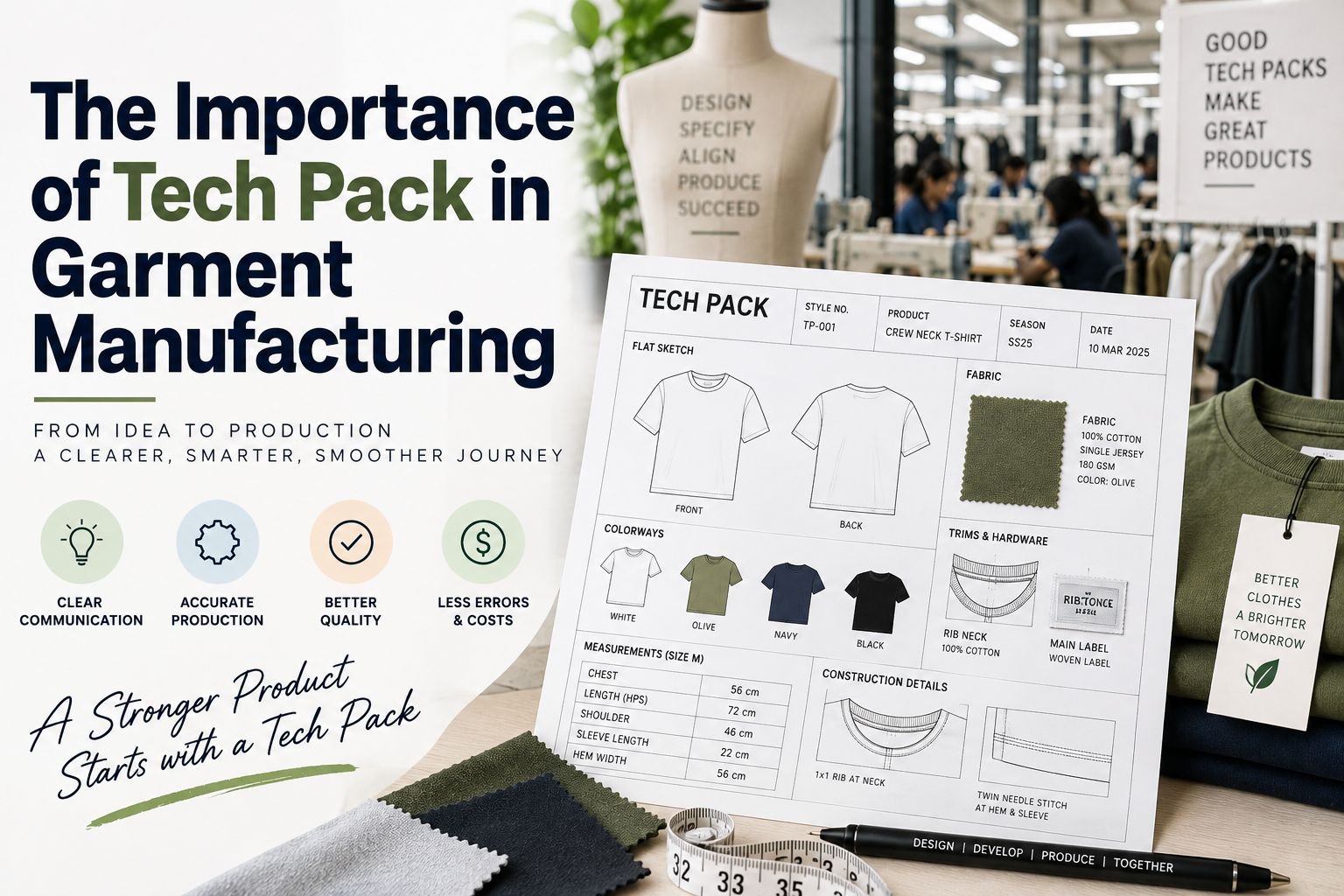
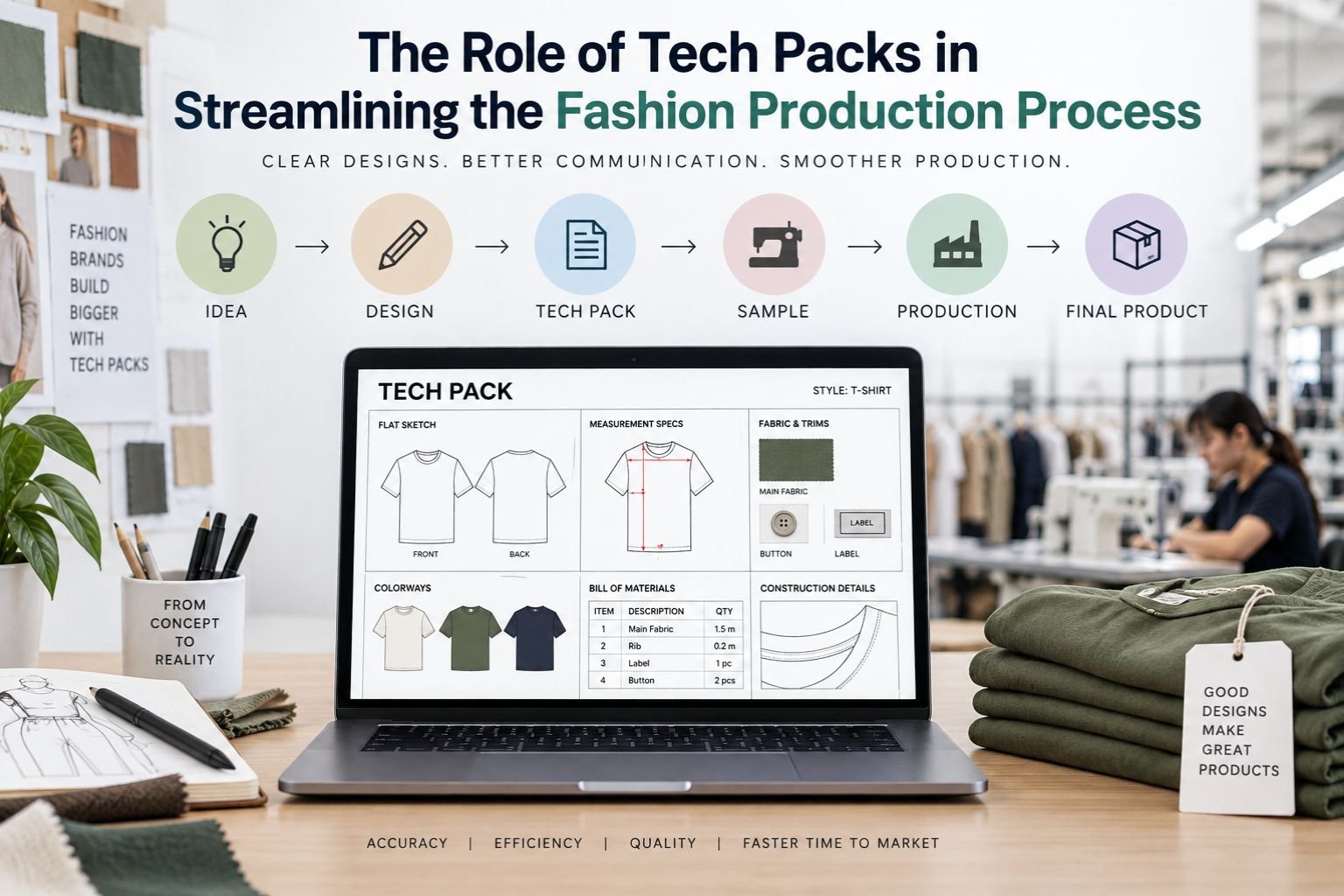
How Measurement Sheets Fit Into a Tech Pack
A measurement sheet is actually one part of a tech pack.
A complete tech pack also includes:
- Design sketches
- Construction details
- Fabric information
- Colorways
- Labels & trims
- Bill of materials
Think of the measurement sheet as the fit control system inside the tech pack.
Without it, the tech pack is incomplete.
Final Thoughts: The Difference Between Amateur and Professional Brands
Fashion success is rarely about creativity alone.
The brands that scale globally are the ones that translate creativity into clear technical communication.
A measurement sheet may look simple — but it protects your brand from:
- production errors
- sizing complaints
- wasted inventory
- damaged reputation
When your measurements are clear, factories trust you.
When factories trust you, production becomes smooth.
And when production becomes smooth — your brand can finally grow without chaos.
Start simple. Stay precise. Improve with every collection.
Your future customers will feel the difference — literally.
FAQs
1. What is the difference between a tech pack and a measurement sheet?
A measurement sheet focuses only on garment sizing and dimensions, while a tech pack includes all production details like materials, construction, and trims.
2. Can I create a measurement sheet without a pattern maker?
Yes. Beginners can start by measuring an approved sample garment carefully and documenting measurements clearly.
3. Should measurements be in inches or centimeters?
Centimeters are preferred globally because most manufacturers use metric systems.
4. How many measurement points should a garment have?
Basic garments need 8–15 points, while complex garments may require 25+ measurement points.
5. What happens if I don’t add tolerance?
Factories may reject pieces unnecessarily or deliver inconsistent sizing, causing disputes.
6. Do POD (Print-on-Demand) brands need measurement sheets?
Yes — especially when moving from POD to custom manufacturing or private labeling.
7. How often should measurement sheets be updated?
Whenever you change fabric, fit, pattern, or target market sizing.
Ready for Production?
Get a professional tech pack for your fashion design.
Table of Contents