Types of Stitches in Garment Manufacturing
Imagine spending months perfecting your designs…
Only to receive your first bulk order and realize the seams look weak.
The hem curls after washing.
And customers start returning pieces.
Most new fashion founders blame the fabric.
Or the factory.
But very often…
the real issue is the stitch.
In garment manufacturing, stitches are not small details.
They control strength, stretch, comfort, durability, and even how premium your product feels.
If you run a clothing brand, POD store, or fashion startup—this guide will change how you look at every seam in your collection.
Let’s break it down in simple, global, factory-friendly language.
What Is a Stitch in Garment Manufacturing?
A stitch is the interlacing of one or more threads in a specific pattern to join fabric pieces, finish edges, or decorate a garment.
Every stitch type is chosen for a reason:
- Some stretch with knit fabric
- Some lock woven seams permanently
- Some prevent fraying
- Some are purely decorative
In production, stitch types are standardized under ISO/ASTM stitch classifications, but you don’t need to memorize codes to run a brand.
What you need to know:
👉 Which stitch is used where
👉 Why that stitch matters
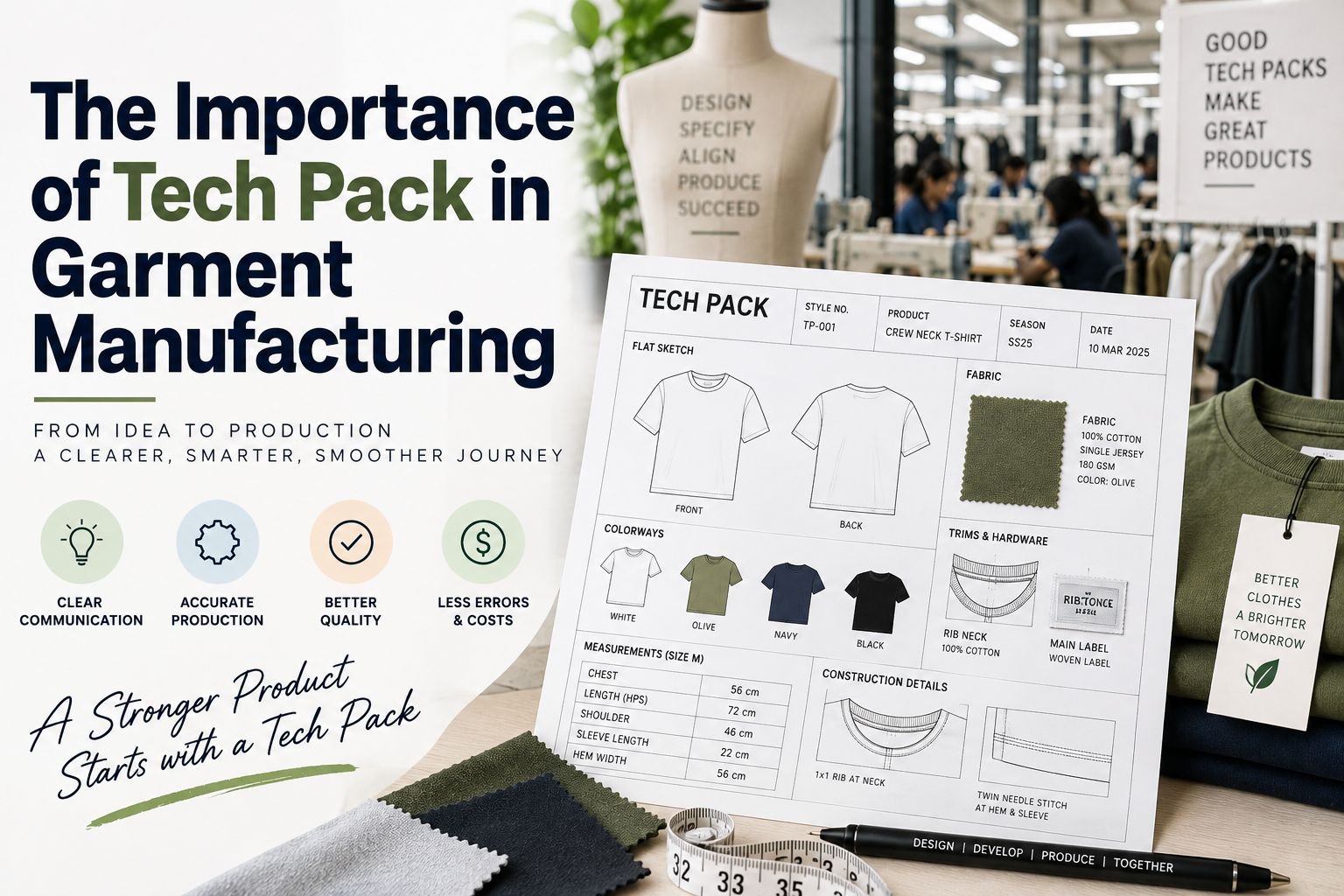
👉 What to specify in your tech pack
Why Fashion Founders Must Understand Stitch Types
Factories don’t guess.
If your tech pack only says “stitch here”, the line supervisor will choose what’s fastest or cheapest—not what suits your brand.
Understanding stitches helps you:
- Control garment quality
- Avoid seam failures
- Reduce returns
- Price your products correctly
- Speak confidently with manufacturers
- Build premium collections
At Tech Pack Genius, we see this daily—brands lose money simply because stitching wasn’t clearly defined.
Major Categories of Stitches
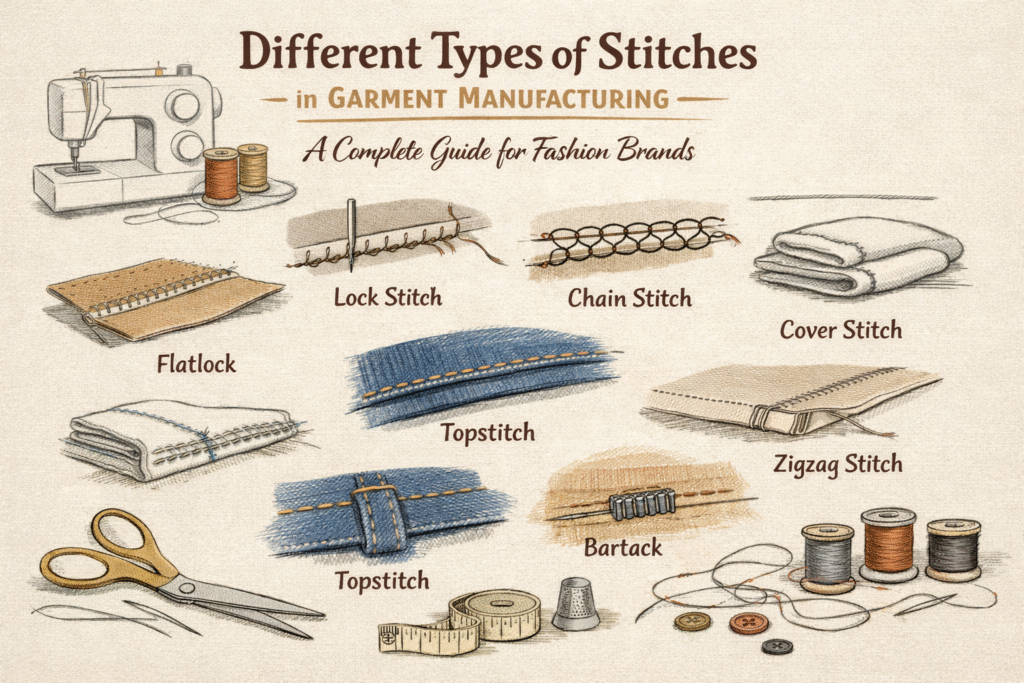
All garment stitches fall into five main families:
- Lock Stitches
- Chain Stitches
- Overedge Stitches
- Cover Stitches
- Decorative / Specialty Stitches
Let’s go one by one.
1. Lock Stitch – The Industry Workhorse
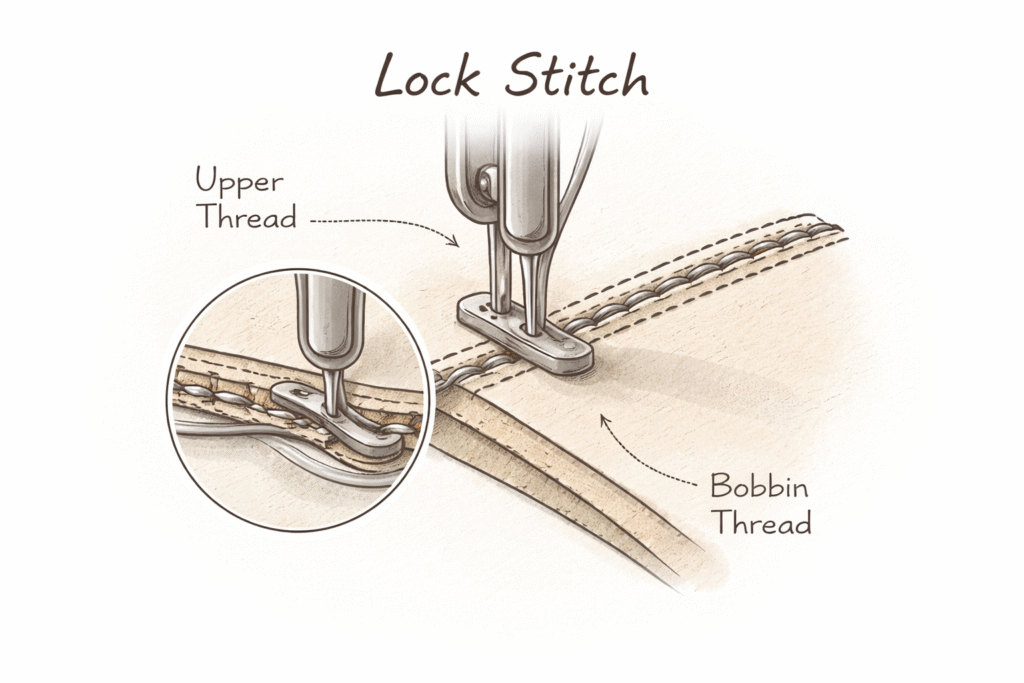
Best for: Woven fabrics, straight seams, collars, plackets, waistbands.
A lock stitch uses two threads—one from the needle and one from the bobbin—locking inside the fabric.
Why factories love it
- Strong and stable
- Clean look
- Doesn’t unravel easily
- Perfect for tailoring
Common uses
- Shirt side seams
- Trouser inseams
- Jacket construction
- Pocket attachment
Founder tip
If your woven garment needs durability and structure, specify:
Single needle lock stitch, 10–12 SPI
SPI means stitches per inch—higher SPI = finer seam.
2. Chain Stitch – Flexible and Fast
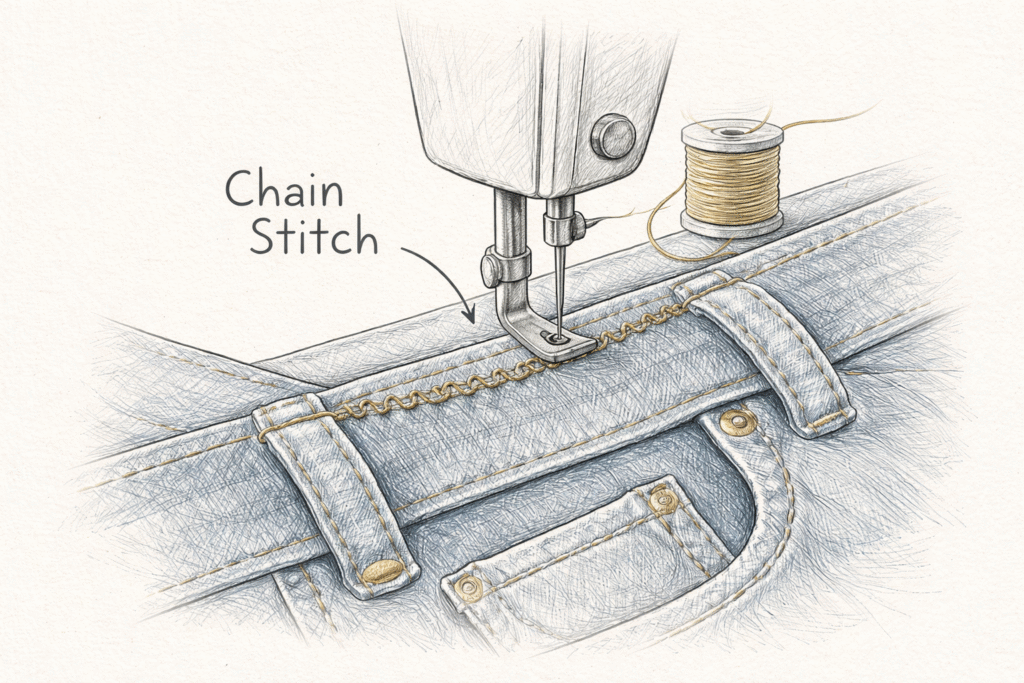
Best for: Stress points, casualwear, denim, waist seams.
A chain stitch uses looped threads from the underside, forming a chain-like pattern.
Why it’s used
- Faster production
- Slight stretch
- Easy to alter
- Classic in denim
Common uses
- Jeans waistbands
- Shoulder seams
- Yokes
- Workwear garments
Watch out
If one end breaks, chain stitches can unravel quickly—unless bartacked.
3. Overlock / Overedge Stitch – The Fray Stopper
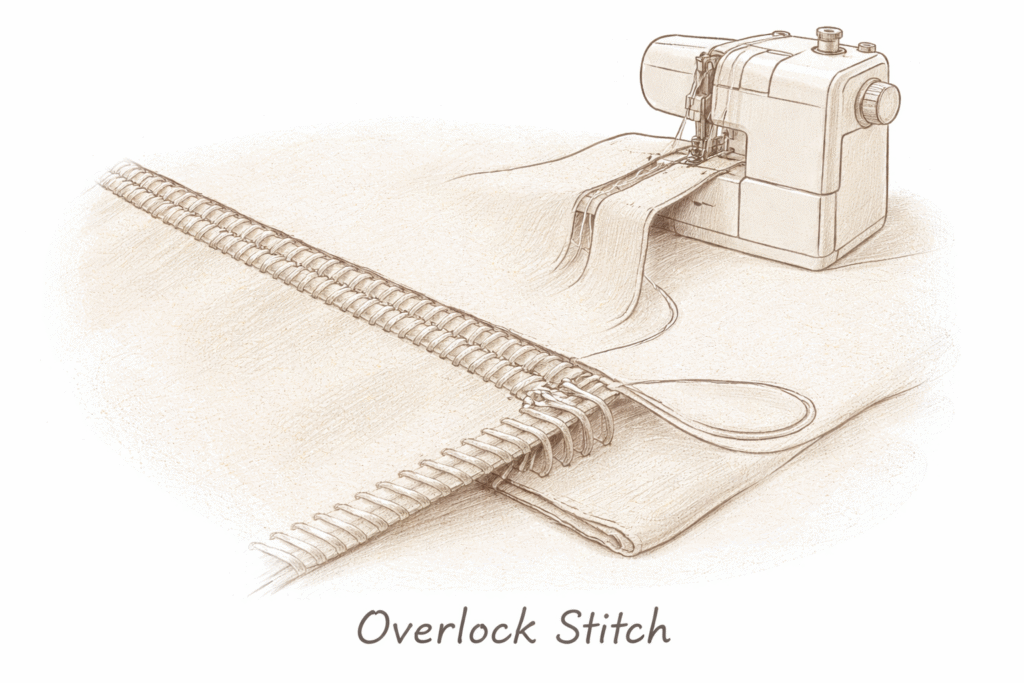
Best for: Knitwear, raw edges, seam finishing.
This stitch wraps thread around the fabric edge to stop fraying.
Made using an overlock machine (often called serger).
Why it matters
- Prevents fabric damage
- Adds stretch
- Keeps seams clean
- Speeds up production
Where you’ll see it
- T-shirt side seams
- Inside hoodie seams
- Activewear
- Leggings
Beginner note
A 4-thread overlock is common for knit seams.
A 3-thread overlock is usually for finishing edges only.
4. Cover Stitch – The Stretch Specialist
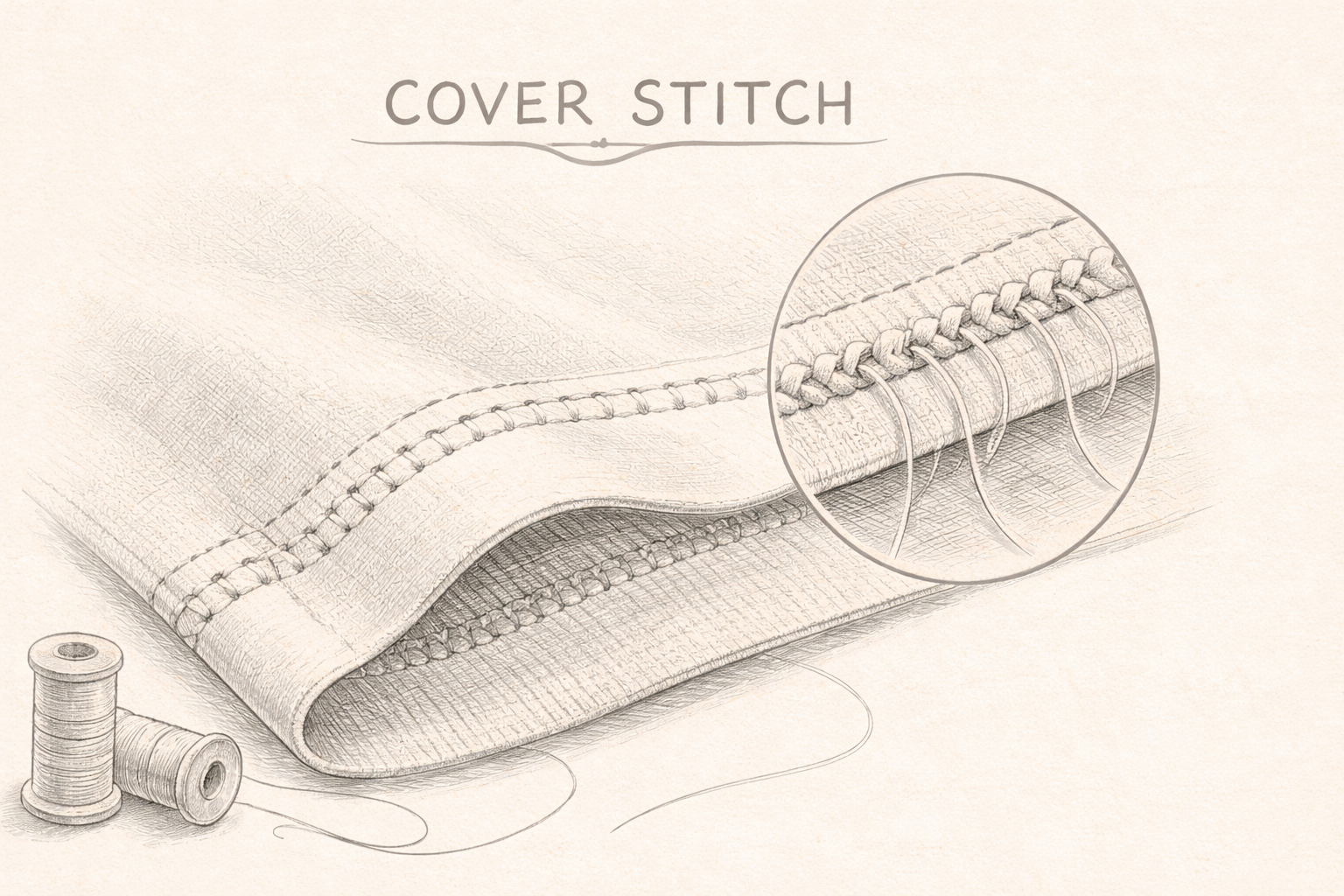
Best for: Hemlines on knit garments.
A cover stitch creates parallel lines on the top and looped threads underneath.
Why it’s crucial
- Stretches without breaking
- Lies flat
- Professional finish
Used in
- T-shirt hems
- Sleeve hems
- Activewear seams
- Base layers
If your T-shirt hem pops after two wears—wrong stitch was used.
5. Flatlock Stitch – Athletic and Seamless Feel
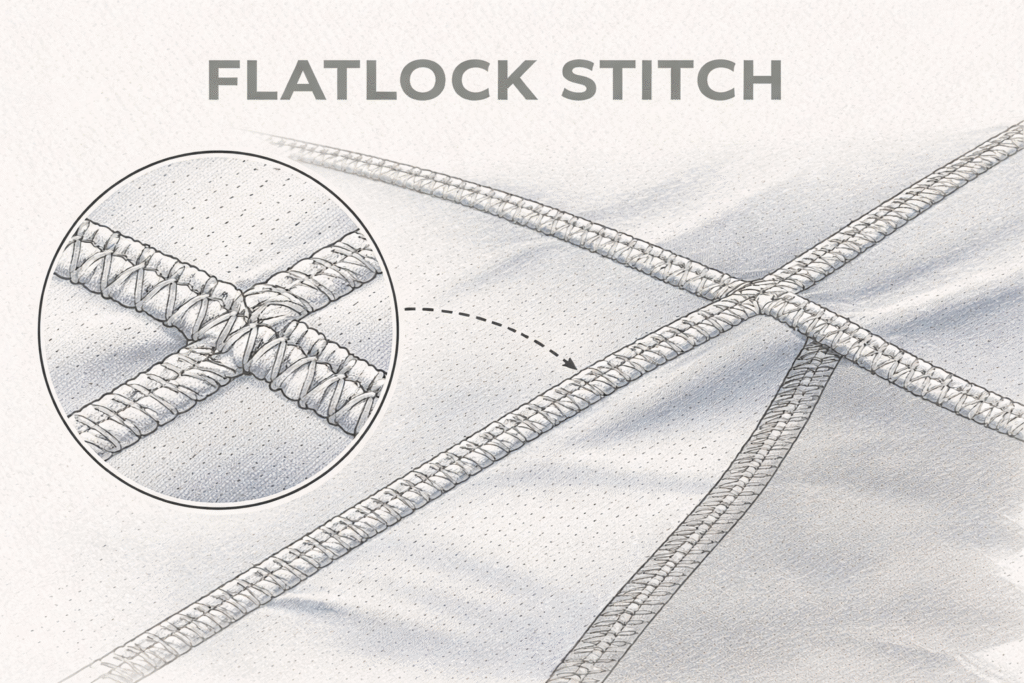
Best for: Sportswear, compression garments.
This stitch flattens two fabric edges together.
Benefits
- No bulky seam
- Comfortable on skin
- Strong
- Modern look
Seen in
- Yoga wear
- Running tops
- Gym leggings
Premium activewear brands rely heavily on flatlock construction.
Decorative and Reinforcement Stitches
These stitches aren’t structural—but they change perception and longevity.
6. Topstitch
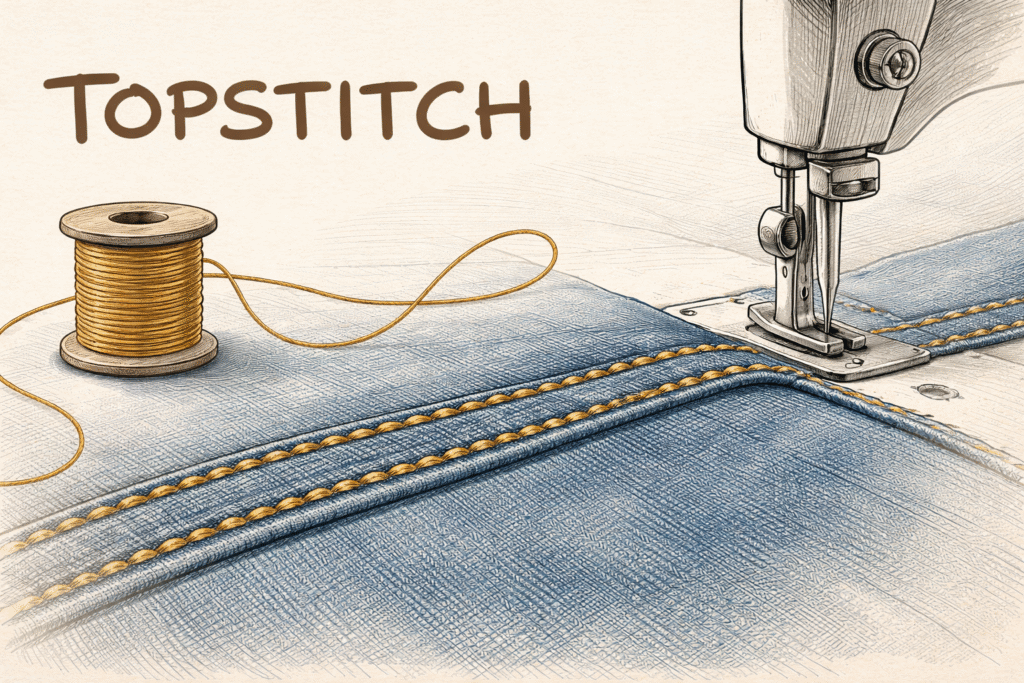
A visible stitch on the outside of garments.
Why brands use it
- Style detail
- Strengthens seams
- Premium look
Seen on:
- Denim jackets
- Shirt plackets
- Pocket edges
7. Bartack Stitch
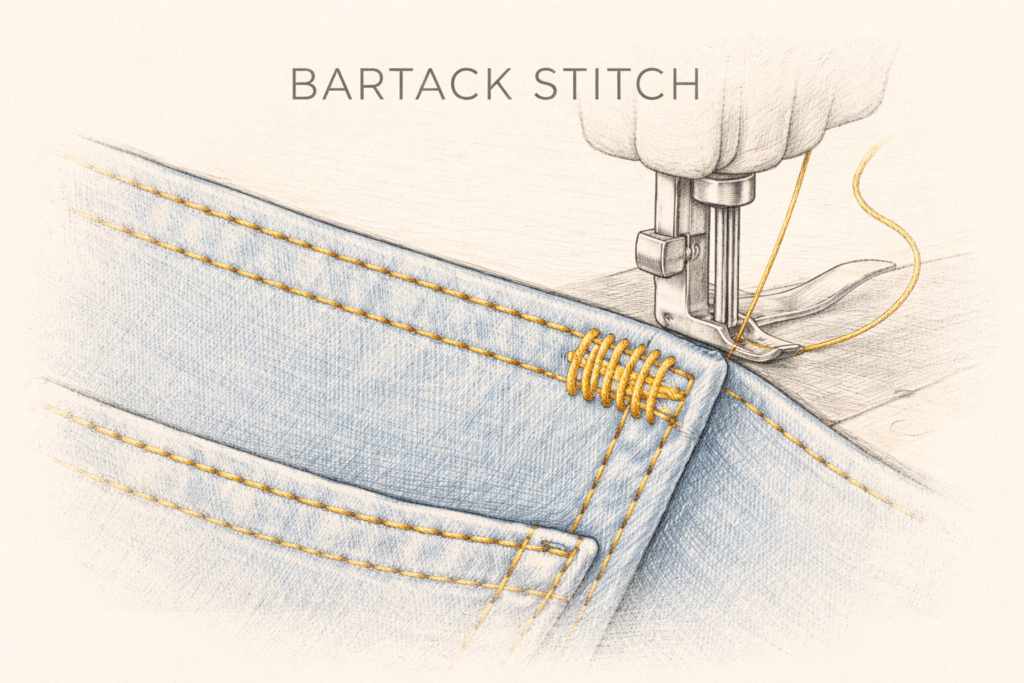
Short, dense stitches at stress points.
Essential for
- Pocket corners
- Belt loops
- Fly openings
If your brand sells pants—bartacks are non-negotiable.
8. Zigzag Stitch
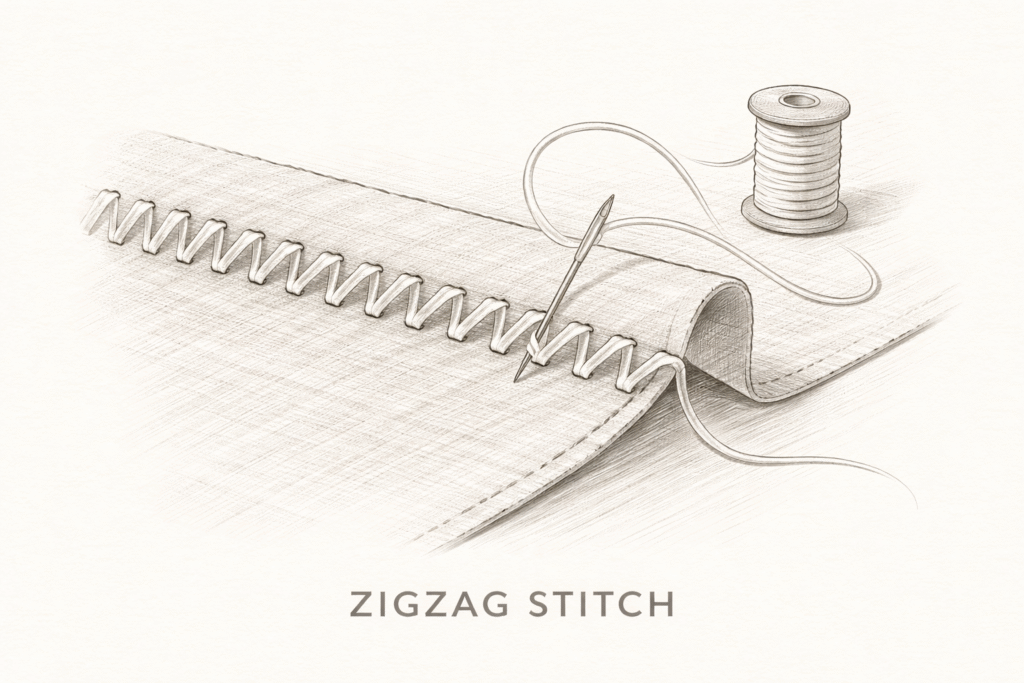
Moves side-to-side instead of straight.
Best for
- Elastic insertion
- Light stretch areas
- Edge finishing
9. Blind Hem Stitch
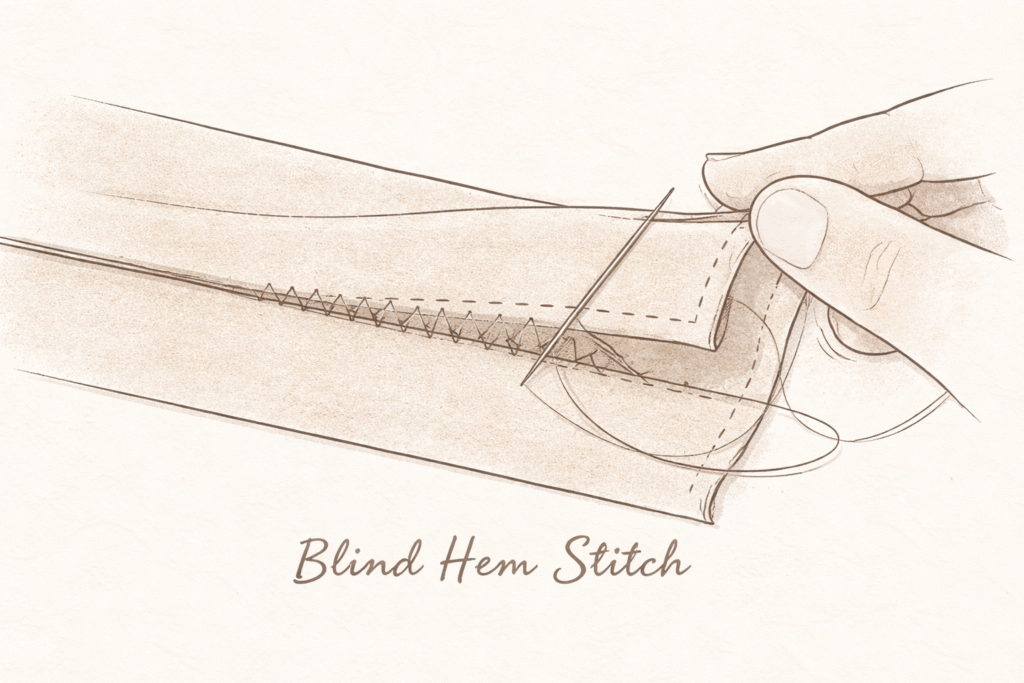
Almost invisible from the outside.
Used for
- Dress hems
- Trousers
- Skirts
Creates luxury tailoring finishes.
10. Decorative Embroidery Stitch
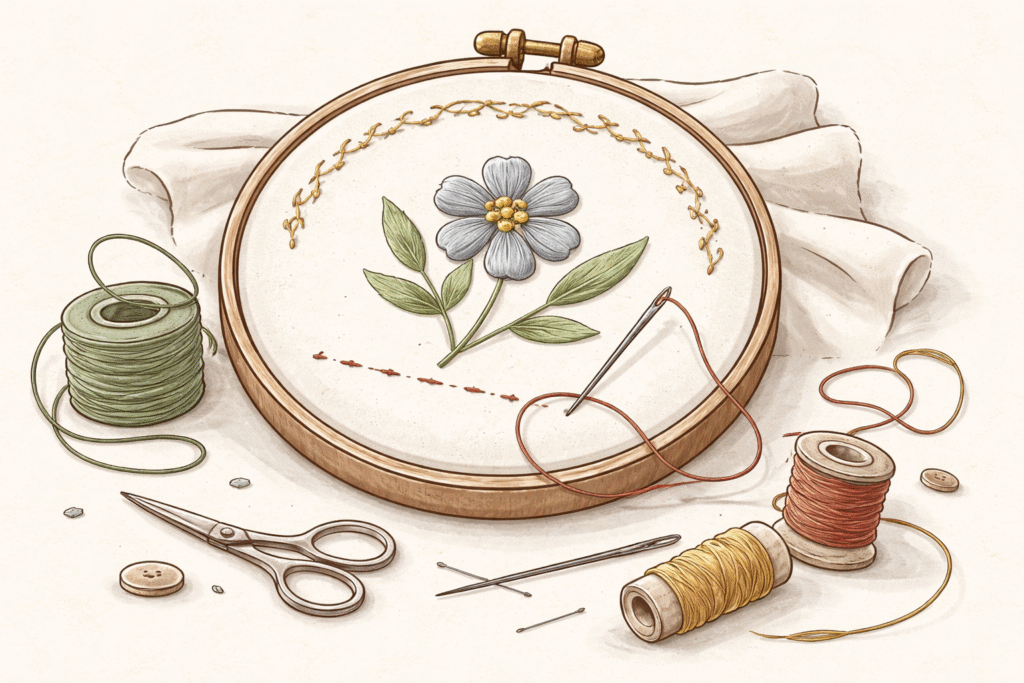
Purely aesthetic.
Includes:
- Satin stitch
- Chain embroidery
- Running stitch
Used in logos, motifs, monograms.
How to Choose the Right Stitch for Your Garment
Before approving samples, ask:
- Is this woven or knit?
- Will this area stretch?
- Is it load-bearing?
- Is the stitch visible?
- What’s the price point?
Simple Matching Rule
| Garment Area | Recommended Stitch |
|---|---|
| Side seam (knit) | 4-thread overlock |
| Hem (T-shirt) | Cover stitch |
| Pocket corners | Bartack |
| Denim seams | Chain stitch |
| Dress hem | Blind stitch |
| Activewear panels | Flatlock |
What to Specify in Your Tech Pack
Every professional tech pack should include:
- Stitch type
- Stitch class (if known)
- SPI
- Thread color
- Seam allowance
- Reinforcement points
Example:
Side seam: 4-thread overlock, 10 SPI
Hem: 2-needle cover stitch
Pocket opening: single needle lock stitch + bartack ends
This clarity saves money, time, and sampling rounds.
Global Production Reality: Why Stitch Choices Change by Country
Different factories specialize in different stitch setups.
- Bangladesh & Vietnam: high-volume knit production
- Turkey & Portugal: premium finishing
- India: versatile mixed-category manufacturing
- China: complex constructions
Always confirm:
👉 Machine availability
👉 Operator skill
👉 Cost difference per stitch type
Some stitches slow production lines—and cost more.
Common Stitching Mistakes New Brands Make
- Letting factories choose by default
- Using lock stitch on stretch areas
- Skipping bartacks
- Not specifying SPI
- Over-decorating first collections
- Choosing expensive stitches at low price points
Conclusion: Stitches Are Silent Brand Builders
Your customer never says:
“I love this lock stitch.”
But they feel it.
In durability.
In comfort.
In how long the garment lasts.
When you master stitches, you stop being a guessing founder.
You become a manufacturing-aware brand owner.
And that’s where real scale begins.
If you’re building collections and want production-ready tech packs that specify every stitch clearly—TechPackGenius.com exists for exactly that.
FAQs: Different Types of Stitches
1. What is the strongest stitch for clothing?
Lock stitch combined with bartacks at stress points is extremely durable.
2. Which stitch is best for T-shirts?
Overlock for seams and cover stitch for hems.
3. What stitch is used in jeans?
Chain stitch and lock stitch, plus heavy topstitching.
4. What is SPI in stitching?
Stitches per inch—controls seam density and strength.
5. Do decorative stitches increase cost?
Yes. More machine time = higher CM cost.
6. Can I change stitch types after sampling?
Yes, but it affects costing and timelines.
7. Why does my hem break after washing?
Likely wrong stitch type for stretch fabric.
Ready for Production?
Get a professional tech pack for your fashion design.
Table of Contents