How to Create Your First Clothing Collection
You’ve been sketching designs at midnight.
Saving fabric references on Instagram.
Dreaming about seeing your label stitched into a neckline tag.
But then reality hits.
Where do I even start?
How do real brands go from idea… to a finished clothing collection selling online?
If that sounds like you, you’re in the right place.
This guide is written for first-time fashion founders, designers, print-on-demand creators, and ecommerce sellers around the world who want to launch their very first clothing line—without wasting money, time, or sanity.
Let’s break it down, step by step.
What Does “Creating a Clothing Collection” Really Mean?
A clothing collection is not just a group of random designs.
It’s a planned set of garments that:
- Share a common theme or story
- Fit the same customer type
- Use similar colors, fabrics, and silhouettes
- Can be produced and sold together
Think of it like a movie trilogy, not random episodes.
Your first collection doesn’t need 50 styles.
Most successful startup brands launch with:
- 5–12 core pieces
- In 2–3 colorways each
- Focused on one clear customer
Simple beats scattered. Every time.
Step 1: Decide Who You’re Designing For (Before Anything Else)
This is where beginners usually go wrong.
They say:
“My brand is for everyone.”
In fashion, that’s a fast way to connect with no one.
Instead, get specific:
Ask yourself:
- Are they men, women, or unisex buyers?
- What age range?
- Streetwear, luxury, activewear, loungewear, kidswear?
- Budget-friendly or premium?
- Which country or region will you sell in first?
Example from Global Markets
- A UK startup might focus on sustainable basics for office workers.
- An Indian brand could launch affordable festive wear for Gen Z.
- A US POD creator might target gym lovers with bold quote tees.
- A Dubai label could build resort wear for tourists.
Your customer decides:
✔ fabric
✔ fit
✔ pricing
✔ production method
✔ branding
Everything.
Step 2: Build a Clear Collection Concept
Now comes the fun part.
Your collection should have a central idea or mood.
This is called a collection concept.
It can be inspired by:
- A season (Summer Escape, Winter Layers)
- A lifestyle (Work-from-Anywhere, City Nights)
- A feeling (Confidence, Freedom, Minimalism)
- A place (Mediterranean coast, Tokyo streets)
Write one sentence:
“This collection is for ___ people who want ___ style for ___ occasions.”
That becomes your creative compass.
Step 3: Research What’s Already Selling
Before designing, study the market.
Go where your customers shop:
- Instagram and TikTok
- Amazon fashion
- Zara / H&M / Shein / ASOS
- Etsy and Shopify stores
- Pinterest trend boards
Look for:
- Popular silhouettes
- Color palettes
- Price ranges
- Fabric types
- Review complaints
Pro Tip
Read 1-star reviews.
They reveal gaps you can fill:
- “Fabric feels cheap.”
- “Sleeves are too tight.”
- “Shrunk after wash.”
That’s free product development insight.
Step 4: Design Your First Styles (Keep It Tight)
For your debut collection, avoid complexity.
Start with:
- T-shirts
- Hoodies
- Dresses
- Co-ord sets
- Shirts
- Joggers
Choose:
- 1 hero product
- 3–5 supporting designs
- 1 statement piece
Sketch them or create digital flats.
Even simple hand drawings work.
What matters is clarity of design—not fancy art.
Step 5: Choose Fabrics and Materials Wisely
Fabric choice can make or break your brand.
Think about:
- Climate
- Comfort
- Durability
- Wash care
- Cost
- Sustainability
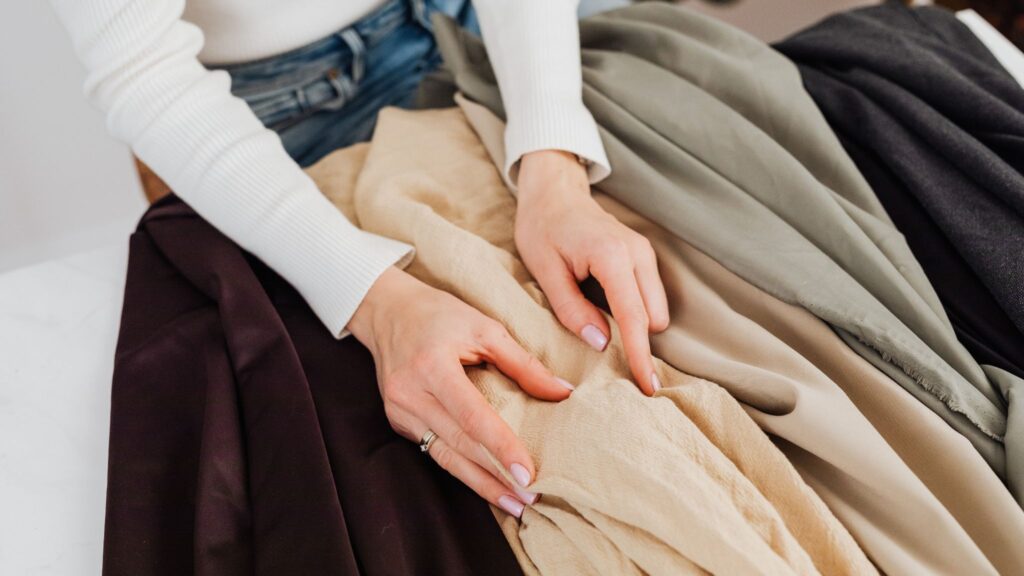
Common Beginner-Friendly Fabrics
- Cotton jersey → tees
- French terry → hoodies
- Poplin → shirts
- Twill → pants
- Rayon/viscose → dresses
Beginner Term Explained: GSM
GSM = Grams per Square Meter.
It tells you fabric thickness.
- 160–180 GSM → lightweight tees
- 200–220 GSM → premium tees
- 300+ GSM → hoodies
Step 6: Create a Tech Pack (This Is Non-Negotiable)
Here’s where many new brands lose money.
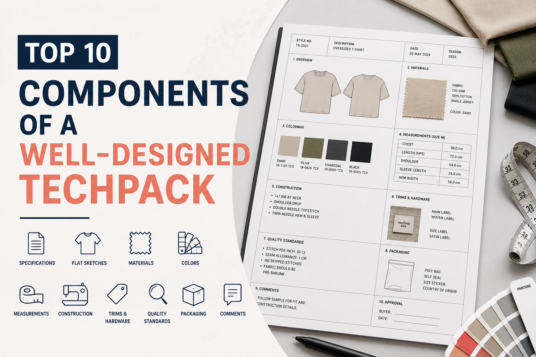
A tech pack is a professional document that tells factories exactly how to make your garment.
It includes:
- Flat drawings
- Measurements
- Fabric details
- Stitching
- Trims
- Labels
- Color codes
- Print placement
- Packaging instructions
Without a tech pack?
Factories guess.
Guessing = mistakes.
Mistakes = wasted samples and cash.
At Tech Pack Genius, we specialize in building factory-ready tech packs for first-time founders—so production runs smoothly from day one.
Step 7: Find the Right Manufacturer
Not all factories suit startups.
Look for:
- Low MOQ (minimum order quantity)
- Sample development
- Clear communication
- Export experience
- Quality control
- Ethical compliance
You can find manufacturers via:
- Trade shows
- Google searches
- Alibaba / Maker’s Row
- Referrals
- Local sourcing agents
Always request:
- Sample garments
- Fabric swatches
- Cost breakdown
- Production timeline
Step 8: Develop Samples (Expect Revisions)
Sampling is where ideas meet reality.
Your first sample might not be perfect.
That’s normal.
Review:
- Fit
- Stitch quality
- Print alignment
- Shrinkage after wash
- Comfort
- Color accuracy
Send clear feedback.
Adjust patterns.
Update tech packs.
Repeat until it’s right.
Step 9: Price Your Collection for Profit
Many beginners underprice.
Use this simple formula:
Total production cost + packaging + shipping + marketing + platform fees = base cost
Then:
- Wholesale price = 2x base cost
- Retail price = 2.5–3x base cost
Example:
If one hoodie costs $18 to produce:
- Wholesale → $36
- Retail → $45–54
Always leave room for profit and growth.
Step 10: Prepare for Launch
Before selling, make sure you have:
- Brand name and logo
- Hang tags and labels
- Size charts
- Product photos
- Website or marketplace store
- Clear return policy
- Social media content
Do a soft launch:
- Email list
- Instagram preview
- Friends & early supporters
- Limited stock drop
Scarcity builds demand.
Common Mistakes First-Time Fashion Founders Make
Avoid these traps:
- Designing too many styles
- Skipping tech packs
- Choosing factories only by price
- Ignoring fit testing
- Underpricing
- Not knowing their customer
- Ordering huge quantities too early
Slow and smart beats fast and broke.
Every time.
Why Your First Collection Matters So Much
Your first drop isn’t just products.
It’s proof:
- Proof you can execute
- Proof factories can trust you
- Proof customers will pay
- Proof your brand has legs
Treat it like your foundation.
Strong foundation = scalable brand.
Final Thoughts: Start Small. Start Smart. Start Now.
You don’t need a fashion degree to launch a clothing collection.
You need:
- Clear customer focus
- Simple designs
- Smart research
- Strong tech packs
- The right manufacturing partners
Thousands of successful brands started exactly where you are now—with one collection and a big dream.
Your job?
Take the first real step today.
And when you’re ready to turn sketches into production-ready garments, TechPackGenius.com is here to help you build detailed tech packs that factories understand—so your first collection launches with confidence.
Frequently Asked Questions
1) How many pieces should my first clothing collection have?
Start with 5–12 styles. It keeps costs low and helps you test what customers love.
2) How much money do I need to launch my first collection?
It varies by category and country, but many founders start between $2,000–$15,000 using low-MOQ factories and small runs.
3) What is a tech pack in fashion?
A tech pack is a detailed production document that tells manufacturers exactly how to make your garment—measurements, fabrics, trims, stitching, and more.
4) Can I start a clothing brand without manufacturing myself?
Yes. You can use private-label factories, small batch producers, or print-on-demand services depending on your model.
5) What’s the easiest type of clothing to start with?
T-shirts, hoodies, co-ord sets, and simple dresses are beginner-friendly because patterns and fabrics are straightforward.
6) How long does it take to create a first collection?
Most first-time brands take 3–6 months from concept to launch, depending on sampling and production speed.
7) Should I launch locally or globally first?
Start where logistics are easiest—often your home country—then expand internationally once systems are smooth.
Table of Contents